
You have no items in your shopping cart.
Knives
How would you like to shop?
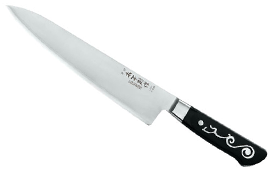
Chef's Knives
Chopping, slicing, and mincing
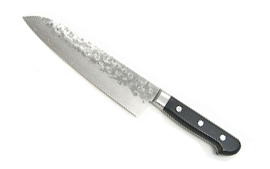
Santoku Knives
Japanese all-purpose blade
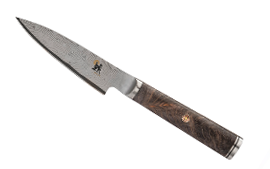
Paring Knives
Peeling and detail work
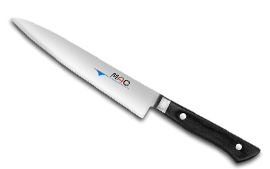
Utility Knives
Sandwiches and small produce
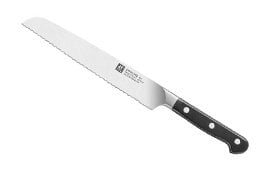
Bread Knives
Crusty loaves and soft bread
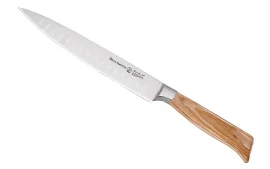
Carving and Slicing
Roasts, ham, and brisket
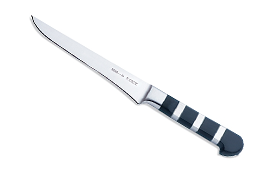
Boning Knives
Removing meat from the bone
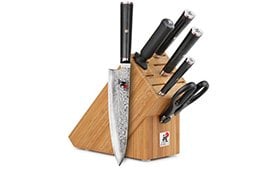
Knife Sets
Outfitting a kitchen or giving a gift
Shop All Shapes
Fillet, nakiri, yanagi, cleavers, steak, oyster, and every other shape we carry
European Makers
Professional and Commercial
Not sure where to start?
What will you cut most often?
What is your budget per knife?
Which edge style do you want?
All Knives
-

Minonokuni Take 13-inch (330mm) Yanagi
The 330mm is the longest yanagi Minonokuni makes in the Take line. It is a specialist’s knife for large fish, such as whole loins of tuna and wide sides of salmon, where even a 300mm blade would need a second stroke to finish the slice.The length gives a long, slow stroke, and the cook controls the thickness of each slice through the angle of the blade. On a board of ordinary depth, it can be unwieldy, so we suggest it for a sushi counter or a kitchen that slices large fish daily.
Why TakeThe Take line uses white steel. It is good enough for professional use and less brittle than blue steel, and on a blade this long, a little extra tolerance in the edge is worth having. White steel also returns to a keen edge quickly on a waterstone, which shortens the time spent maintaining a long single bevel.For a more manageable length, see the Take 300mm yanagiba or the Take 240mm yanagiba. The knife shapes guide covers the yanagi and other slicers.As with every Take knife, the blade is forged and finished by hand, and minor marks from that work are a normal part of the knife. Learn More$300.00 -
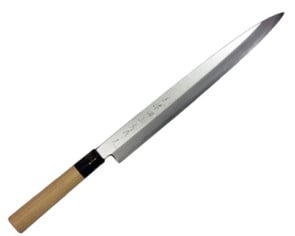
Minonokuni Take 11.8-inch (300mm) Yanagiba
At 300mm, this yanagiba is long enough to cut fillets from larger fish and to slice wide blocks for sashimi without a second stroke. It belongs on a sushi counter or a deep home board where the cook has room to draw the full length of the blade.A long yanagiba is also a precise one. The length lets the cook slow the stroke and control the thickness of each slice, which matters for thin cuts of white fish. It does take practice to keep the tip steady, and a cook coming from a shorter slicer should allow time to adjust.
Take or Matsu at 300mmBoth lines make this length. The blue steel Matsu 300mm yanagi holds an edge longer but is more brittle and suits an experienced cook. Take uses white steel, which is still good enough for professional use and tolerates more, so we suggest it for cooks who are not yet experts in single-bevel knives.For a slightly shorter knife, see the Take 270mm yanagiba. The Take 330mm yanagi is the longest in the line. Our knife shapes guide describes the yanagiba. Learn More -

Minonokuni Take 10.6-inch (270mm) Left-Handed Yanagi
A left-handed sushi chef who needs a longer slicer can choose this Take 270mm yanagi, which we stock. The blade is ground for the left hand, with the bevel on the left face and the hollow back on the right.The long, weighted blade should glide through the fish under its own weight while the thin edge makes the cut. Draw from heel to tip in a single stroke. Pressing down or sawing will crush the flesh and spoil the surface of the slice.
Take for Left-Handed CooksTake is the sweet spot of the Minonokuni range. Its white steel is ready for professional work and less brittle than blue steel, so it is a good choice for a left-handed cook who has some experience but is not yet an expert with single-bevel knives. A cook who would rather learn on the most forgiving steel can choose the Ume 270mm left-handed yanagi.The Take 240mm left-handed yanagi is shorter and easier on a home board. The right-handed version is the Take 270mm yanagiba. The knife shapes guide explains the yanagi. Learn More -

Minonokuni Take 10.6-inch (270mm) Yanagiba
Slicing fish for a full dining room calls for a longer knife, and the 270mm yanagiba adds that length without moving to the largest sizes. A wide block of fish can be sliced from heel to tip in one smooth draw, which keeps the surface of each piece glossy and intact.The added length also means added weight toward the tip. Let that weight carry the blade through the fish, and keep the grip relaxed. A cook used to a 240mm will need a few sessions to adjust to the longer stroke.
The Take LineTake uses white steel, a fine-grained carbon steel that sharpens quickly and holds an edge well in a working kitchen. It is less brittle than the blue steel Matsu 270mm yanagiba, and so suits cooks who are confident with sushi but not yet experts at maintaining a single-bevel edge.Shorter and longer options are the Take 240mm and Take 300mm. Left-handed cooks can order the Take 270mm left-handed yanagi. For more on slicers, see the knife shapes guide. Learn More$220.00 -

Minonokuni Take 9.4-inch (240mm) Left-Handed Yanagi
Made for left-handed chefs, this Take 240mm yanagi is ground with its bevel on the left face, so it slices sushi and sashimi as cleanly in the left hand as a standard yanagi does in the right. We keep it in stock.At 240mm, it is long enough for a saku of tuna or a full side of salmon to be cut in one stroke, which gives each slice a smooth surface. The knife is still short enough for an ordinary home board. For a cook who will slice in both a restaurant and a home kitchen, this length covers both.
SteelThe white steel in the Take line is good enough for professional use and less brittle than blue steel. That makes it a practical choice for a left-handed cook who is newer to single-bevel knives, where an awkward cut is more likely. The Matsu 240mm left-handed yanagiba is the blue steel option for experienced hands, and the Ume 240mm left-handed yanagi is the most forgiving.Other left-handed Take lengths are the 210mm and 270mm. See our kitchen knife shapes guide for an overview of slicers. Learn More$275.00 -
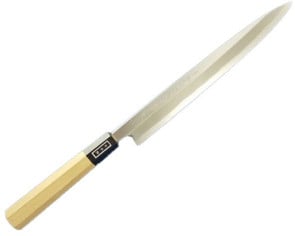
Minonokuni Take 9.4-inch (240mm) Yanagiba
For a cook who wants one yanagiba that can serve at home and in a professional kitchen, 240mm is the length to choose. It slices a full saku of tuna or a salmon fillet in a single pull, but it is not so long that it becomes awkward on an ordinary board.The Take line is the one we point a cook toward when in doubt. White steel takes an edge fine enough for sashimi and is less brittle than blue steel, so a slip of technique is less likely to cost a chip in the edge. It is the sweet spot between the Matsu 240mm yanagiba, for experienced hands, and the Ume 240mm yanagiba, for a first knife.
Using the LengthPlace the heel at the far edge of the fish and draw the blade toward you in one smooth motion, letting the tip finish the cut. The slice should come away with a bright, unbroken surface. If it needs a second stroke, the cut was too short or too slow.Other lengths are the 210mm and the 270mm. A left-handed cook should choose the Take 240mm left-handed yanagi. The knife shapes guide has more on Japanese slicers. Learn More$200.00 -

Minonokuni Take 8.3-inch (210mm) Left-Handed Yanagi
A left-handed sushi cook needs the bevel on the left side of the blade to slice cleanly, and this Take 210mm yanagi has it. Held in the left hand, the edge draws through the fish and steers the slice away from the block, the same way a right-handed yanagi works in the right hand.The 210mm length fits a home board and handles sashimi from salmon, tuna and yellowtail fillets. Expect a well-ground, flat blade that is sharp when it arrives. Like any single-bevel knife, it performs best once the cook has learned to maintain the edge on waterstones.
Choosing a Line for Left-Handed UseTake is the middle of our three standard lines, and we stock left-handed models in all three. Take’s white steel is less brittle than the blue steel Matsu 210mm left-handed yanagiba but holds an edge well enough for a professional kitchen. The Ume 210mm left-handed yanagi is the most forgiving and the easiest to learn to sharpen.For a longer stroke, see the Take 240mm left-handed yanagi. The right-handed version is the Take 210mm yanagiba. Our knife shapes guide explains the yanagi in detail. Learn More -

Minonokuni Take 8.3-inch (210mm) Yanagiba
A 210mm yanagiba is a comfortable length for slicing sashimi on a home cutting board, and the Take version gives a first-time sushi cook a knife that will grow with their skills. The blade is ground very flat, and the long, narrow edge cuts a block of fish in a single drawing stroke.Draw the knife toward you from the heel, keeping the pressure light. The single bevel and hollow back let each slice fall away cleanly instead of clinging to the blade. Short fillets of salmon or yellowtail are well within reach of this length.
Take or Matsu?The Take line uses white steel, which takes a very fine edge and comes back quickly on a waterstone. It is less brittle than the blue steel of the Matsu 210mm yanagiba, and so better suited to a cook who is still learning both the slicing stroke and how to sharpen a single bevel. It is good enough for professional use, which is why we call Take the sweet spot.Longer blocks of fish are easier with the Take 240mm yanagiba. Left-handed cooks should see the Take 210mm left-handed yanagi. The knife shapes guide covers the yanagiba. Learn More -

Minonokuni Take 7.7-inch (195mm) Deba
The 195mm is the largest deba in the Take line, built for large saltwater fish and big freshwater fish. Its mass is the point. A heavy blade drops through the head and collar of a large fish with little effort from the cook, and the long edge keeps the cut straight along a wide frame.That weight makes it slower on small fish, so it suits a cook who regularly handles large ones, such as a restaurant buying whole fish or an angler cleaning a large catch. For mixed work, the Take 180mm deba or Take 165mm deba is easier to manoeuvre.
Steel ChoiceWhite steel gives the Take line an edge that holds up in a professional kitchen while staying less brittle than blue steel. That combination is why we call Take the sweet spot of the Minonokuni range. A cook who wants the same size in the most forgiving steel can look at the Ume 195mm deba.Left-handed cooks will find the Take 180mm left-handed deba the largest left-handed option in the line. For more on choosing a deba, see the guide to knife shapes. Learn More$265.00 -

Minonokuni Take 7.1-inch (180mm) Left-Handed Deba
This is a left-handed deba in the true sense. Forging and grinding put the single bevel on the left face, rather than reshaping a right-handed blade, so a left-handed cook gets the same control along the frame that the knife was designed to give. At 180mm, it is the largest left-handed deba in the Take line.The size is meant for large fish such as salmon and big snapper. The heavy heel splits heads and cuts collars, and the long edge follows the backbone in fewer passes. On poultry, it breaks down a whole bird with room to spare.
A Line for Learning and for WorkTake is the line we suggest for cooks who want a knife good enough for professional work but less brittle than blue steel. For a left-handed cook still learning to sharpen a single bevel, the Ume 180mm left-handed deba is more forgiving still.Shorter left-handed sizes are the Take 165mm and Take 150mm. The right-handed version is the Take 180mm deba. The knife shapes guide explains where the deba fits.Each Take knife is forged by hand. Expect small hammer marks, a slightly uneven finish on the iron and other signs of handwork, none of which affect the edge. Learn More

