
You have no items in your shopping cart.
Knives
How would you like to shop?
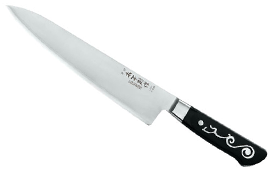
Chef's Knives
Chopping, slicing, and mincing
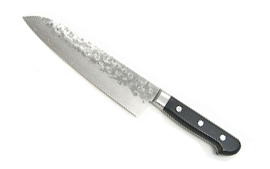
Santoku Knives
Japanese all-purpose blade
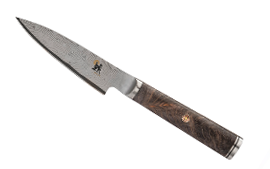
Paring Knives
Peeling and detail work
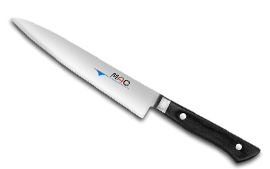
Utility Knives
Sandwiches and small produce
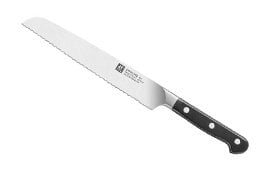
Bread Knives
Crusty loaves and soft bread
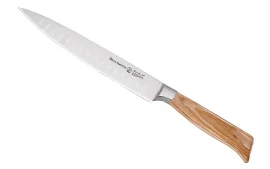
Carving and Slicing
Roasts, ham, and brisket
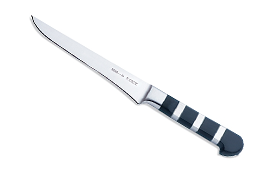
Boning Knives
Removing meat from the bone
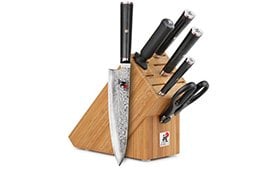
Knife Sets
Outfitting a kitchen or giving a gift
Shop All Shapes
Fillet, nakiri, yanagi, cleavers, steak, oyster, and every other shape we carry
European Makers
Professional and Commercial
Not sure where to start?
What will you cut most often?
What is your budget per knife?
Which edge style do you want?
All Knives
-

Minonokuni Matsu 8.3-inch (210mm) Yanagiba
The 210mm yanagiba is the length for a home kitchen or a small sushi station, where a longer slicer would overhang the board. It is long enough to cut a block of tuna or salmon for sashimi in a single pull, which leaves a clean, glossy face on each slice.Matsu is the top of the three standard Minonokuni lines, forged from blue steel. That steel holds a fine edge longer than white steel, and it is also harder and less forgiving of a twist or a knock against a plate. A sushi cook who already sharpens single-bevel knives will get the most from it.
How It CutsStart the slice at the heel and draw the knife toward you, letting the full length pass through the fish. A sawing motion tears the flesh, and pressing down crushes it. The flat back keeps each slice from sticking to the blade, and the single bevel steers the cut slightly away from the fish so the slice falls cleanly.
Other Lengths and LinesFor a longer stroke on larger blocks, see the Matsu 240mm yanagiba, the standard length at a sushi counter. Left-handed cooks need the Matsu 210mm left-handed yanagiba. To learn the technique on softer steel first, the Take 210mm yanagiba is the sensible step. Our knife shapes guide compares the yanagiba with the sujihiki and other slicers. Learn More$295.00 -

Minonokuni Matsu 8.3-inch (210mm) Left-Handed Yanagiba
Left-handed sushi cooks cannot simply use a right-handed yanagiba. The single bevel and hollow back are reversed on this knife, so the edge steers the slice away from the fish when it is held in the left hand. A right-handed blade used left-handed pulls into the fish and leaves a ragged, wedge-shaped slice.This Matsu 210mm is a true mirror of the right-handed Matsu 210mm yanagiba, forged in the same blue steel. We stock it rather than make it to order, so it ships like any other knife in the line.
Is the Matsu the Right Line?Blue steel takes a very fine edge and keeps it longer than the white steel in the Take line. The trade-off is a harder, more brittle edge that is less forgiving of careless sharpening or a twist in the cut. If this is a first single-bevel knife, consider the Take 210mm left-handed yanagi or the Ume 210mm left-handed yanagi, which are easier to learn on and to sharpen.At 210mm, the blade suits a home cutting board and slices fillets of salmon, tuna and yellowtail in one long pull. The Matsu 240mm left-handed yanagiba gives a longer stroke for larger blocks. Read more about the yanagiba in our guide to knife shapes. Learn More$420.00 -

Minonokuni Matsu 9.4-inch (240mm) Yanagiba
The 240mm yanagiba is the standard length at a sushi counter. It completes a slice of tuna or yellowtail in one draw without making the knife hard to handle on a standard board, and it gives enough room for hira-zukuri and the thin, angled sogi-zukuri cuts used for white fish.The Matsu blade is hand-forged from blue steel. Of the three standard Minonokuni lines, it holds an edge the longest, and it is also the most delicate, so it suits a cook who already has a feel for single-bevel knives.
Fitting the Length to the KitchenFor home use and smaller boards, the Matsu 210mm yanagiba is easier to manage. For whole loins and wide blocks of salmon, the Matsu 270mm adds reach. Left-handed cooks will want the Matsu 240mm left-handed yanagiba.Cooks who want the same length in a steel that is less brittle can look at the Take 240mm yanagiba. The knife shapes guide covers how the yanagiba differs from a Western slicer. Learn More$320.00 -

Minonokuni Matsu 9.4-inch (240mm) Left-Handed Yanagiba
For a left-handed sushi chef, 240mm is the working length, and a mirror-ground blade is the only way to get the straight, smooth slice the yanagiba is made for. The bevel sits on the left face of this knife and the hollow back on the right, the reverse of the right-handed Matsu 240mm yanagiba.This is the longest left-handed Matsu we carry. The length lets a slice of tuna, salmon or hamachi start at the heel and finish at the tip in one draw, with no back-and-forth. The knife is in stock at Knife Merchant; we do not special-order left-handed Matsu knives in other sizes.
Blue Steel for Experienced HandsBlue steel is hard and holds an edge a long time, but the thin single-bevel edge chips if the blade is twisted or knocked against bone. It is best for a cook already comfortable sharpening chisel-ground knives on waterstones. The Take 240mm left-handed yanagi in white steel is less brittle and a better choice for a cook new to the style.For a shorter knife on a home board, see the Matsu 210mm left-handed yanagiba. The kitchen knife shapes guide explains the yanagiba and its relatives. Learn More -
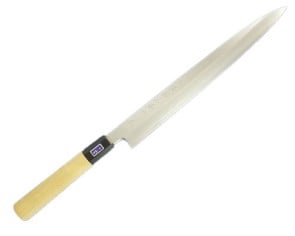
Minonokuni Matsu 10.6-inch (270mm) Yanagiba
At 270mm, this yanagiba suits a cook who slices large blocks of fish in volume, such as a full saku of bluefin or a wide side of salmon. The extra length over a 240mm lets each slice finish in one stroke even when the fish is broad, so fewer slices need a second pass.The longer blade asks more of the cook. It needs room on the board and a steady wrist to keep the tip from wandering. For that reason, we suggest it for professionals and experienced home sushi cooks, the same people who will appreciate the blue steel edge. A hard, thin edge like this one keeps its bite through a long service, but it is less forgiving of a twist than the white steel of the Take 270mm yanagiba.
Where the 270mm FitsThe Matsu yanagiba comes in four lengths. The 240mm is the standard counter length, while the 300mm gives the longest stroke for large fish and a wide board. Between them, the 270mm adds reach without the weight of the longest knife. The guide to Japanese and Western knife shapes covers the yanagiba in more detail.Every Matsu knife is forged by hand, and small hammer marks and color variation in the iron are normal. Learn More$355.00 -
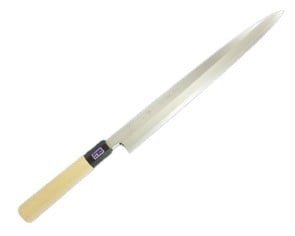
Minonokuni Matsu 11.8-inch (300mm) Yanagi
The 300mm yanagi is a sushi counter knife. Its length lets the chef slice a large block of fish, or a wide fillet of salmon, in a single long draw from heel to tip, so each slice keeps a smooth face and holds its shape on the plate.A knife this long needs space. It works best on a deep board with room to the side, and it rewards a practiced, relaxed stroke over force. We recommend it for experienced cooks, both because of the length and because of the steel. Matsu knives are forged from blue steel, which holds the keenest edge in the three standard Minonokuni lines but is also the most brittle. A cook who already sharpens single-bevel knives will keep it in good order.
Choosing a Yanagi LengthThe Matsu 240mm yanagiba is the standard counter length, and the Matsu 270mm is a step up in reach. Choose the 300mm when the fish and the board are large and the work is mostly slicing. For a 300mm yanagi in a less demanding steel, see the Take 300mm yanagiba.The knife shapes guide explains how the yanagi is used with the deba and usuba. Learn More$400.00 -

Minonokuni Matsu 7.1-inch (180mm) Usuba
The usuba is the Japanese vegetable knife, and the 180mm Matsu is the size for a home kitchen or a cook new to the shape. Its tall, flat blade meets the board along the full length of the edge, so a straight push cut separates each slice of cucumber or carrot completely.The single bevel gives the usuba its main job, katsuramuki. A peeled length of daikon is turned against the edge to unroll a continuous, paper-thin sheet, which is then cut into fine threads for garnish or rolled for decoration. The flat back keeps those sheets even in thickness.
Matsu, Take or Ume?All three lines make this shape in the same sizes. Matsu uses blue steel, which holds the finest edge longest and suits a cook already used to single-bevel knives. The Take 180mm usuba is less brittle, so it is a better choice for a cook learning the shape. The Ume 180mm usuba is the most forgiving and the easiest of the three to learn to sharpen.For long daikon and whole heads of cabbage, the Matsu 210mm usuba gives more length. A cook who wants a point for decorative cuts should look at the Matsu 180mm kama-usuba. The kitchen knife shapes guide compares the usuba with the nakiri, its double-bevel cousin. Learn More$330.00 -

Minonokuni Matsu 8.3-inch (210mm) Usuba
For a cook who cuts vegetables all day, the 210mm usuba earns its place through length. A long daikon can be turned through katsuramuki without the sheet running off the end of the blade, and a full head of napa cabbage or a bunch of scallions can be cut in fewer strokes.The blade is square-tipped in the Kanto style, with a flat edge that meets the board along its whole length. Cutting is a straight push down and forward. Rocking the knife, as with a Western chef’s knife, wears the edge and makes uneven cuts.
Who the Matsu Usuba SuitsThe Matsu line is forged from blue steel. Its edge stays keen through long vegetable prep, but it is the most delicate steel in the range, and a careless twist or a stray bone will chip it. It belongs with a cook who already sharpens single-bevel knives. The Take 210mm usuba is the practical alternative for a cook still learning, with an edge that is less brittle.The Matsu 180mm usuba is shorter and lighter for home boards. For carved garnishes and work that needs a point, the Matsu 210mm kama-usuba is the Kansai-style alternative. The knife shapes guide has more on usuba and nakiri knives. Learn More$400.00 -

Minonokuni Matsu 7.1-inch (180mm) Kama-Usuba
The kama-usuba is the Osaka, or Kansai, form of the usuba. It keeps the flat edge and single bevel for vegetable work, but the spine curves down to a pointed tip, which the square Kanto usuba lacks. That tip is what makes the knife useful for decorative cuts and fine garnish work.At 180mm, this Matsu is a manageable size on a home board. Use the length of the edge for push-cut slicing and katsuramuki, then switch to the tip to carve vegetable flowers, cut a pattern into shiitake caps, or trim a turned vegetable. Because the tip is thin and hard, keep it to vegetables and away from frozen food.
Selecting the LineThe blue steel in the Matsu line keeps a very fine edge the longest of the three standard Minonokuni lines. It is also the most delicate, so we suggest it for a cook who already works with single-bevel knives. The Take 180mm kama-usuba is less brittle and a better first knife, and the Ume 180mm kama-usuba is the most forgiving.For more length, see the Matsu 210mm kama-usuba. The square-tipped Matsu 180mm usuba suits cooks who do mostly sheets and julienne. The knife shapes guide explains both forms. Learn More$330.00 -
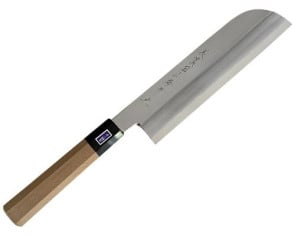
Minonokuni Matsu 8.3-inch (210mm) Kama-Usuba
In a professional kitchen, the 210mm kama-usuba can serve as the main vegetable knife. The length handles long daikon and large heads of cabbage, and the pointed tip handles the detail work that a square-tipped usuba cannot, from cutting decorative shapes to scoring the skin of eggplant.The weight is noticeably greater than the Matsu 180mm kama-usuba, which helps when pushing through dense roots such as burdock and kabocha. On softer produce, let the edge do the cutting and use only a light push.
Blue Steel, ConsideredThe Matsu line is forged in blue steel, so the edge stays keen through hours of prep. That hardness makes the edge more brittle, and the thin tip of a kama-usuba is the most exposed part of the blade. We recommend it for experienced cooks. The Take 210mm kama-usuba in white steel offers the same shape with an edge that tolerates more.Cooks who mostly cut sheets and julienne may prefer the square-tipped Matsu 210mm usuba. The knife shapes guide covers the usuba family.Because each Matsu knife is forged and finished by hand, small marks from the hammer and variations in the finish are expected and do not affect the edge. Learn More$400.00

