
You have no items in your shopping cart.
Knives
How would you like to shop?
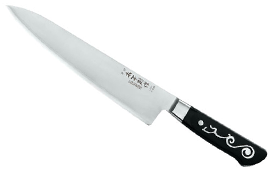
Chef's Knives
Chopping, slicing, and mincing
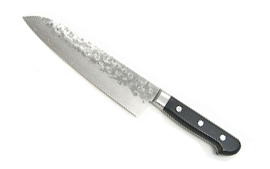
Santoku Knives
Japanese all-purpose blade
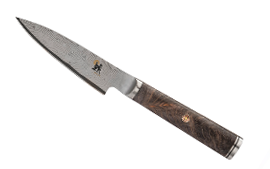
Paring Knives
Peeling and detail work
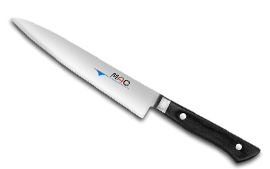
Utility Knives
Sandwiches and small produce
Bread Knives
Crusty loaves and soft bread
Carving and Slicing
Roasts, ham, and brisket
Boning Knives
Removing meat from the bone
Knife Sets
Outfitting a kitchen or giving a gift
Shop All Shapes
Fillet, nakiri, yanagi, cleavers, steak, oyster, and every other shape we carry
European Makers
Professional and Commercial
Not sure where to start?
What will you cut most often?
What is your budget per knife?
Which edge style do you want?
All Knives
-

Zwilling Four Star 8-inch Carving Knife
Carve roasts, poultry and large cuts cleanly and evenly, with no tearing and no sawing. The Zwilling Four Star 8-inch carving knife has a long, narrow blade that moves through cooked meat with less resistance than a wide chef’s knife, which keeps slices thin and moist.Its thin profile and gradual taper are designed for long, continuous strokes. The bolster and molded handle give stability at the carving board, where one hand holds the knife and the other a fork.Rest a roast before carving so the juices settle, and steady it with a carving fork placed away from the line of the cut.For buffet carving and large roasts, the Four Star 10-inch slicer has more length and a hollow edge. Our Kitchen Knife Shapes guide explains carving and slicing knives. Learn More$119.95 -

Zwilling Four Star 7-inch Chef’s Knife
When an 8-inch feels like slightly too much blade, a 7-inch is the next step down. The Zwilling Four Star 7-inch chef’s knife keeps the full chef’s profile, so it rocks, chops and slices, with a little less reach and a little more agility on a small board.Use it for daily dinners: an onion, a few peppers, a chicken breast and a handful of herbs. The molded Four Star handle is comfortable through long sessions and easy to keep clean, since there are no rivets or seams.A 7-inch blade also suits cooks with smaller hands and kitchens with small cutting boards, where an 8-inch blade overhangs the edge of the board.For more length, see the Four Star 8-inch chef’s knife; for a flatter edge, the Four Star 7-inch santoku. Our guide to knife shapes explains how chef’s knife lengths differ. Learn More$139.95 -
Zwilling Pro 10-inch Carving Knife
A Thanksgiving turkey, a standing rib roast or a whole ham calls for a carving knife long enough to finish each slice in a single draw. The Zwilling Pro 10-inch carving knife provides that length on a narrow blade, which keeps drag low and slices intact.Long strokes toward you, with no sawing, give the cleanest surface on the meat. The Pro curved bolster gives a secure grip for guiding a longer knife, and the pointed tip follows the breastbone and joints when carving poultry.Steady the roast with a carving fork placed away from the line of the cut, and keep the blade level so each slice comes out the same thickness from top to bottom.For smaller roasts and chicken, the Pro 8-inch carving knife is easier to handle. Our guide to knife shapes explains carving and slicing knives. Learn MoreRegular Price: $159.95
Special Price $127.95
-
Zwilling Pro 7-inch Fillet Knife
Filleting a fish means running a thin, flexible blade along the backbone and then under the skin, and the Zwilling Pro 7-inch fillet knife is made for both cuts. Its length reaches across a trout, bass or snapper in long strokes, and the blade flexes to stay tight against the ribs.It also trims and portions meat and poultry where a thinner, more flexible blade helps. The Pro curved bolster supports a secure pinch grip, which matters when the work is slippery.To skin a fillet, start at the tail, angle the edge slightly down toward the skin and push the knife forward while pulling the skin back. The flex keeps the edge flat against the skin, which leaves the flesh whole.For trimming meat and boning poultry, the Pro 5.5-inch flexible boning knife is shorter and more maneuverable. Our guide to knife shapes compares fillet and boning knives. Learn MoreRegular Price: $149.95
Special Price $119.95
-
Zwilling Pro 6-inch Chef’s Knife
A 6-inch chef’s knife suits cooks with smaller hands, small cutting boards and the many jobs that do not need a full-size blade: a shallot, a chicken breast, a handful of herbs. The Zwilling Pro version keeps the full chef’s profile and the line’s curved bolster in a shorter, quicker knife.It rocks through herbs and garlic and is light enough to use for an hour of small prep without tiring the wrist. It also pairs well with an 8-inch, the 6-inch taking the quick jobs and the longer knife the big ones.The shorter blade also brings the tip closer to the hand, which makes fine work such as mincing a single garlic clove or trimming a chicken thigh easier to control.Compare the Pro Slim 7-inch, which is lighter and has a medium-sized handle, and the Pro 8-inch for most general prep. Our Kitchen Knife Shapes guide describes the chef’s knife in all its lengths. Learn MoreRegular Price: $139.95
Special Price $111.95
-

Miyabi Evolution 7-inch Rocking Santoku
The Evolution 7-inch rocking santoku curves toward the tip, so it rocks like a Western chef’s knife with the height of a santoku. The riveted handle feels familiar to cooks coming from German knives.The high camber puts less stress on your wrists while you cut with a smooth rocking motion.It minces herbs and garlic and chops vegetables, and the FC61 edge hones back easily. For a straight vegetable blade, see the Evolution nakiri. Learn More$164.95 -
Zwilling Pro 10-inch Chef’s Knife
Ten inches of blade covers more of the board in each stroke, which matters when the job is a case of onions, a whole cabbage or a watermelon. The Zwilling Pro 10-inch chef’s knife brings that reach with the line’s curved bolster, so the hand stays in a controlled pinch grip even with more steel in front of it.Long slicing cuts through a boneless roast or a side of salmon finish in one pass, and the height of the blade keeps the knuckles clear when chopping. The longer knife needs a board large enough to hold it; on a small board, the 8-inch is easier to manage.The curve toward the tip still rocks well through herbs, but most of the value of the extra length is in slicing and chopping large quantities, where each stroke covers more of the board.For an everyday length, see the Pro 8-inch chef’s knife. The 10-inch carving knife is the Pro line’s other choice for large roasts, and our knife shapes guide explains when a longer chef’s knife pays off. Learn MoreRegular Price: $199.95
Special Price $159.95
-

Miyabi Birchwood SG2 6.5-inch Bunka Knife
The bunka combines a nakiri’s flat edge with a clipped, pointed tip, so it chops vegetables like a nakiri and also handles fine tip work such as scoring and coring. The Birchwood 6.5-inch bunka puts that shape on Miyabi’s premium line.Use the flat section for dicing onions and slicing peppers, and the reverse-angled "K-tip," or reverse tanto, for shallots, herbs and the detail work a square nakiri cannot do. It is a compact main knife for a cook who does most of the cutting on vegetables.For a squared tip, compare the Birchwood nakiri. The Miyabi Artisan bunka is the same shape with a hammered finish. Our guide to knife shapes describes the bunka. Learn More$364.95 -

Wüsthof Classic 6-inch Flexible Boning Knife
Wüsthof’s Classic 6-inch flexible boning knife has a longer, thinner blade than the 5-inch boning knife, and it bends a little under pressure. That flex lets the edge follow the curve of a rib cage or a turkey breastbone so less meat stays behind, and the extra inch gives a long, smooth stroke when skinning a pork loin.It is a good choice for whole chickens and turkeys, for trimming brisket and for removing the skin from salmon fillets. The narrow tip works into joints to separate them without chopping. As with any boning knife, let the edge ride along the bone and leave chopping to a cleaver.Customers deciding between this knife and the Classic 5-inch boning knife can consider the work. The 5-inch is easier to control around small joints; this 6-inch covers larger cuts. For dedicated fish work, the Classic Ikon 7-inch flexible fillet knife is longer and thinner still. See our guide to knife shapes for more on boning knives. Learn More$119.95 -

Wüsthof Classic 8-inch Half Bolster Chef's Knife
Wüsthof’s Classic 8-inch Half Bolster chef’s knife, also called the demi-bolster, has the familiar Classic handle and blade with one change. The bolster stops short of the heel, so the edge runs all the way back to the handle.That matters in two ways. The heel of the blade touches the board, so it can do heavy work such as splitting a hard squash. It is also simpler to maintain. A full bolster eventually has to be ground down as the blade wears with sharpening, and this knife never needs that.The knife is a little lighter than the standard Classic 8-inch, with the same 1.9-inch width and triple-riveted handle. It suits customers who like the shape of the Classic 8-inch chef’s knife and sharpen their own knives. The Classic Ikon 8-inch offers the same sharpening advantage on a contoured handle. Our kitchen knife shapes guide explains how bolster styles differ. Learn More$169.95


