
You have no items in your shopping cart.
Knives
How would you like to shop?
Chef's Knives
Chopping, slicing, and mincing
Santoku Knives
Japanese all-purpose blade
Paring Knives
Peeling and detail work
Utility Knives
Sandwiches and small produce
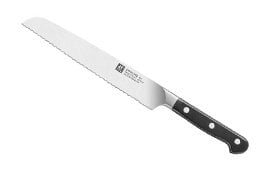
Bread Knives
Crusty loaves and soft bread
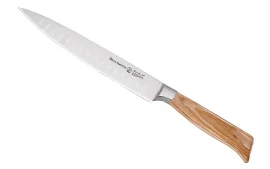
Carving and Slicing
Roasts, ham, and brisket
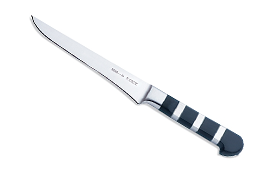
Boning Knives
Removing meat from the bone
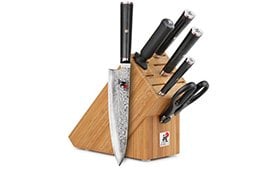
Knife Sets
Outfitting a kitchen or giving a gift
Shop All Shapes
Fillet, nakiri, yanagi, cleavers, steak, oyster, and every other shape we carry
European Makers
Professional and Commercial
Not sure where to start?
What will you cut most often?
What is your budget per knife?
Which edge style do you want?
All Knives
-

Kikuichi Kasumi Series 9.4-inch (240mm) Fuguhiki
A fuguhiki is a specialist slicer, and Kikuichi explains that it is used to achieve ultra-thin slices of fugu, with a much thinner blade than a yanagi. This 240mm Kasumi fuguhiki brings that thin, flexible-feeling blade to any fish served in translucent slices, such as fluke and sea bream, and to thin carpaccio of scallop.It follows the Kasumi construction, pairing a White #2 carbon edge with a softer carbon steel back, and has a traditional single bevel. The thinner blade asks for a lighter hand and a careful sharpening routine than a yanagi does, so it suits sushi chefs and experienced home cooks who already own a yanagi and want a dedicated knife for usuzukuri, the paper-thin style of slicing. Keep it to boneless whitefish and away from chopping or hard foods.
Fuguhiki or Yanagi?For general sashimi and sushi work, the Kasumi 9.4-inch (240mm) Yanagi has a sturdier blade. Learn More$484.95 -
Global Classic 10-inch Yanagi Sashimi Knife
For sashimi and sushi at home, the G-11R is the traditional Japanese tool in a form that is easy to keep. Its 25 cm yanagi blade is ground on one side only, the way Japanese sashimi knives have long been made, and the back of the blade is slightly hollow so each slice of fish separates and falls away.A yanagi is used with a single long pull from heel to tip. The length lets that one stroke cut through a block of tuna or a salmon fillet, leaving a glossy face on the slice that a sawing motion would tear. The single bevel also steers the blade slightly away from the cut side, which helps slices peel off cleanly. Traditional yanagi are usually carbon steel and need oiling after each use; this one needs only washing and drying.The single-bevel edge is made for the right hand and must be sharpened on whetstones. Cooks new to Japanese sharpening should weigh that before buying.
Which Global Slicer?The Global Classic 12-inch Yanagi Sashimi Knife is the longer version for large loins and sushi counters. The Global Classic 10-inch Sujihiki is ground on both sides, works in either hand and sharpens like a Western knife. See our kitchen knife shapes guide for more on yanagi and sujihiki. Learn MoreRegular Price: $184.95
Special Price $147.96
-
Global Classic 12-inch Yanagi Sashimi Knife
At 30 cm, the G-14R is the length used behind sushi counters, where whole loins of tuna and full sides of salmon are portioned and sliced through service. The extra reach lets one long pull carry through a wide block of fish, so every slice has a single clean face.Like all yanagi, it is ground on one side, with a slightly hollow back that helps each slice release from the blade. The cook draws the knife from heel to tip without pressing down, letting the length do the work. That technique matters more here than with shorter slicers, and the long blade needs a large board and some practice to control.This knife is right-handed and is sharpened on whetstones only. For a kitchen that slices raw fish every day, it also saves the oiling a carbon steel yanagi requires.
12-inch or 10-inch?For home sushi and smaller fillets, the Global Classic 10-inch Yanagi Sashimi Knife is easier to handle. If you want a long slicer that works in either hand and sharpens like a Western knife, choose the Global Classic 10-inch Sujihiki. The Knife Merchant guide to knife shapes covers single-bevel Japanese knives. Learn MoreRegular Price: $229.95
Special Price $183.96
-
Global Classic 10-inch Sujihiki
A sujihiki is the Japanese answer to the Western slicer: a long, narrow blade ground on both sides, made to slice fish and boneless meat in a single drawing stroke. The G-47 brings that shape to the Global Classic line with a 25 cm blade.The length lets the knife draw through a block of tuna, a salmon fillet or a beef tenderloin in one motion, which leaves a smooth, clean face on each slice. The narrow blade has little surface for food to drag against. It carves boneless roasts for the table and slices terrines neatly.Because the edge is ground on both sides, the G-47 works equally well in the right or left hand and can be sharpened like any other double-bevel knife, which makes it the practical choice for a cook who wants a sashimi-length slicer without the upkeep of a single-bevel yanagi.
Sujihiki or Yanagi?The Global Classic 10-inch Yanagi Sashimi Knife is single-bevel and right-handed. It produces a finer cut on raw fish but takes whetstone skill to maintain. Choose the G-47 for versatility and easier care. Global lists the blade at 25 cm, which retailers often round to 10 inches; it measures 9.8 inches. Our guide to sujihiki, yanagi and other knife shapes explains the differences. Learn MoreRegular Price: $179.95
Special Price $143.96
-
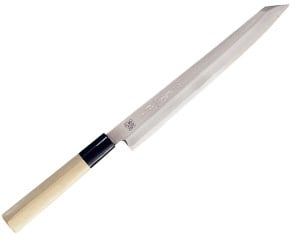
Kikuichi Kokaji White Carbon 9.4-inch (240mm) Kiritsuke Yanagi
Kikuichi’s Kokaji knives are completely hand forged by the Kokaji-kai knife makers in Sakai, and this 9.4-inch (240mm) yanagi gives the classic sashimi knife an angled kiritsuke tip. Kikuichi points to the line’s geometry, edge retention and eye-catching kiritsuke tip, and each blade is hand engraved with the Kikuichi chrysanthemum.The single-bevel White #2 carbon edge at 61 to 62 HRC slices raw fish in one smooth pull, and the angled tip is useful for fine scoring and detailed garnish work. This is a knife for an experienced sushi cook or a collector who wants a hand-forged Sakai blade made in the traditional way, and it ships with a saya. Like any traditional carbon knife, it should be dried and oiled after use and sharpened on whetstones.
From the Same MakersThe Kokaji White Carbon 8.25-inch (210mm) Kiritsuke Gyuto brings the same steel and tip to a double-bevel chef’s knife. Learn More$440.00 -
Minonokuni Matsu 6.5-inch (165mm) Deba
A 165mm deba is sized for the whole fish a cook brings home from the market, such as sea bream, mackerel and small salmon. The Matsu version pairs that size with blue steel, so the edge stays keen through a full morning of breaking down fish before it needs the stone.
Work on the FrameThe heel and the thick spine take the heavy cuts through the head and collar. The forward third does the fine work, tracing the backbone for a clean three-piece fillet and lifting the belly away from the ribs. Kept to fish and poultry, the blade handles small bones well, but it is not a cleaver for frozen product or the heavy leg bones of beef.Blue steel is the hardest steel in the Minonokuni range and the most delicate, and a single-bevel edge is very thin by nature. Our advice is to choose Matsu after some experience with chisel-ground knives. A cook still learning that grind will be better served by the Take 165mm deba in white steel, which is less brittle, or the Ume 165mm deba, the most forgiving of the three.
165mm or 180mm?Choose this size for small and medium fish and for jointing chickens. For salmon and heavier heads, the Matsu 180mm deba carries more weight behind the heel. Our guide to kitchen knife shapes explains where the deba fits among the other Japanese knives. Learn MoreRegular Price: $330.00
Special Price $260.00
-

Minonokuni Matsu 7.1-inch (180mm) Deba
Salmon, large sea bass and big snapper call for more blade than a small deba can give. The Matsu 180mm deba adds length and weight behind the heel, so the knife does more of the work when a head must be split or a thick collar cut through.The hard blue steel edge holds up through a long run of fish. It comes with a caveat, though. Blue steel is the most delicate of the steels in the Minonokuni line, so the edge rewards a cook who already knows how a single-bevel blade tracks along a backbone. Twist the blade in a bone joint and the thin edge can chip. For a cook still building that feel, the Take 180mm deba is the better choice, and it is less brittle.
Choosing the SizePick the 180mm for larger fish, or for a kitchen that breaks down a mix of fish and whole poultry daily. The Matsu 165mm deba is quicker in the hand on mackerel and smaller bream. Both are right-handed. The kitchen knife shapes guide shows the deba alongside the yanagiba and usuba it is used with.Each Matsu knife is forged and finished by hand, so the blade carries hammer marks and small variations in the kasumi finish. Those marks are part of how the knife was made, and they do not affect the edge. Learn More -

Minonokuni Matsu 8.3-inch (210mm) Yanagiba
The 210mm yanagiba is the length for a home kitchen or a small sushi station, where a longer slicer would overhang the board. It is long enough to cut a block of tuna or salmon for sashimi in a single pull, which leaves a clean, glossy face on each slice.Matsu is the top of the three standard Minonokuni lines, forged from blue steel. That steel holds a fine edge longer than white steel, and it is also harder and less forgiving of a twist or a knock against a plate. A sushi cook who already sharpens single-bevel knives will get the most from it.
How It CutsStart the slice at the heel and draw the knife toward you, letting the full length pass through the fish. A sawing motion tears the flesh, and pressing down crushes it. The flat back keeps each slice from sticking to the blade, and the single bevel steers the cut slightly away from the fish so the slice falls cleanly.
Other Lengths and LinesFor a longer stroke on larger blocks, see the Matsu 240mm yanagiba, the standard length at a sushi counter. Left-handed cooks need the Matsu 210mm left-handed yanagiba. To learn the technique on softer steel first, the Take 210mm yanagiba is the sensible step. Our knife shapes guide compares the yanagiba with the sujihiki and other slicers. Learn More$295.00 -

Minonokuni Matsu 8.3-inch (210mm) Left-Handed Yanagiba
Left-handed sushi cooks cannot simply use a right-handed yanagiba. The single bevel and hollow back are reversed on this knife, so the edge steers the slice away from the fish when it is held in the left hand. A right-handed blade used left-handed pulls into the fish and leaves a ragged, wedge-shaped slice.This Matsu 210mm is a true mirror of the right-handed Matsu 210mm yanagiba, forged in the same blue steel. We stock it rather than make it to order, so it ships like any other knife in the line.
Is the Matsu the Right Line?Blue steel takes a very fine edge and keeps it longer than the white steel in the Take line. The trade-off is a harder, more brittle edge that is less forgiving of careless sharpening or a twist in the cut. If this is a first single-bevel knife, consider the Take 210mm left-handed yanagi or the Ume 210mm left-handed yanagi, which are easier to learn on and to sharpen.At 210mm, the blade suits a home cutting board and slices fillets of salmon, tuna and yellowtail in one long pull. The Matsu 240mm left-handed yanagiba gives a longer stroke for larger blocks. Read more about the yanagiba in our guide to knife shapes. Learn More$420.00 -

Minonokuni Matsu 9.4-inch (240mm) Yanagiba
The 240mm yanagiba is the standard length at a sushi counter. It completes a slice of tuna or yellowtail in one draw without making the knife hard to handle on a standard board, and it gives enough room for hira-zukuri and the thin, angled sogi-zukuri cuts used for white fish.The Matsu blade is hand-forged from blue steel. Of the three standard Minonokuni lines, it holds an edge the longest, and it is also the most delicate, so it suits a cook who already has a feel for single-bevel knives.
Fitting the Length to the KitchenFor home use and smaller boards, the Matsu 210mm yanagiba is easier to manage. For whole loins and wide blocks of salmon, the Matsu 270mm adds reach. Left-handed cooks will want the Matsu 240mm left-handed yanagiba.Cooks who want the same length in a steel that is less brittle can look at the Take 240mm yanagiba. The knife shapes guide covers how the yanagiba differs from a Western slicer. Learn More$320.00


