
You have no items in your shopping cart.
Knives
How would you like to shop?
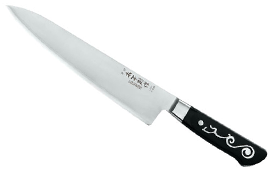
Chef's Knives
Chopping, slicing, and mincing
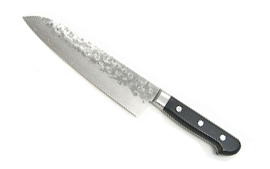
Santoku Knives
Japanese all-purpose blade
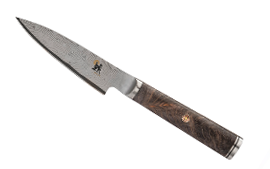
Paring Knives
Peeling and detail work
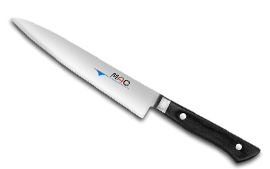
Utility Knives
Sandwiches and small produce
Bread Knives
Crusty loaves and soft bread
Carving and Slicing
Roasts, ham, and brisket
Boning Knives
Removing meat from the bone
Knife Sets
Outfitting a kitchen or giving a gift
Shop All Shapes
Fillet, nakiri, yanagi, cleavers, steak, oyster, and every other shape we carry
European Makers
Professional and Commercial
Not sure where to start?
What will you cut most often?
What is your budget per knife?
Which edge style do you want?
All Knives
-

Minonokuni Ume 5.9-inch (150mm) Deba
For a cook who has never owned a deba, the Ume 150mm is where we suggest starting. The size suits trout, mackerel and other fish that fit on a home cutting board, and the Ume line is the most forgiving of the three standard Minonokuni lines.The deba is a single-bevel knife with a thick, heavy spine. The heel cuts through heads and collars, and the thinner forward edge glides along the backbone to lift each fillet. Learning that motion takes a few fish, and a forgiving edge makes the learning easier.
Built for LearningUme uses a softer carbon steel than Take or Matsu. It is less likely to chip when a cut goes wrong, and it is the best of the three lines for learning to sharpen a single bevel. A Minonokuni 1000 grit waterstone is the stone to begin with. As skills grow, the Take 150mm deba in white steel is the natural next knife.For bigger fish and poultry, see the Ume 165mm deba. Our kitchen knife shapes guide shows how the deba is used alongside the yanagiba and usuba. Learn More -

Minonokuni Take 5.9-inch (150mm) Left-Handed Deba
A deba ground for the left hand puts the bevel on the left face of the blade, so the edge follows the backbone when a left-handed cook fillets a fish. This Take 150mm deba is that mirror image, and we keep it in stock.The size suits trout, mackerel, small bream and similar fish, and it handles poultry jointing as well. Start at the head with the heavy heel, then work along the frame with the tip. A right-handed deba used in the left hand fights the cook on every pass and leaves meat on the bone, which is why the grind matters more on this knife than on a double-bevel blade.
Choosing TakeThe Take line is our recommendation for a cook who is new to single-bevel knives. Its white steel is ready for professional use, yet it is less brittle than blue steel and will tolerate the occasional misjudged cut while technique develops. A Ume 165mm left-handed deba is the more forgiving option for a cook who expects to spend time learning to sharpen.For larger fish, the Take 165mm left-handed deba and Take 180mm left-handed deba add length and weight. The right-handed version is the Take 150mm deba. The knife shapes guide has more on the deba. Learn More$260.00 -

Minonokuni Take 5.9-inch (150mm) Deba
A 150mm deba covers most fish a home cook will bring home whole, from trout and mackerel to a small snapper, and it is small enough for a standard home cutting board. The Take version is a sound first deba for a cook who wants to learn traditional fish butchery.The thick, heavy blade does the forceful work. Cut through the head and collar with the heel, then switch to the tip to follow the backbone and separate the fillets cleanly from the bone. The single bevel helps the edge ride flat along the frame, so less flesh is left behind.
A Steel That Tolerates LearningWe describe Take as the sweet spot of the Minonokuni range. Its white steel holds a fine edge well enough for professional kitchens, and it is less brittle than the blue steel used in the Matsu deba. That margin matters while a cook is learning how hard to lean on the heel.Other SizesSmaller fish are quicker work with the Take 135mm ko-deba. The Take 165mm deba adds weight for larger fish and for poultry. Left-handed cooks can order the Take 150mm left-handed deba, which we keep in stock. Read about the deba and its uses in our guide to kitchen knife shapes. Learn More$190.00 -

Minonokuni Take 5.3-inch (135mm) Ko-Deba
Ko-deba means small deba. At 135mm, this Take knife is built for fish that a full-size deba would overpower. Horse mackerel, sardines, smelt and small trout are its work. On fish this size, the work is mostly filleting rather than cleaving.The blade tapers from a thick spine near the handle to a fine tip. That taper lets the cook open a small fish along the belly, run the tip down each side of the backbone and lift the fillets with very little flesh left on the frame. It is a light knife, so we do not recommend it for splitting heads or cutting through heavy collars. For that work, use the Take 150mm deba or a larger size.
Why TakeTake sits in the middle of the three standard Minonokuni lines. Its white steel is adequate for professional use but less brittle than the blue steel of the Matsu line, which makes it a sound choice for a cook who is not yet an expert with single-bevel knives. The knife shapes guide shows how the deba compares with Western fillet knives.A cook who processes small fish for a restaurant, or an angler who cleans a cooler of panfish at home, will find the ko-deba quicker to handle than any larger size. Learn More$180.00 -

Minonokuni Aogami Damascus 5.9-inch (150mm) Petty Knife
A petty knife is the Japanese utility knife, a small companion to a gyuto for work that a large blade makes awkward. This 150mm Aogami Damascus petty peels and trims fruit, minces herbs and slices charcuterie with precision.Its narrow blade gets into tight spaces, such as hulling strawberries, removing the silver skin from a tenderloin or cleaning up a fish fillet. Held in the hand, it handles peeling an apple or shaping a turned vegetable.
Pairing the PettyThe Aogami Damascus petty belongs to our specialty Sakura series. It pairs naturally with the Aogami Damascus 210mm gyuto or 240mm gyuto for a matched set. The Homura 150mm petty is the alternative with a stainless jacket that needs less care.Blue steel is hard and holds a keen edge, but the fine tip is delicate. Avoid prying and keep it off frozen food. The kitchen knife shapes guide covers utility and paring knives. Learn More -

Minonokuni Sakura Damascus 5.9-inch (150mm) Deba
The Sakura Damascus deba is a hand-forged, water-quenched craftsman’s piece for breaking down whole fish and splitting lobster. At 150mm, it suits small and medium fish. Its rippled Damascus jacket makes it a knife people notice on the board.Use the heel for heads and lobster shells, and the forward edge to follow the backbone for clean fillets. The single bevel keeps the edge close to the bone. As with any deba, avoid twisting the blade in a joint or using it on frozen food.
A Specialty KnifeSakura is one of our specialty lines. It is technically more premium than our standard lines, but not necessarily right for every user. The blade is blue steel, which holds an edge a long time but is delicate, and its single-bevel edge is very thin by nature. A cook new to the deba will be better served by the Take 150mm deba or the Ume 150mm deba.Search results for “Sakura knives” also turn up an unrelated company. This knife is made by Minonokuni and sold by Knife Merchant. For more on the deba, see our guide to kitchen knife shapes. Learn More -

Minonokuni Homura 5.9-inch (150mm) Petty Knife
The Homura 150mm petty is a small utility knife for the jobs a gyuto is too large for. It trims boneless meat, peels fruit and handles garnish work, and it fits comfortably in the hand for peeling off the board.Like the rest of the Homura line, it has a blue steel edge inside a stainless jacket, so only the very edge needs the care of carbon steel. That makes it a practical first carbon-edged knife for a cook who wants to see how blue steel behaves before buying a larger one.
Matching It to a Larger KnifeThe petty pairs naturally with the Homura 210mm gyuto or the Homura 170mm santoku. For a petty with a Damascus finish, see the Aogami Damascus 150mm petty, which has an iron jacket and needs more attention to stay free of rust.The fine tip is the most delicate part of a blue steel blade. Keep it off bones and frozen food, and do not use the tip to pry. The kitchen knife shapes guide covers utility knives. Learn More

