
You have no items in your shopping cart.
Knives
How would you like to shop?
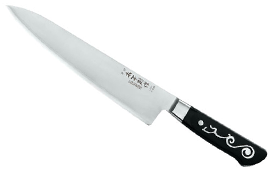
Chef's Knives
Chopping, slicing, and mincing
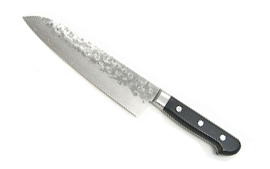
Santoku Knives
Japanese all-purpose blade
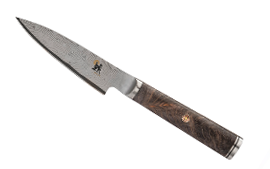
Paring Knives
Peeling and detail work
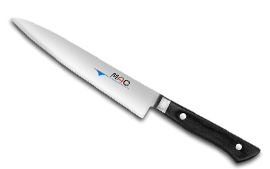
Utility Knives
Sandwiches and small produce
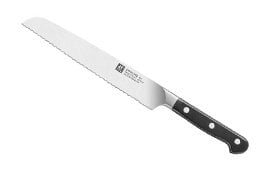
Bread Knives
Crusty loaves and soft bread
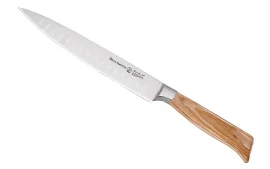
Carving and Slicing
Roasts, ham, and brisket
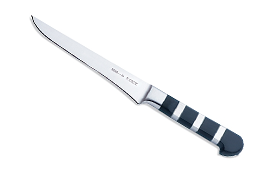
Boning Knives
Removing meat from the bone
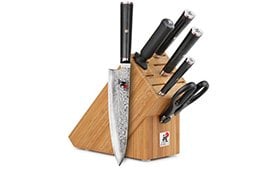
Knife Sets
Outfitting a kitchen or giving a gift
Shop All Shapes
Fillet, nakiri, yanagi, cleavers, steak, oyster, and every other shape we carry
European Makers
Professional and Commercial
Not sure where to start?
What will you cut most often?
What is your budget per knife?
Which edge style do you want?
All Knives
-

Kyocera Innovation Black 7-inch Ceramic Chef's Knife
The 7-inch chef’s knife is the longest Innovation Black knife we carry and the one to reach for when the board is full. Its length covers a whole head of romaine or a row of carrots in one stroke, and the pointed tip handles the fine mincing of garlic and herbs. Kyocera describes it as the most commonly used knife shape in professional and home kitchens.On produce, ceramic has real advantages. It does not react with acids or rust, and Kyocera rates the edge at double the working life of its earlier ceramic. Bones, frozen blocks and prying will chip the edge, so pair it with a steel knife for those jobs.Our answer, when someone asks how a ceramic chef’s knife gets sharpened, is diamond. The Kyocera RSD-01 diamond sharpener restores the edge at home. EVERSHARP, the repair service Kyocera authorizes, takes care of heavy wear and chips; Kyocera’s sharpening service page has the form.
Choosing a Larger Innovation Black KnifeThe 6-inch Chef’s Santoku has a flat edge for push cutting and is a little shorter. This chef’s knife leads the Innovation Black 4-Piece Set, and the Innovation White 7-inch Chef’s Knife is the white-blade version. Learn More -

Kikuichi Kasumi Series 9.4-inch (240mm) Yanagi
Kikuichi calls the yanagi the quintessential sashimi knife, and the 9.4-inch (240mm) Kasumi yanagi is the length sushi cooks reach for at the counter. Its long, narrow single-bevel blade slices raw fish in one pulling stroke, which leaves a clean, glossy surface with no torn fibers.Kasumi is Kikuichi’s most popular traditional series, by its own account, and Kikuichi calls a Kasumi yanagi a knife fit for a true professional. Kikuichi hand forges the blade from two pieces of steel, a hard White #2 carbon edge backed by a softer carbon steel jacket, following traditional sword-making technique, which makes the edge keen and the blade forgiving to sharpen. Because it is single bevel, the yanagi rewards a cook who learns traditional sharpening, and it is a natural step for a home cook who already makes sushi and sashimi.
Choosing a Kasumi YanagiThe Kasumi 8.25-inch (210mm) Yanagi suits a home cutting board, and the Kasumi 9.4-inch (240mm) Fuguhiki is thinner for paper-thin slices. Learn More$440.00 -

Kikuichi Kasumi Series 8.25-inch (210mm) Yanagi
The 8.25-inch (210mm) yanagi is the shortest in Kikuichi’s Kasumi range and the most practical for a home kitchen, where a long sashimi knife can overhang a standard cutting board. Kikuichi supplies this size with a saya to protect the edge.The single-bevel blade is hand forged in Kikuichi’s Kasumi construction, a hard White #2 carbon edge joined to a softer carbon steel back. That pairing gives a fine, keen edge for slicing salmon, tuna and yellowtail, and the softer back makes sharpening on whetstones more forgiving. It is a good first traditional knife for a home cook learning to make sashimi and nigiri, and the shorter length is easier to control as that skill develops.
210mm or 240mm?The Kasumi 9.4-inch (240mm) Yanagi gives the longer single stroke professional sushi cooks prefer. For a slicer with a double-bevel edge, see the GC Series Carbon Steel 9.4-inch (240mm) Sujihiki. Learn More$385.00 -

Kikuichi WTC Warikomi Tsuchime Carbon 7.1-inch (180mm) Gyuto, Limited Edition
Kikuichi made the WTC gyuto as a limited edition, a 7.1-inch (180mm) chef’s knife for everyday prep such as cutting onions and dicing vegetables. It has a White #2 carbon core clad in stainless steel, and a hand-hammered tsuchime surface on the three-layer blade.White #2 is a high-purity carbon steel that takes an exceptionally fine edge and responds quickly to ceramic honing rods and fine waterstones. The construction gives a carbon steel edge at 63 HRC, the hardest in Kikuichi’s carbon knives we carry, with stainless outer layers that make the blade easier to keep than a fully carbon knife. Only the exposed edge will patina and needs drying after use. The octagonal oak wa handle keeps the knife light and balanced toward the blade, and the 180mm length is easy to steer on a small cutting board. It is nimble enough for detailed prep and a tight line station, with enough belly for rocking cuts through herbs and aromatics, and it handles vegetables, fruit and boneless proteins with equal precision. It is a good fit for a cook who wants carbon sharpness with less upkeep.
Other 180mm GyutosCompare the GC Series Carbon Steel 7.1-inch (180mm) Gyuto, a Western-handled carbon knife, with the fully stainless GM Series Molybdenum 7.1-inch (180mm) Gyuto. Learn More$320.00 -

Kikuichi WG Series Elite Warikomi Gold 9.4-inch (240mm) Sujihiki
Shoppers search for this knife by its model number, WGS24, and it is the middle size of Kikuichi’s Elite Warikomi Gold sujihikis. At 9.4 inches (240mm), it carves a beef tenderloin or a whole side of fish in a single draw, the length many professional carving stations settle on.Kikuichi builds the series with a VG1 stainless edge clad in softer steel, a warikomi construction that keeps the cutting edge hard and the blade body tough. The narrow slicer profile leaves clean faces on roasts and sashimi, and the Western-style handle gives a secure grip for cooks used to European carving knives. Its 240mm length is long enough for holiday roasts and short enough to steer through a fish loin without overhanging the board. The knife carries on a legacy that began with the swords Kikuichi forged for the Emperor.
Sujihiki Sizes in the WG SeriesFor a more compact slicer, see the 8.25-inch (210mm) Sujihiki. The 10.6-inch (270mm) Sujihiki adds reach for large roasts. Learn More$274.95 -

Kikuichi WG Series Elite Warikomi Gold 8.25-inch (210mm) Sujihiki
An 8.25-inch (210mm) sujihiki is a compact slicer, and Kikuichi’s Elite Warikomi Gold version is the most manageable size for a home kitchen. It slices a pork tenderloin or a salmon fillet in long, clean pulls, and it stores in a standard knife block slot.The blade is a warikomi construction, a VG1 stainless core held between layers of softer steel, which pairs a keen edge with a tough, easy-care body. The slim slicer profile creates less drag than a chef’s knife and leaves a smooth, glossy face on sliced meat and fish. It is a sensible first sujihiki for anyone who carves at home. The Western handle makes the shape approachable for cooks who are new to Japanese slicers, and Kikuichi notes the whole series is light and comfortable in the hand.
Choosing a Sujihiki LengthThe Elite Warikomi Gold 9.4-inch (240mm) Sujihiki handles larger roasts, and the 10.6-inch (270mm) Sujihiki is the long professional size. Learn More$244.95 -
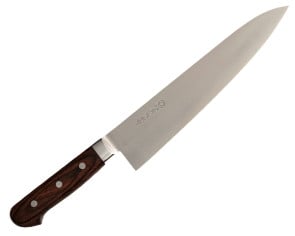
Kikuichi WG Series Elite Warikomi Gold 9.4-inch (240mm) Gyuto
Kikuichi calls its Elite Warikomi Gold one of its longest-standing Western-style lines, and its 9.4-inch (240mm) gyuto is the professional length of the series. Warikomi means the hard cutting steel is sandwiched inside softer steel, so the VG1 edge can be hardened for sharpness and the outer layers keep the blade tough and simple to look after.Its length speeds work on large batches of vegetables and carves a roast without sawing, and the Western handle feels familiar to anyone moving from a German chef’s knife. Kikuichi describes the series as light and comfortable, which matters on a 240mm knife used through a long prep list. It suits professional cooks and home cooks who already handle a long gyuto confidently and want a stainless blade that needs no special drying routine.
Choosing Among Kikuichi’s Premium LinesFor a hammered damascus blade with the same handle, see the WDT Series 9.4-inch (240mm) Gyuto. The table below compares every premium Kikuichi line we carry. Learn More$309.95 -

Kikuichi WDT Series Warikomi Damascus Tsuchime 9.4-inch (240mm) Sujihiki
Slicing roasts and fish is the job of a sujihiki, and the WDT24S gives that job a 9.4-inch (240mm) blade of hammered damascus over a VG10 core. Shoppers search for it as the Kikuichi WDT Series Warikomi Damascus Tsuchime sujihiki.A sujihiki is narrower than a gyuto, so it meets less resistance in the cut and leaves a smooth face on brisket and sashimi. Kikuichi notes that the tsuchime finish helps release food, which keeps thin slices of fish or cured meat from clinging as they come off the blade. With a Western mahogany-dyed birch handle, it suits cooks who want a Japanese slicer without changing their grip, whether at a carving station or at home for the holidays.
Pairing With a GyutoIts damascus pattern matches the WDT 9.4-inch (240mm) Gyuto, and a Kikuichi 240mm Sujihiki Magnet Saya keeps the edge covered in a drawer or knife bag. Learn More$374.95 -

Kikuichi WDT Series Warikomi Damascus Tsuchime 9.4-inch (240mm) Gyuto
The 9.4-inch (240mm) WDT gyuto is the long chef’s knife of Kikuichi’s Warikomi Damascus Tsuchime series, built for cooks who prep in volume. The extra length covers a full board, so a case of peppers or a stack of cabbage goes faster, and the blade slices roasts in a single stroke.A VG10 core sits inside 17 layers of damascus steel, and the hand-hammered tsuchime surface leaves small pockets that, per Kikuichi, help release food from the blade. On a long knife that means fewer pauses to scrape slices off the side. The Western birch handle gives a secure, familiar grip, which makes this a natural step up for a cook who already uses a 10-inch German chef’s knife. Hone it lightly each day.
240mm Gyuto OptionsFor a lighter knife with a Japanese handle, see the NWD 9.4-inch (240mm) Gyuto. For a shorter WDT blade, choose the WDT 8.25-inch (210mm) Gyuto. Learn More -

Kikuichi WDT Series Warikomi Damascus Tsuchime 8.25-inch (210mm) Gyuto
Kikuichi describes its Warikomi Damascus Tsuchime series as popular with people who want a Western handle and a Japanese blade, and the 8.25-inch (210mm) gyuto is the all-purpose knife of the line. Its 17-layer damascus blade is hammered with a tsuchime finish over a VG10 cutting core, and Kikuichi notes the hammered surface helps release food from the blade.That release is useful with starchy and wet foods, such as potato slices and cucumber rounds that would otherwise cling to the steel. The 210mm length is close to a standard Western chef’s knife, so it is an easy choice for a home cook moving to Japanese cutlery. The mahogany-dyed birch handle gives a warm, familiar grip, and the blade is stainless, so care is a quick wash and dry. Each knife is hand-engraved with Kikuichi’s signature chrysanthemum logo.
Choosing a WDT KnifeThe WDT 9.4-inch (240mm) Gyuto adds reach, and the WDT 7.1-inch (180mm) Santoku suits push cuts on a smaller board. Learn More$354.95

