
You have no items in your shopping cart.
Knives
How would you like to shop?
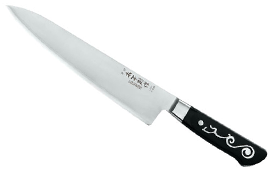
Chef's Knives
Chopping, slicing, and mincing
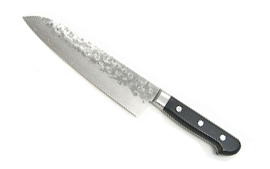
Santoku Knives
Japanese all-purpose blade
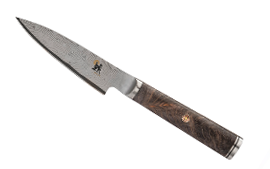
Paring Knives
Peeling and detail work
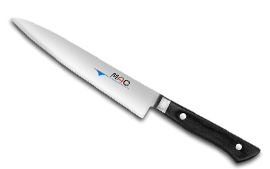
Utility Knives
Sandwiches and small produce
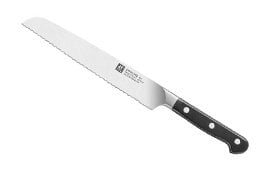
Bread Knives
Crusty loaves and soft bread
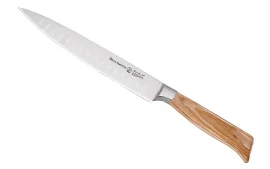
Carving and Slicing
Roasts, ham, and brisket
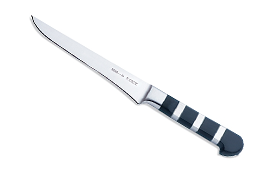
Boning Knives
Removing meat from the bone
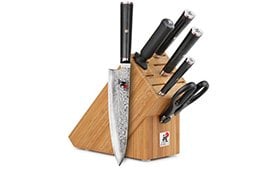
Knife Sets
Outfitting a kitchen or giving a gift
Shop All Shapes
Fillet, nakiri, yanagi, cleavers, steak, oyster, and every other shape we carry
European Makers
Professional and Commercial
Not sure where to start?
What will you cut most often?
What is your budget per knife?
Which edge style do you want?
All Knives
-

Kyocera Innovation White 6-inch Ceramic Nakiri, Black Handle
A nakiri is a vegetable knife with a straight edge and a tall, squared blade. The straight edge touches the board along its whole length, so a chop through a bunch of kale or a pile of herbs cuts through completely without leaving pieces joined at the bottom. Kyocera’s 6-inch Innovation White nakiri adds a ceramic blade to that shape.Kyocera also points out that the wide blade works as a scoop for carrying chopped food from the board to a sauté pan. It suits boneless proteins as well as produce. Bone-in cuts and anything frozen should go to a steel knife, since ceramic chips under force.Knife Merchant holds authorized Kyocera dealer status, which customers raise before they order. It matters because Kyocera’s limited warranty covers only knives bought from authorized resellers.
Nakiri or Santoku?The Innovation White 5.5-inch Santoku has a pointed tip for finer work and a shorter blade. The nakiri is the better choice for chopping large amounts of vegetables. For a curved edge that rocks, see the Innovation White 7-inch Chef’s Knife. Learn More$95.00 -

Kyocera Innovation White 5.5-inch Ceramic Santoku, Red Handle
Thin strips of flank steak for a stir-fry and even slices of chicken breast for cutlets both depend on a sharp, straight blade. This red-handled Innovation White santoku brings a 5.5-inch ceramic edge to boneless meat, and the red handle follows the widely used color code for raw meat knives.Kyocera warns against cutting frozen food with ceramic, so let meat thaw completely first. The blade cannot rust, and Kyocera credits this generation of its ceramic with doubling the time between sharpenings. Bones, cartilage and prying all belong to a steel knife.Customers ask how we sharpen these. Only diamond will cut the ceramic, so use the RSD-01 Diamond Wheel Sharpener for routine touch-ups and send chips or heavy wear to EVERSHARP, Kyocera’s approved service (see Kyocera’s sharpening service page).
Red-Handled Innovation White KnivesTrimming and cubing go to the red paring and utility knives. Away from raw meat, the black and blue santoku cover produce and seafood. Learn More$75.00 -

Kyocera Innovation White 5.5-inch Ceramic Santoku, Blue Handle
Portioning a skinless salmon fillet or slicing tuna for a poke bowl calls for a blade that cuts in one smooth pass. A 5.5-inch ceramic santoku handles boneless fish well, and its blue handle matches the color many kitchens assign to seafood knives so it stays out of the vegetable work.The ceramic blade will not rust from brine or react with citrus marinades. Kyocera’s paper-cutting tests found its Innovation ceramic dulling half as fast as the brand’s earlier blades. The edge is hard and brittle, so pin bones, shells and frozen fish should go to a steel knife.Knife Merchant is an authorized Kyocera dealer, and shoppers want that confirmed before buying. That status keeps the knife under Kyocera’s limited warranty, which does not extend to unauthorized sellers.
Pairing a Blue SantokuFor smaller seafood jobs, the blue paring knife and utility knife complete the color group. For vegetables or raw meat, choose the black or red santoku. Learn More$75.00 -

Kyocera Innovation White 5.5-inch Ceramic Santoku, Black Handle
Push cutting is the santoku’s specialty. The flat edge meets the board along its length, so each stroke goes down and forward through an onion or a stack of zucchini rounds without rocking. At 5.5 inches, this Innovation White santoku is the compact version, sized for cutting boards and prep lists that do not call for a full chef’s knife.Kyocera lists slicing, dicing and mincing as its work on produce and boneless meat. The double-beveled ceramic edge cuts cleanly through produce and will not rust or react with acidic ingredients. Ceramic is brittle, though, so leave frozen food and bones to steel.How do you sharpen a ceramic santoku? Customers put that question to us, and the answer is diamond abrasive. The Kyocera Diamond Wheel Sharpener handles regular maintenance, and EVERSHARP, which Kyocera authorizes for service, grinds out chips and restores dull edges (details on Kyocera’s sharpening service page).
Santoku Sizes and ColorsFor a longer blade with a flat edge, see the Innovation White 6-inch Nakiri or the Innovation Black 6-inch Chef’s Santoku. This santoku also comes with a blue handle or a red handle, and the Innovation Black 5.5-inch Santoku has a black blade. Learn More$75.00 -

Kyocera Innovation White 5-inch Ceramic Tomato Knife, Black Handle
A ripe tomato has a slick skin over soft flesh, and a plain edge tends to slide across the skin and press the tomato flat before it cuts. This 5-inch Innovation White tomato knife has a micro-serrated ceramic edge that catches the skin on the first stroke, so slices come away clean. Kyocera also recommends it for other tough-skinned fruits and vegetables and for bread, which makes it a natural choice for plums, peppers and dinner rolls.Ceramic does not react with the acid in tomatoes or citrus, so the cut surfaces keep their color and taste. The handle, designed by Yohei Kuwano, tapers toward the blade and is shaped to stay put in a wet hand.Before ordering, customers check that we are authorized to sell Kyocera. Knife Merchant is an authorized reseller, and Kyocera’s limited warranty excludes knives from unauthorized sellers.
Serrated or Plain Edge?For thin slices of cooked meat or fish, a plain edge such as the Innovation Black 5-inch Slicing Knife leaves a smoother face. For general prep, the Innovation White 4.5-inch Utility Knife is the plain-edge option in this line. Learn More$60.00 -

Kyocera Innovation White 4.5-inch Ceramic Utility Knife, Red Handle
Cubing chicken breast for skewers or trimming a pork tenderloin goes faster with a knife long enough to slice through in one stroke. A 4.5-inch ceramic blade fits those jobs, and the red handle follows the common kitchen convention of marking the knife used for raw meat.The ceramic blade slices boneless meat cleanly and cannot rust from the moisture of raw protein. Kyocera’s own figures show the Innovation ceramic holding its edge twice as long as earlier Kyocera blades. Bones and joints are another matter. Use a steel knife there, because ceramic chips if it strikes something hard.We hold authorized Kyocera dealer status, a point buyers raise with us before ordering ceramic. Kyocera’s limited warranty applies only to purchases from authorized resellers.
Red Handle Sizes and Other ColorsFor smaller trimming, the red-handled 3-inch Paring Knife is easier to steer. For slicing larger cuts thin, the red-handled 5.5-inch Santoku adds length. Other handle colors are black and blue. Learn More$50.00 -

Kyocera Innovation White 4.5-inch Ceramic Utility Knife, Blue Handle
Ceviche is a good test of a knife, because the fish is cut into small cubes and then soaked in lime juice. This blue-handled Innovation White utility knife has a 4.5-inch ceramic blade that slices raw fish cleanly and leaves no metallic taste in the cure.Blue handles conventionally mark the knives reserved for seafood in kitchens that color-code their tools, which makes this one easy to keep on task. Kyocera rates the zirconia and alumina blade at double the edge life of its older ceramic. Pin bones and frozen fillets are jobs for steel, since ceramic chips under that kind of stress.Sharpening is a question customers bring to us before they buy ceramic. The answer is diamond, either the Kyocera Diamond Wheel Sharpener at home or EVERSHARP, the shop Kyocera authorizes for repairs, for chips and heavy wear (Kyocera’s sharpening service page explains the process).
Building a Blue-Handled SetThe 3-inch Paring Knife and 5.5-inch Santoku share this handle color. Outside seafood work, the black-handled utility knife suits general prep, and the red-handled one is the raw meat choice. Learn More$50.00 -

Kyocera Innovation White 4.5-inch Ceramic Utility Knife, Black Handle
Kyocera recommends its 4.5-inch Innovation White utility knife for basic everyday cutting. It slices a sandwich, halves a lime and cuts an apple into wedges without the bulk of a larger knife.The straight blade is long enough to work on the board and short enough to handle in the air. Kyocera puts its weight at about half that of a comparable metal knife, and Yohei Kuwano’s handle tapers toward the blade with a rounded underside that holds steady in a wet hand. Citrus and tomatoes cannot discolor or corrode the ceramic.Is Knife Merchant an authorized Kyocera dealer? Customers ask, and the answer is yes, which keeps this knife eligible for Kyocera’s limited warranty, since Kyocera does not cover knives from unauthorized sellers.
Where the Utility Knife FitsThe Innovation White 3-inch Paring Knife is better for peeling, and the Innovation White 5.5-inch Santoku takes over for dicing vegetables. Shoppers who color-code can choose a blue or red handle, and the Innovation Black 4.5-inch Utility Knife pairs the length with a black blade. Learn More$50.00 -

MAC Chef Series 5-inch Prep Knife with Dimples
The TH-50 sits between a parer and a utility knife: a 5-inch Chef Series blade, taller than a parer, with dimples along the face. MAC lists it as a paring knife; its height and edge length make it a small prep knife for cooks who want a compact second knife beside their chef’s knife.The height gives room for the knuckles when chopping herbs or slicing shallots on the board, and the dimples help release slices of potato, cucumber and soft cheese. It is small enough to work in the hand for peeling and trimming, and long enough to halve a lemon or slice a tomato.For a narrower utility knife, compare the HB-55 or the PKF-50. Our Kitchen Knife Shapes guide describes the small knives in more detail. Learn More$62.95 -

Shun Premier 4-Piece Steak Knife Set
The Shun Premier 4-Piece Steak Knife Set is for hosts who want the knife on the table to match the steak on the plate. A razor-sharp fine edge glides through the meat and cuts fewer of its fibers, so more of the juices stay inside the steak rather than running onto the plate. Because the edge is not serrated, it slices cleanly instead of tearing, and it is easier to re-sharpen when the time comes. The 5-inch blades are long enough for the largest steak, yet short enough for close control. The hand-hammered tsuchime finish gives each knife the signature Shun Premier look and helps food release. The set of four suits a small dinner party and arrives in a box suitable for gift-giving or storage.
FeaturesFine, non-serrated edge: A clean edge slices rather than tears, so each cut stays neat and the meat stays juicy.Edge retention at the table: Ceramic and glass plates are extremely hard on knife edges, and VG-MAX steel holds its edge for a very long time even with repeated contact against a plate.VG-MAX cutting cores: Shun’s proprietary steel resists wear and corrosion and holds a fine, keen edge.Hammered tsuchime finish: The hand-hammered surface helps food release and gives the set its distinctive appearance.Contoured walnut PakkaWood handles: The handles offer comfort and control and resist moisture.Gift box: The presentation box makes the set ready to give and doubles as storage.Handcrafted in Seki City, Japan: Each Shun knife requires at least 100 individual steps to complete in Seki City, one of Japan’s most important blade-making centers since the 13th century.Free lifetime sharpening: Shun offers free lifetime sharpening for every knife in the set.
Tasks It Handles WellCutting steaks and chops at the tableCutting roast chicken, pork, and lambServing grilled and barbecued meats
Choosing a Shun Premier Table SetTo carve the roast before it reaches the table, pair this set with the Shun Premier 2-Piece Carving Set, whose slicing knife and fork share the same finish and handle. Learn More$499.95

