
You have no items in your shopping cart.
Knives
How would you like to shop?
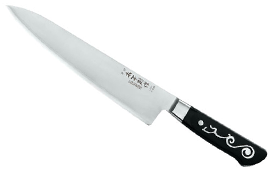
Chef's Knives
Chopping, slicing, and mincing
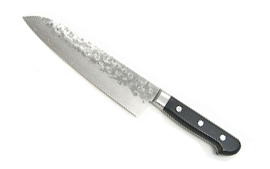
Santoku Knives
Japanese all-purpose blade
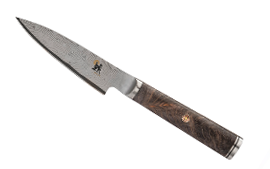
Paring Knives
Peeling and detail work
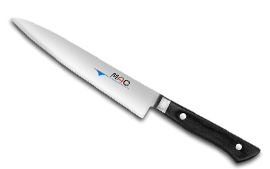
Utility Knives
Sandwiches and small produce
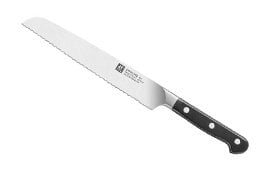
Bread Knives
Crusty loaves and soft bread
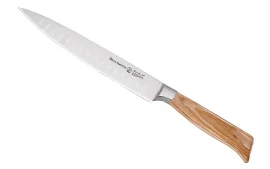
Carving and Slicing
Roasts, ham, and brisket
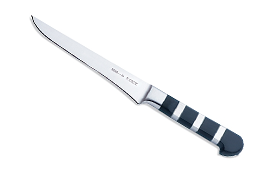
Boning Knives
Removing meat from the bone
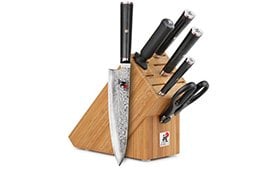
Knife Sets
Outfitting a kitchen or giving a gift
Shop All Shapes
Fillet, nakiri, yanagi, cleavers, steak, oyster, and every other shape we carry
European Makers
Professional and Commercial
Not sure where to start?
What will you cut most often?
What is your budget per knife?
Which edge style do you want?
All Knives
-

Kikuichi Carbon Elite 7-Piece Knife Block Set
Kikuichi Carbon Elite 7-Piece Knife Block Set The Kikuichi Carbon Elite 7-Piece Knife Block Set equips a kitchen with a complete range of carbon steel knives, from detail work to long slicing, along with the block to store them and the rod to maintain them. It suits experienced home cooks and professionals who want the sharpness and easy resharpening of carbon steel across every task, with matching handles and balance throughout. The Knives 120mm Parer: Peeling, trimming and detail work in the hand or on the board. 150mm Honesuki: A Japanese boning knife for breaking down poultry and separating meat at the joints. 180mm Santoku: A compact all-purpose knife for slicing, dicing and mincing vegetables, fish and boneless meat. 210mm Gyuto: The Japanese chef’s knife and the workhorse of the set, with a thin profile that moves through dense vegetables without wedging. 240mm Sujihiki: A long, narrow slicer for carving roasts and portioning fish in a single stroke. Why Carbon Elite Every knife in the set is made from SK-4 high-carbon steel, a single steel throughout rather than a clad blade. SK-4 takes a keen edge and is easy to restore on a waterstone, which makes the set a practical introduction to carbon steel for cooks who sharpen their own knives. The included Kikuichi 10.5-inch Ceramic Honing Rod realigns the edges between sharpenings, and the Kikuichi 6-Slot Knife Block keeps the edges protected, with one slot free for an additional knife such as the Carbon Elite 150mm Petty. Learn More -

Kikuichi GC Series Carbon Steel 5.9-inch (150mm) Honesuki
A honesuki is the Japanese knife for breaking down poultry. Its triangular blade and pointed tip slip into joints and around the thigh bone, separating meat cleanly. Kikuichi’s 5.9-inch (150mm) GC Series honesuki is a carbon steel version, and Kikuichi cautions that it should not be used to chop through bone, so cut through the joints instead.The tall heel gives knuckle clearance and room for a firm grip when working on a slippery bird. It suits butchers, restaurant cooks who break down whole birds and home cooks who buy whole chickens. Raw poultry is wet work, so wipe and dry the blade promptly to prevent rust, and hone it lightly between birds. It works equally well on duck and game birds.
Honesuki or Hankotsu?The 5.9-inch (150mm) Hankotsu is the GC Series boning knife for larger cuts of meat. For trimming after the breakdown, see the 5.9-inch (150mm) Petty. Learn More$154.95 -

Kikuichi GC Series Carbon Steel 5.9-inch (150mm) Hankotsu
Kikuichi calls the HC15 a hankotsu, a Japanese boning knife for separating meat from bone on larger cuts, and describes it as sharp, light and tough. Shoppers find it by its model number, and some retailers sell it as a sakabone.The 5.9-inch (150mm) blade has a pointed tip for working along bones and into joints, and Kikuichi calls it the right combination for small and large butchering. Kikuichi warns against chopping through bone with it, so it is a knife for cutting around bones and through joints. It suits butchers trimming primal cuts and restaurant cooks breaking down lamb and pork shoulders, and hunters use it on venison. The carbon steel sharpens easily, which helps on a knife that works against bone surfaces all day. Dry it promptly after use and hone it before each session.
Hankotsu or Honesuki?For poultry, the lighter, triangular 5.9-inch (150mm) Honesuki is the specialist. Learn More$154.95 -

Kikuichi GM Series Molybdenum Stainless Steel 5.9-inch (150mm) Petty
A 5.9-inch (150mm) petty sits between a paring knife and a gyuto, and Kikuichi’s GM15 is the version in its molybdenum stainless line. It slices a shallot or a lime, trims silver skin from a tenderloin and cuts sandwiches, the small jobs that make a full chef’s knife awkward.Kikuichi’s AUS10 stainless keeps maintenance to a wash and a dry, so this petty is a low-maintenance second knife beside a gyuto at home or on a professional station.
Petty Knife SizesFor finer paring, the GM Series 4.7-inch (120mm) Petty is easier to control in the hand. In carbon steel, see the GC Series 5.9-inch (150mm) Petty. Learn More$134.95 -

Kikuichi GM Series Molybdenum Stainless Steel 4.7-inch (120mm) Petty
At 4.7 inches (120mm), the GM12 handles the paring jobs of a kitchen, though Kikuichi classes it as a petty, the Japanese small utility knife. It peels apples, segments oranges, trims green beans and cores strawberries, and the AUS10 stainless blade only needs a wash and a towel afterward.The thin blade is precise enough for garnish work and for turning vegetables, and it slips easily into a knife roll.
120mm or 150mm Petty?The GM Series 5.9-inch (150mm) Petty adds length for slicing small proteins and working on the board. Learn More$124.95 -

Kikuichi GC Series Carbon Steel 5.9-inch (150mm) Petty
The 5.9-inch (150mm) petty is the utility knife of Kikuichi’s GC Series, sized between a paring knife and a gyuto. It handles the small jobs that a large knife makes awkward, such as slicing a single shallot, trimming silver skin or cutting a sandwich, and it pairs naturally with a gyuto on a professional station.The thin carbon blade holds a fine edge and is quick to touch up on a stone, and it will patina with use. A home cook building a Japanese knife kit can start with a gyuto and add this petty second.
Petty Knife SizesFor finer paring work, the 4.7-inch (120mm) Petty is easier to control in the hand. It pairs well with the 8.25-inch (210mm) Gyuto. Learn More$109.95 -

Kikuichi GC Series Carbon Steel 4.7-inch (120mm) Petty
Petty is the Japanese term for a small utility knife, and Kikuichi uses it for this 4.7-inch (120mm) GC Series knife, which at this length does the work of a paring knife too. A standard 3-inch parer runs short on reach and leverage, and the 120mm blade adds both without giving up agility. It peels and segments citrus, trims green beans, hulls strawberries and cleans up a chicken breast, and the slim carbon blade takes a very fine edge for that detail work.Wipe it dry after cutting fruit, since acid speeds the patina on carbon steel. It is a natural companion to a 210mm gyuto.
120mm or 150mm Petty?The 5.9-inch (150mm) Petty adds length for slicing small proteins and working on the board. Learn More$89.95

