
You have no items in your shopping cart.
Usuba / Nakiri
Usu(Thin)Ba(Knife)
Usuba is a traditional Japanese knife shape with a thick spine and pronounced shinogi line. Characterized by their rectangular shape and utter lack of camber Usuba knives are best used when preparing vegetables. The shape of the Usuba blade and the angle at which the handle is affixed to it allow for a significant degree of knuckle clearance which can be quite helpful when working with larger quantities. It is important to note that Usubas are typically one sided although this definition is not universally applicable and some manufacturers do create double-beveled knives that would indeed qualify as Usubas. The westernized version of an Usuba, which is typically double-beveled and also intended for use on vegetables, is known as a Nakiri. Although many believe the distinction between Usubas and Nakiris to be their one or two sidedness this is not wholly accurate. The key distinction between the two shapes is the thickness of the steel from which they are formed. Despite being named “thin knife” Usubas are thicker than their westernized counterpart the Nakiri.
-

Minonokuni Take 210mm Kama-Usuba
For the chef who moves beyond simple slicing into the realm of true culinary sculpture, the Minonokuni Take 210mm Kama-Usuba is the ultimate instrument. This is the Kansai-region evolution of the traditional Usuba, designed for a higher level of artistry. The defining feature is its kama, or sickle-shaped tip, which provides a delicate point for the most intricate tasks. This elegant curve allows for precise scoring, decorative carving (mukimono), and detailed peeling with the finesse of a paring knife, all without ever putting the main blade down. At the heart of this specialized tool is a blade of Aogami #2 (Blue Paper Steel), a steel celebrated by master chefs for its phenomenal sharpness and incredible edge retention. This premium material allows the long, flat portion of the 210mm blade to glide effortlessly through vegetables, creating whisper-thin sheets and perfect cuts with minimal cell damage. The generous length provides confident stability for board work, while the unique tip offers unparalleled agility. The Minonokuni Take Kama-Usuba is not just a knife; it is a declaration of skill and a tool for the uncompromising culinary artist. Learn More$245.00 -

Minonokuni Take 180mm Left-Handed Kama-Usuba
Designed to chop, slice and cut vegetables, the Minonokuni Take 180mm Left-Handed Kamagata Usuba is truly a work of art. Hand-forged in the methods originally developed for sword making, this is a traditional single sided Japanese knife. This model favors left handed users. At 180mm in length this blade is easy to maneuver and control. It offers enough length to be used when create thin vegetable sheets for sushi wrapping, but is small enough to quickly tap chop without fatigue. This is a White Steel Carbon Blade. It takes an extremely sharp edge, but is less delicate than Blue Steel alternatives that offer longer edge retention but are more brittle and require more aggressive abrasives when sharpening. This is an extremely functional knife for the working sushi chef. Learn More$265.00 -
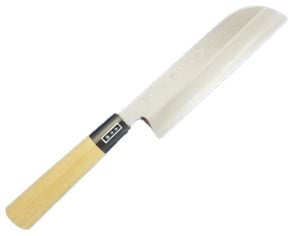
Minonokuni Take 180mm Kama-Usuba
The Minonokuni Take 180mm Kama-Usuba is a traditional single-bevel Japanese vegetable knife crafted for precision and control. Designed with a distinctive sickle-shaped tip, this knife excels at detailed vegetable work, fine cuts, and intricate garnishes, while also performing beautifully for katsuramuki and thin peeling tasks. Forged by skilled artisans, the Take series features high-carbon steel that sharpens to a razor edge, ensuring clean, consistent cuts that preserve texture and freshness. The natural wood handle provides a comfortable, balanced grip, making it an ideal choice for professional chefs and dedicated home cooks who value traditional Japanese technique and superior craftsmanship. Learn More -

Minonokuni Take 210mm Usuba
Master the art of vegetable preparation with the Minonokuni Take 210mm Usuba, a traditional Japanese blade designed for ultimate precision. As the essential tool for any chef serious about their craft, the Usuba excels where other knives cannot. The defining feature is its traditional single-bevel grind and razor-sharp edge, allowing for unparalleled control when creating paper-thin sheets (katsuramuki), delicate garnishes, and precise cuts. The flat profile and substantial 210mm length provide the stability and surface area needed to work through vegetables cleanly and efficiently, without cracking or bruising them. Learn More$245.00 -

Minonokuni Take 180mm Left-Handed Usuba
For the discerning left-handed chef who accepts no compromises, the Minonokuni Take 180mm Left-Handed Usuba represents the pinnacle of vegetable preparation. This is a tool forged for the artist, where superior materials and meticulous craftsmanship converge to create an unparalleled culinary experience. The heart of this Usuba is its blade, expertly crafted from Aogami #2 steel, or Blue Paper Steel—one of the most revered high-carbon steels in Japanese cutlery. This premium steel provides an exquisitely sharp, long-lasting edge that glides through produce with breathtaking ease, preserving the integrity and flavor of every ingredient. Engineered specifically for the left-handed user, this Usuba eliminates all compromise. The true single-bevel grind ensures perfect, clean cuts that track true, allowing you to perform the most demanding techniques, from creating paper-thin katsuramuki sheets to executing intricate decorative work, with flawless precision and intuitive control. As part of the "Take" (Bamboo) collection, this knife signifies a higher level of performance and refinement. It is not just a tool for cutting; it is a statement of dedication to the culinary craft. Learn More -

Minonokuni Take 180mm Usuba
The Také 180mm Usuba is a vegetable knife used for making extremely precise cuts with clean lines. Hand-forged by master blacksmiths from Kasumi Shiro-ko carbon steel this knife will take an extremely sharp edge, but is forgiving enough to be used in a chopping motion where the entire blade makes contact with the board.
Learn more about the Care and Maintenance of Carbon steel knives. Learn More$195.00 -

Minonokuni Gin-San 210mm Kama-Usuba
Minonokuni Gin-San 210mm Kama-Usuba Learn More -
Minonokuni Gin-San 180 mm Kama-Usuba
The Minonokuni Gin-San 180mm Kamagata Usuba is a traditionally hand-forged knife designed to cut vegetables either in hand or on the board. More versatile than the traditional square ended usuba, this knife has a pronounced tip that can be used to create precisely controlled or decorative cuts. Gin-san steel is a very unique material; it can be hammer forged using the ancient techniques of samurai swordmakers, but is a stainless steel. This material requires less care and maintenance that any traditional carbon steel knives so it is a great choice for anyone who prefers a low maintenance blade. At 180 mm this blade is long enough to cut most any fruit or vegetable without being too heavy or cumbersome. This knife is truly a work of art. It would make a great addition to any knife collection and is a fantastic choice for the home collector or working chef. If you prefer a longer blade this knife is also available in a 210mm length. Learn MoreRegular Price: $330.00
Special Price $280.00
-
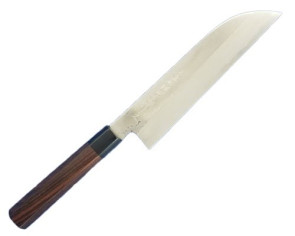
Minonokuni Sakura Damascus 210mm Kama-Usuba
Minonokuni Sakura Damascus 210mm Kama-Usuba: The Art of Vegetable Mastery Experience the pinnacle of Japanese blade artistry and culinary precision with the Minonokuni Sakura Damascus 210mm Kama-Usuba. More than just a knife, this is a handcrafted masterpiece designed for the chef who demands unparalleled performance in vegetable preparation and appreciates the profound beauty of traditional Japanese craftsmanship. The "Sakura" (cherry blossom) motif, delicately integrated into its design, evokes the transient beauty of Japanese spring, making this knife a stunning centerpiece in any collection. The blade itself is a testament to the smith's skill, featuring a breathtaking Damascus pattern created by expertly forging and layering different steels around a core of ultra-pure Shirogami-Ko (White Paper Steel). This not only results in a unique, rippling aesthetic but also contributes to the blade's resilience and the core steel's legendary cutting performance. At its heart, the 210mm Kama-Usuba (sickle-shaped thin blade) is a specialist's tool. The "Kama" style, with its pointed tip, offers exceptional agility for intricate decorative cuts (kazari-giri), precise peeling (katsuramuki), and detailed vegetable work, setting it apart from the blunt-tipped Kanto-style Usuba. The traditional single-bevel edge, forged from Shirogami-Ko hardened to an impressive HRC 62, is ground to a scalpel-like sharpness. This allows for incredibly thin, clean slices that preserve the delicate cell structure of vegetables, enhancing their flavor and texture. Learn More$660.00 -

Minonokuni Sakura Damascus 210mm Usuba
A union of traditional artistry and high-performance materials, the Minonokuni Sakura Usuba (SKU: Sakura-1615) is a precision tool crafted for the specialist. Its purpose is to perform meticulous vegetable work with unparalleled ease and accuracy. The Damascus Blade: The soul of this knife is its striking Shirogami-Ko Damascus blade. The construction features a core of high-purity Shirogami-ko (White Steel #1), a carbon steel revered by Japanese bladesmiths for its ability to achieve an incredibly sharp edge. This hard cutting core is protected by layers of softer steel forge-welded around it, creating the elegant, wave-like pattern characteristic of Damascus steel. This process provides the perfect blend of properties: the extreme sharpness of the Shirogami core with the added durability and resilience of the Damascus cladding. Hardened to a Rockwell Hardness of 60/62, the blade offers exceptional edge retention through rigorous use. The 210mm (8.3-inch) blade is ground to a traditional Urasuki Chisel profile—a single-bevel edge with a concave hollow on the back. This specialized grind is the key to creating razor-thin, clean slices while minimizing friction and preventing food from sticking. Learn More$660.00


