
You have no items in your shopping cart.
Knives
How would you like to shop?
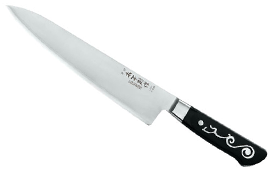
Chef's Knives
Chopping, slicing, and mincing
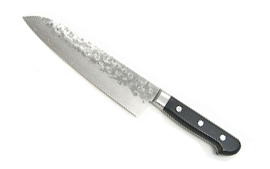
Santoku Knives
Japanese all-purpose blade
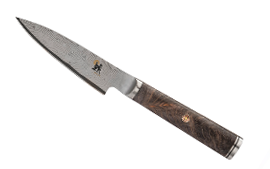
Paring Knives
Peeling and detail work
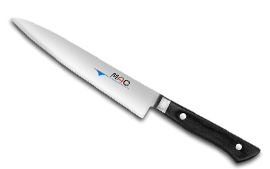
Utility Knives
Sandwiches and small produce
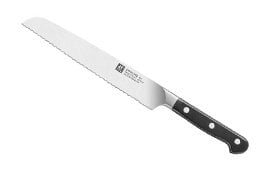
Bread Knives
Crusty loaves and soft bread
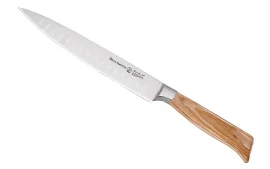
Carving and Slicing
Roasts, ham, and brisket
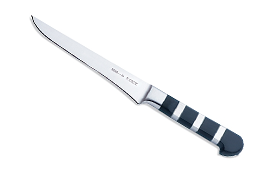
Boning Knives
Removing meat from the bone
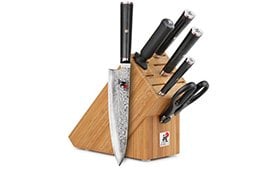
Knife Sets
Outfitting a kitchen or giving a gift
Shop All Shapes
Fillet, nakiri, yanagi, cleavers, steak, oyster, and every other shape we carry
European Makers
Professional and Commercial
Not sure where to start?
What will you cut most often?
What is your budget per knife?
Which edge style do you want?
All Knives
-

R. Murphy Duxbury 2.125-inch Oyster Knife, ECOgrip Handle
R. Murphy developed the Duxbury with the oystermen at Island Creek Oysters in Duxbury, Massachusetts. According to Edible Boston’s history of the company, the farm’s crew kept breaking the tips of their New Haven knives, so R. Murphy redesigned the blade with a stronger tip and named the result after the town.The blade is short, 2.125 inches, with a sharp, pointed tip that eases into the hinge with little force. A short blade keeps your hand close to the work and gives good control on small oysters and fast, repetitive shucking. The handle is R. Murphy’s ECOgrip, shaped to fit the hand and molded from recycled polypropylene in “Murphy Green,” so it can be cleaned and sanitized at a raw bar or on a farm.Customers ask us which knife suits which oyster. A pointed knife like this works well when the hinge is tight. If you prefer to lever the shell open with a curved tip, the New Haven shucker has a longer blade on the same handle material, and the Olympia shucker is ground for small, deep-cupped oysters. For a wood handle, compare the Wellfleet. Oyster knives are covered in our guide to knife shapes. Learn More$19.50 -
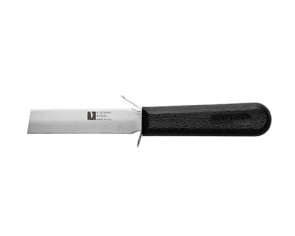
R. Murphy 3-inch Carbon Steel Produce Knife, Black Handle
Produce departments and farm crews use a short knife to trim and split fruit and vegetables on the job, and the R. Murphy 3-inch carbon steel produce knife is a compact tool for that work. Its 3-inch carbon blade ends in a squared-off point, and a bent guard sits between the blade and the black handle.The square point lets you trim away bruises and blemishes on the display without stabbing into the next piece of fruit, and the short, straight edge splits a melon or an avocado to show customers its ripeness. In the field, it cuts lettuce heads and herb stems. Carbon steel takes a keen edge and is quick to touch up on a steel or stone, which matters on a knife used all day.The 3-inch orange-handled produce knife is the same size in high-carbon stainless steel, with a handle you can spot in a bin or a field. For longer cuts, the 4-inch green-handled produce knife adds an inch of blade. Learn More$18.25 -
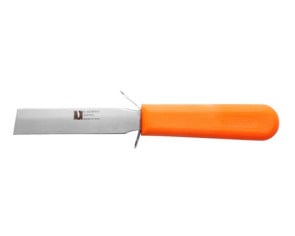
R. Murphy 3-inch Produce Knife, Orange Handle
A bright orange handle is easy to find in a produce cooler or a muddy row, which is the point of the R. Murphy 3-inch produce knife with an orange handle. Grocers and farms use it to trim and split produce, and the color keeps it from disappearing into the trimmings.Its 3-inch straight-edged blade ends in a blunt point. On the sales floor, it cuts away bruised leaves and blemishes and splits fruit to check ripeness without spearing anything behind it. On a farm, it is a handy size for cutting herbs, greens and small heads at harvest. A built-in guard at the front of the handle keeps the hand behind the edge, and the slip-resistant handle grips well with wet or gloved hands.For the carbon steel version of this knife, see the 3-inch black-handled produce knife. For larger produce and a longer cut, the 4-inch produce knife has an extra inch of stainless blade and a green handle. Learn More$27.15 -
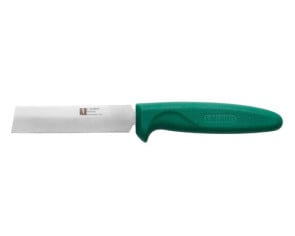
R. Murphy 4-inch Stainless Steel Produce Knife, Green Handle
Bigger produce calls for more blade. The R. Murphy 4-inch produce knife gives grocers and farm crews an extra inch over the 3-inch models, so a head of cabbage or a melon takes fewer strokes to cut through.Produce workers use it to trim cabbage and lettuce, cut stems and split melons and squash to check their ripeness. The blade is square at the point, so you can work close to the rest of a display or a crate without stabbing into it. Stainless steel stands up to the wet conditions of a produce room or a wash station with less upkeep than carbon steel, though it should still be dried at the end of a shift.For close trimming and splitting small fruit, the shorter 3-inch carbon steel produce knife is quick and precise. The 3-inch orange-handled produce knife adds a bright handle that is easy to find in the field. Learn More$13.95 -

Dexter-Russell Traditional 4.25-inch Produce Knife, Carbon Steel
Dexter-Russell’s F5S is a compact Traditional produce knife, a size suited to trimming lettuce, cutting fruit and opening bagged produce at a market stand or in a home kitchen. Shoppers search for it by its item number, 9060. The blade takes a keen edge quickly and darkens with use, so it should be dried after washing. Beyond the kitchen, customers buy it for trimming insulation and gaskets and for opening boxes.
Other Dexter Produce KnivesThe Traditional 6-inch Produce Knife adds length for melons and cabbage, and the Sani-Safe 5-inch Produce Knife has a stain-free blade and sanitary handle. Learn More$15.45 -

Dexter-Russell Traditional 6-inch Produce Knife, Carbon Steel
Dexter-Russell’s Traditional 6-inch produce knife is the most visited produce knife among the Dexter pages on our site. It is a long, slim knife with a blunt end, and Dexter calls it ideal for slicing and dicing foods like onions and tomatoes. The rounded end keeps a sharp point away from the hand during fast cutting, which suits a market stand or a home cook working through a garden harvest. Grocery chains use it to trim produce, and growers use it at harvest for crops such as celery.The blade is the old-fashioned kind that takes a very fine edge and darkens with use. Dry it after washing and give it a few strokes on a honing steel, and it will stay sharp through a season of canning tomatoes and putting up peppers. Dexter has made knives in Southbridge, Massachusetts, since 1818, and its Traditional patterns are especially popular in the Northeast.
Carbon or Stain-Free Produce Knife?For a stain-free blade and a sanitary handle, see the Sani-Safe 6-inch Produce Knife. The Traditional 4.25-inch Produce Knife is a smaller option with the same kind of blade. Learn More$16.00 -

Dexter-Russell Sani-Safe 5-inch Produce Knife
Dexter-Russell’s Sani-Safe 5-inch produce knife has a blunted safety tip, so a prep cook can work quickly through a case of lettuce or peppers without a sharp point at the end of each stroke. Dexter calls it versatile enough for bulk vegetable processing or precise finishing work, and it suits produce departments, salad bars and home cooks alike. Grocers use it to trim blemishes and to split fruit to show or check ripeness. The sealed, sanitary handle stands up to repeated washing in a busy prep area.A note on size: the blade actually measures 4.375 inches long and 0.75 inch wide. Dexter has listed it as a 5-inch produce knife for many years and customers search for it by that size, so we keep the 5-inch name to avoid any confusion with the knife they have ordered before.
5-inch or 6-inch?The Sani-Safe 6-inch Produce Knife has the same shape with more reach for melons and cabbage. Learn More$19.99 -

Dexter-Russell Sani-Safe 6-inch Produce Knife
Six inches of blade and a rounded safety tip make Dexter-Russell’s Sani-Safe S186 a practical knife for cutting melons and heads of cabbage. Dexter designed it to slice, dice and chop all types of fruits and vegetables, and the blunt end lets a busy cook move fast with less risk of a puncture. In grocery stores it trims blemishes from produce and splits fruit open so staff and shoppers can judge ripeness.
Choosing a Produce Knife LengthFor smaller items and finishing work, the Sani-Safe 5-inch Produce Knife is easier to control. The Traditional 6-inch Produce Knife offers this length with a wood handle. Learn More$20.99 -

Kikuichi GC Series Carbon Steel 4.7-inch (120mm) Petty
Petty is the Japanese term for a small utility knife, and Kikuichi uses it for this 4.7-inch (120mm) GC Series knife, which at this length does the work of a paring knife too. A standard 3-inch parer runs short on reach and leverage, and the 120mm blade adds both without giving up agility. It peels and segments citrus, trims green beans, hulls strawberries and cleans up a chicken breast, and the slim carbon blade takes a very fine edge for that detail work.Wipe it dry after cutting fruit, since acid speeds the patina on carbon steel. It is a natural companion to a 210mm gyuto.
120mm or 150mm Petty?The 5.9-inch (150mm) Petty adds length for slicing small proteins and working on the board. Learn More$89.95 -

Kikuichi GC Series Carbon Steel 5.9-inch (150mm) Petty
The 5.9-inch (150mm) petty is the utility knife of Kikuichi’s GC Series, sized between a paring knife and a gyuto. It handles the small jobs that a large knife makes awkward, such as slicing a single shallot, trimming silver skin or cutting a sandwich, and it pairs naturally with a gyuto on a professional station.The thin carbon blade holds a fine edge and is quick to touch up on a stone, and it will patina with use. A home cook building a Japanese knife kit can start with a gyuto and add this petty second.
Petty Knife SizesFor finer paring work, the 4.7-inch (120mm) Petty is easier to control in the hand. It pairs well with the 8.25-inch (210mm) Gyuto. Learn More$109.95

