
You have no items in your shopping cart.
Knives
How would you like to shop?
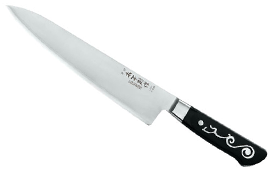
Chef's Knives
Chopping, slicing, and mincing
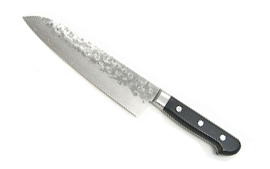
Santoku Knives
Japanese all-purpose blade
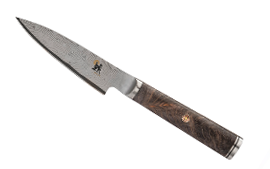
Paring Knives
Peeling and detail work
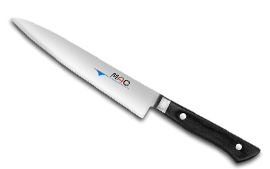
Utility Knives
Sandwiches and small produce
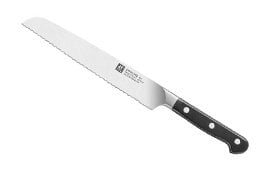
Bread Knives
Crusty loaves and soft bread
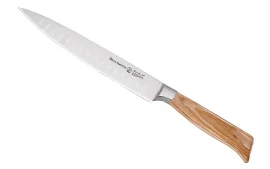
Carving and Slicing
Roasts, ham, and brisket
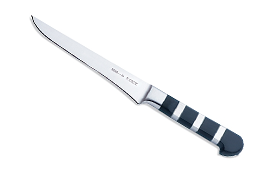
Boning Knives
Removing meat from the bone
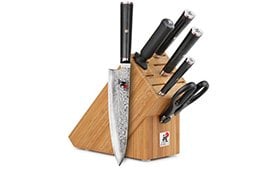
Knife Sets
Outfitting a kitchen or giving a gift
Shop All Shapes
Fillet, nakiri, yanagi, cleavers, steak, oyster, and every other shape we carry
European Makers
Professional and Commercial
Not sure where to start?
What will you cut most often?
What is your budget per knife?
Which edge style do you want?
All Knives
-

Minonokuni Homura 6.7-inch (170mm) Santoku
The Homura 170mm santoku is an all-purpose Japanese knife for cooks who want the edge of blue carbon steel with less of its maintenance. A santoku, or knife of three virtues, handles slicing, dicing and mincing with equal ease, and its compact length suits smaller boards and everyday prep of vegetables and boneless meat.The flatter edge favors push cuts and tap chopping over rocking. Its blade is tall enough to scoop chopped vegetables from the board, and the rounded tip makes the knife comfortable for a cook moving from a Western chef’s knife.
Choosing Within the Homura LineCooks who prepare mostly vegetables may prefer the flat edge of the Homura 170mm nakiri. For longer slicing strokes and larger cuts of meat, the Homura 210mm gyuto offers more length. The Homura 150mm petty covers detail work and trimming.Homura’s stainless jacket sets it apart from our other blue steel santoku, the Aogami Black, Aogami Damascus and Raku, which need more attention to stay free of rust. For the santoku and its relatives, see our kitchen knife shapes guide. Learn More$230.00 -

Minonokuni Homura 9.4-inch (240mm) Gyuto
A 240mm gyuto gives a professional the length for long slicing strokes and the knuckle clearance for chopping a full board of vegetables. The Homura version adds a blue steel edge that holds through extended prep, wrapped in stainless steel that keeps the rest of the blade free of rust.It is equally suited to vegetables and proteins. Push-cut carrots and celery near the heel, slice a brisket or a side of salmon with the full length, and work the tip for fine mincing. The double bevel suits either hand.
Homura or Another Blue Steel Gyuto?The stainless jacket is the reason to choose Homura. It makes the knife approachable for cooks who want blue steel performance without the upkeep of a fully carbon blade. A cook who is comfortable caring for carbon steel and wants a rustic finish can compare the Aogami Black 240mm gyuto. The Aogami Damascus 240mm gyuto has a Damascus pattern, and the Raku 240mm gyuto uses Aogami Super.The Homura 210mm gyuto is the more compact choice for a home board. Our kitchen knife shapes guide compares the gyuto and santoku. Learn More -

Minonokuni Homura 8.3-inch (210mm) Gyuto
Homura puts a blue carbon steel edge inside a stainless steel jacket. Only the exposed edge needs the care a carbon knife requires, which makes this 210mm gyuto a practical way for a cook to get the edge of blue steel with far less upkeep.As the edge develops a patina with use, the blade takes on a two-tone look, with the darkened carbon edge against the matte stainless faces. The 210mm length is a versatile size for a home kitchen, long enough for slicing roasts and quick enough for dicing onions and mincing herbs.
Why HomuraAmong our double-bevel blue steel knives, Homura is the one we suggest to a cook who has not owned carbon steel before. The Aogami Black 210mm gyuto and the Aogami Damascus 210mm gyuto have iron jackets that need drying and attention, and the Raku 210mm gyuto uses a harder Aogami Super steel.The Homura 240mm gyuto adds length, and the Homura 170mm santoku is shorter. The knife shapes guide explains the gyuto.Each Homura is forged by hand, so handle colors and finish vary from piece to piece. Learn More$330.00 -

Kikuichi GC Series Carbon Steel 5.9-inch (150mm) Honesuki
A honesuki is the Japanese knife for breaking down poultry. Its triangular blade and pointed tip slip into joints and around the thigh bone, separating meat cleanly. Kikuichi’s 5.9-inch (150mm) GC Series honesuki is a carbon steel version, and Kikuichi cautions that it should not be used to chop through bone, so cut through the joints instead.The tall heel gives knuckle clearance and room for a firm grip when working on a slippery bird. It suits butchers, restaurant cooks who break down whole birds and home cooks who buy whole chickens. Raw poultry is wet work, so wipe and dry the blade promptly to prevent rust, and hone it lightly between birds. It works equally well on duck and game birds.
Honesuki or Hankotsu?The 5.9-inch (150mm) Hankotsu is the GC Series boning knife for larger cuts of meat. For trimming after the breakdown, see the 5.9-inch (150mm) Petty. Learn More$154.95 -

Kikuichi GC Series Carbon Steel 5.9-inch (150mm) Hankotsu
Kikuichi calls the HC15 a hankotsu, a Japanese boning knife for separating meat from bone on larger cuts, and describes it as sharp, light and tough. Shoppers find it by its model number, and some retailers sell it as a sakabone.The 5.9-inch (150mm) blade has a pointed tip for working along bones and into joints, and Kikuichi calls it the right combination for small and large butchering. Kikuichi warns against chopping through bone with it, so it is a knife for cutting around bones and through joints. It suits butchers trimming primal cuts and restaurant cooks breaking down lamb and pork shoulders, and hunters use it on venison. The carbon steel sharpens easily, which helps on a knife that works against bone surfaces all day. Dry it promptly after use and hone it before each session.
Hankotsu or Honesuki?For poultry, the lighter, triangular 5.9-inch (150mm) Honesuki is the specialist. Learn More$154.95 -

MAC Chef Series 8.5-inch Chef’s Knife
The HB-85 is the entry point to MAC chef’s knives: a narrow, light 8.5-inch blade in the Chef Series, stamped and bolsterless. It suits a cook buying a first Japanese knife and a professional who wants a spare knife for the line.The narrow blade gives a little more length than the 8-inch models for slicing proteins and long vegetables, and its low height makes it quick through onions and peppers. With less steel behind the edge, it is lighter than the BK-80 and less suited to dense squash or chopping through hard rinds.Choosing Between the Chef Series KnivesFor a taller blade and more knuckle clearance, see the BK-80. For a shorter knife from the same family, the 7.25-inch HB-70 is a compact gyuto for small boards. Our guide to kitchen knife shapes explains how blade height and profile change the way a knife cuts. Learn More$79.95 -

MAC Chef Series 7.25-inch Chef’s Knife
A small board, a galley kitchen or a smaller hand all favor a shorter chef’s knife, and the HB-70 brings the thin Chef Series blade down to 7.25 inches. It is long enough for onions and chicken thighs, and short enough to control closely on a crowded counter.The blade is narrow and light, with a fine tip for garlic and shallots and enough curve to rock through herbs. It also makes a capable second knife beside a longer chef’s knife, taking the small jobs that do not need a full-length blade.If you want more length from the same series, step up to the 8.5-inch HB-85 or the 8-inch BK-80. For a 7-inch knife with a non-stick coating, see the BF-HB-70. Our knife shapes guide compares chef’s knives with santokus and utility knives at this size. Learn More$72.95 -

MAC Chef Series 5.5-inch Utility Knife
The Mac Chef Series 5.5-inch Utility Knife is an all-purpose knife, and is commonly used when a paring knife is just too small and a chef’s knife is too large. The thin, light blade makes quick work of slicing tomatoes, cutting a sandwich or trimming chicken.It is the plain-steel version of the non-stick BF-HB-55, and either one works as a small second knife for a cook who does most of the work with a chef’s knife. The pointed tip and narrow blade are useful for jobs such as cutting around the pit of an avocado or peeling ginger.For a bolstered utility knife, see the Professional PKF-50. Our guide to knife shapes compares utility knives with parers and petty knives. Learn More$49.95 -

MAC Chef Series 4-inch Paring Knife
A 4-inch parer with a pointed tip covers most small cutting jobs, and the HB-40 is MAC’s Chef Series version: thin, light and straight-edged. It works on the board for mincing a clove of garlic or slicing a shallot, and in the hand for peeling an apple or trimming green beans.The pointed tip suits jobs the Original Series round-tipped PK-40 cannot do as well, such as coring tomatoes, cutting slits in a roast for garlic and scoring pastry. The thin blade slices strawberries and radishes cleanly without crushing them.For a shorter blade with a bolster, see the Professional PKF-30; for curved peeling work, the bird’s beak PK-25. Our knife shapes guide compares paring knife shapes. Learn More$47.95 -
MAC Essential Chef Set
The MAC Chef Series is a line of Japanese kitchen knives renowned for their lightweight design, precision and exceptional sharpness. Crafted from MAC's original molybdenum steel, these knives feature thin blades measuring 2.0–2.5mm, which allows for effortless slicing and reduces food wedging. The blades are shaped in traditional European styles, complemented by a straight handle that is aligned with the spine to create a comfortable grip and balanced control. Ideal for a variety of food preparation tasks, the MAC Chef Series combines the sharpness of Japanese knives with the versatility of Western designs, making them a favorite among both professional chefs and home cooks. This set includes the 4 most essential knives from the MAC Chef Series: Mac Chef Series 4 in. (100mm) Paring Knife (Item# HB-40) Mac Chef Series 5.3 in. (135mm) Utility Knife (Item# HB-55) Mac Chef Series 7.25 in. Chef's Knife (Item# HB-70) Mac Chef Series 8.5 in. (215mm) Chef Knife (Item# HB-85) Learn More


