
You have no items in your shopping cart.
Knives
How would you like to shop?
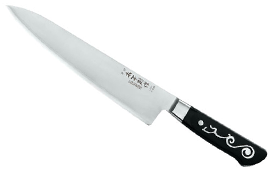
Chef's Knives
Chopping, slicing, and mincing
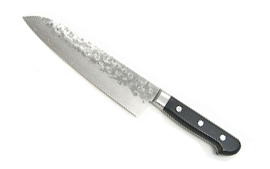
Santoku Knives
Japanese all-purpose blade
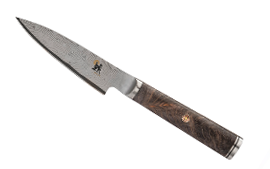
Paring Knives
Peeling and detail work
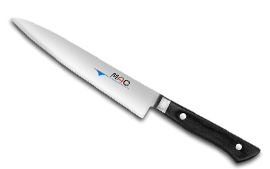
Utility Knives
Sandwiches and small produce
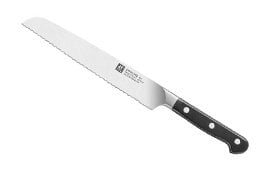
Bread Knives
Crusty loaves and soft bread
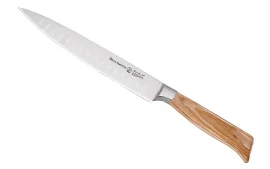
Carving and Slicing
Roasts, ham, and brisket
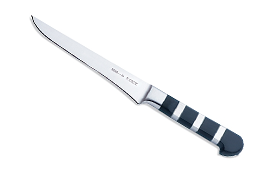
Boning Knives
Removing meat from the bone
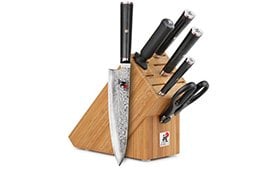
Knife Sets
Outfitting a kitchen or giving a gift
Shop All Shapes
Fillet, nakiri, yanagi, cleavers, steak, oyster, and every other shape we carry
European Makers
Professional and Commercial
Not sure where to start?
What will you cut most often?
What is your budget per knife?
Which edge style do you want?
All Knives
-

Mercer Renaissance 7-inch Fillet Knife
The Renaissance 7-inch Fillet Knife separates fish from the bone and skin with little waste, and it removes membranes from meat as well. It is forged from high-carbon German steel with a full tang and a triple-riveted handle.The narrow blade follows the frame of a round fish, and the taper-ground edge slides between skin and flesh when skinning a fillet. The short bolster leaves the whole edge free for sharpening.
Choosing a Fillet KnifeThe Genesis 7-inch Flexible Fillet Knife has a softer, non-slip handle, useful when hands are wet from fish. Learn More$56.95 -

Mercer Renaissance 2.5-inch Bird’s Beak Peeler
The curved blade of a bird’s beak knife peels any rounded fruit or vegetable with control, removes blemishes and shapes garnishes. The Renaissance version is forged with a full tang and the line’s triple-riveted handle.It is the tool for tourné cuts on potatoes and carrots, a technique students practice early in culinary training.
Other Bird’s Beak KnivesSee the Genesis and Millennia 2.5-inch Bird’s Beak Peelers. Learn More$32.35 -

Mercer Renaissance 11-inch Granton Edge Slicer
Rows of hollows ground into the sides of a granton blade break the suction between steel and meat, so thin slices of roast beef, ham or salmon fall away instead of clinging. The Renaissance 11-inch Granton Edge Slicer pairs that edge with a long, narrow blade for clean, single-stroke slices.Unlike most Renaissance knives, this slicer is stamped from one piece of steel rather than forged, with a three-quarter tang and the line’s triple-riveted handle. That keeps a long blade light enough to control.
Choosing a SlicerThe Millennia 11-inch Granton Edge Slicer is lighter still, and the Millennia 14-inch handles a whole brisket. Learn More$39.55 -

Mercer Millennia 8-inch Straight Fork
An extra inch of tine gives a firmer hold on large roasts, whole turkeys and steamship rounds. The Millennia 8-inch Straight Fork lifts and steadies big cuts at a carving station or in the home kitchen, and it turns meat on the grill at a safe distance.It is stamped from high-carbon Japanese steel with the textured Millennia handle.
Other ForksThe Millennia 7-inch Straight Fork suits everyday roasts. Learn More$23.25 -

Mercer Millennia 6-inch Wide Boning Knife
A wider boning blade gives more steel to steer with and more knuckle room when separating large cuts. The Millennia 6-inch Wide Boning Knife suits beef and pork subprimals, venison quarters and brisket trimming, where a very narrow blade can feel unstable.It is stamped from high-carbon Japanese steel, light in the hand and quick to sharpen. The textured handle and finger guard help on a cold, wet board.
Other Millennia Boning KnivesFor a narrower blade, see the Millennia 6-inch Stiff Boning Knife. The Millennia 6-inch Stiff Curved Boning Knife follows the curve of a bone. Learn More$21.20 -

Mercer Millennia 6-inch Stiff Curved Boning Knife
A curved boning blade sweeps around the round of a bone, keeping the edge in contact as it travels. The Millennia 6-inch Stiff Curved Boning Knife pairs that curve with a stiff blade that does not deflect off dense tissue, which suits pork shoulders, hams, beef and deer.The upswept tip works into joints and lifts meat cleanly from the bone. The knife is stamped from high-carbon Japanese steel, light and quick to sharpen, with a textured handle and finger guard.
Curved or Straight?For straight seams and trimming, the Millennia 6-inch Stiff Boning Knife is simpler to control. A white-handled curved option is the Ultimate White 6-inch Curved Boning Knife. The kitchen knife shapes guide explains boning and fillet knives. Learn More$21.20 -

Mercer Wood and Glass Knife Block
Mercer’s Wood and Glass Block holds knives upright between panels of tempered glass, so every blade stays in view. It is the block that comes with Mercer’s Genesis and Renaissance block sets, sold here on its own for knives you already own.The open design has no narrow slots for crumbs and moisture to collect in, and the glass wipes clean. The block sits on a beechwood base about 3 1/4 inches deep, which suits a narrow counter.
Other StorageFor a block that takes any mix of knives, see the large magnetic board. Learn More$65.00 -

Mercer Boning Knife Guard, 6 x 1-inch
The 6 x 1-inch guard is sized for narrow blades: 6-inch boning knives, fillet knives and other slim knives that rattle around in a wider sheath. A snug fit keeps the knife from sliding out of the guard in a bag or a drawer.The ABS exterior shields the edge and your fingers, and the felt lining keeps the blade surface free of scratches as it goes in and out. It suits a butcher’s or a fishmonger’s kit as well as a home drawer.
Other SizesFor a wider 6-inch blade, such as a utility or small chef’s knife, use the 6 x 2-inch guard. Every size is listed in the Details. Learn More -
Minonokuni Matsu 6.5-inch (165mm) Deba
A 165mm deba is sized for the whole fish a cook brings home from the market, such as sea bream, mackerel and small salmon. The Matsu version pairs that size with blue steel, so the edge stays keen through a full morning of breaking down fish before it needs the stone.
Work on the FrameThe heel and the thick spine take the heavy cuts through the head and collar. The forward third does the fine work, tracing the backbone for a clean three-piece fillet and lifting the belly away from the ribs. Kept to fish and poultry, the blade handles small bones well, but it is not a cleaver for frozen product or the heavy leg bones of beef.Blue steel is the hardest steel in the Minonokuni range and the most delicate, and a single-bevel edge is very thin by nature. Our advice is to choose Matsu after some experience with chisel-ground knives. A cook still learning that grind will be better served by the Take 165mm deba in white steel, which is less brittle, or the Ume 165mm deba, the most forgiving of the three.
165mm or 180mm?Choose this size for small and medium fish and for jointing chickens. For salmon and heavier heads, the Matsu 180mm deba carries more weight behind the heel. Our guide to kitchen knife shapes explains where the deba fits among the other Japanese knives. Learn MoreRegular Price: $330.00
Special Price $260.00
-

Minonokuni Matsu 7.1-inch (180mm) Deba
Salmon, large sea bass and big snapper call for more blade than a small deba can give. The Matsu 180mm deba adds length and weight behind the heel, so the knife does more of the work when a head must be split or a thick collar cut through.The hard blue steel edge holds up through a long run of fish. It comes with a caveat, though. Blue steel is the most delicate of the steels in the Minonokuni line, so the edge rewards a cook who already knows how a single-bevel blade tracks along a backbone. Twist the blade in a bone joint and the thin edge can chip. For a cook still building that feel, the Take 180mm deba is the better choice, and it is less brittle.
Choosing the SizePick the 180mm for larger fish, or for a kitchen that breaks down a mix of fish and whole poultry daily. The Matsu 165mm deba is quicker in the hand on mackerel and smaller bream. Both are right-handed. The kitchen knife shapes guide shows the deba alongside the yanagiba and usuba it is used with.Each Matsu knife is forged and finished by hand, so the blade carries hammer marks and small variations in the kasumi finish. Those marks are part of how the knife was made, and they do not affect the edge. Learn More


