
You have no items in your shopping cart.
Knives
How would you like to shop?
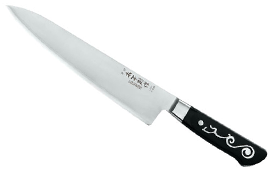
Chef's Knives
Chopping, slicing, and mincing
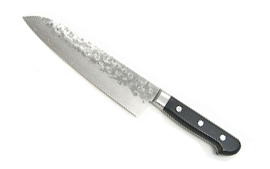
Santoku Knives
Japanese all-purpose blade
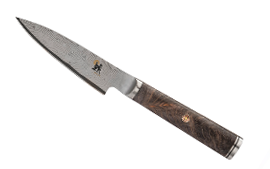
Paring Knives
Peeling and detail work
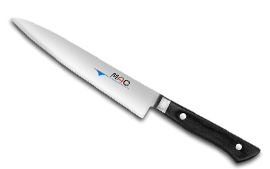
Utility Knives
Sandwiches and small produce
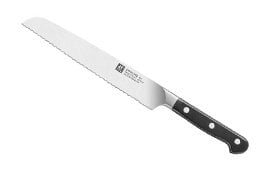
Bread Knives
Crusty loaves and soft bread
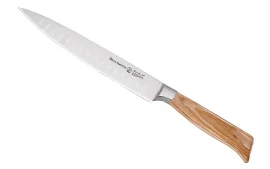
Carving and Slicing
Roasts, ham, and brisket
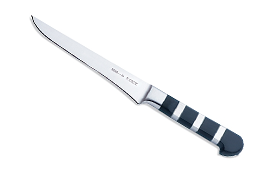
Boning Knives
Removing meat from the bone
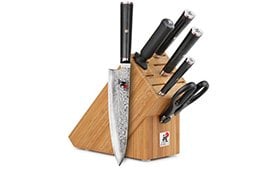
Knife Sets
Outfitting a kitchen or giving a gift
Shop All Shapes
Fillet, nakiri, yanagi, cleavers, steak, oyster, and every other shape we carry
European Makers
Professional and Commercial
Not sure where to start?
What will you cut most often?
What is your budget per knife?
Which edge style do you want?
All Knives
-
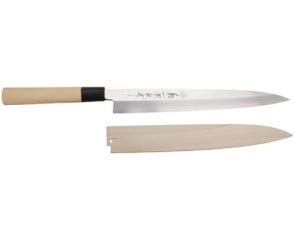
Kikuichi Kasumitogi Series 10.6-inch (270mm) Yanagi
Kikuichi describes Kasumitogi as another single-bevel traditional series, hand forged in the sword-making tradition from two pieces of steel, and shoppers search for it as the Kikuichi Kasumitogi yanagi. This 10.6-inch (270mm) yanagi is the long professional size, made for slicing whole fish loins and large blocks of tuna in a single draw.The edge is White #3 carbon steel at 57 to 60 HRC, a little softer than the White #2 of Kikuichi’s Kasumi series. A softer edge sharpens more quickly on whetstones, which makes this a practical working knife for a busy sushi counter where knives are touched up daily. The long blade suits experienced cooks with room to work, and Kikuichi supplies the Kasumitogi series without a saya.
Kasumitogi or Kasumi?For a harder White #2 edge, see the Kasumi 9.4-inch (240mm) Yanagi. A double-bevel slicer at 270mm is the GC Series Carbon Steel 10.6-inch (270mm) Sujihiki. Learn More$345.00 -

Kikuichi Kasumi Series 9.4-inch (240mm) Yanagi
Kikuichi calls the yanagi the quintessential sashimi knife, and the 9.4-inch (240mm) Kasumi yanagi is the length sushi cooks reach for at the counter. Its long, narrow single-bevel blade slices raw fish in one pulling stroke, which leaves a clean, glossy surface with no torn fibers.Kasumi is Kikuichi’s most popular traditional series, by its own account, and Kikuichi calls a Kasumi yanagi a knife fit for a true professional. Kikuichi hand forges the blade from two pieces of steel, a hard White #2 carbon edge backed by a softer carbon steel jacket, following traditional sword-making technique, which makes the edge keen and the blade forgiving to sharpen. Because it is single bevel, the yanagi rewards a cook who learns traditional sharpening, and it is a natural step for a home cook who already makes sushi and sashimi.
Choosing a Kasumi YanagiThe Kasumi 8.25-inch (210mm) Yanagi suits a home cutting board, and the Kasumi 9.4-inch (240mm) Fuguhiki is thinner for paper-thin slices. Learn More$440.00 -

Kikuichi Kasumi Series 8.25-inch (210mm) Yanagi
The 8.25-inch (210mm) yanagi is the shortest in Kikuichi’s Kasumi range and the most practical for a home kitchen, where a long sashimi knife can overhang a standard cutting board. Kikuichi supplies this size with a saya to protect the edge.The single-bevel blade is hand forged in Kikuichi’s Kasumi construction, a hard White #2 carbon edge joined to a softer carbon steel back. That pairing gives a fine, keen edge for slicing salmon, tuna and yellowtail, and the softer back makes sharpening on whetstones more forgiving. It is a good first traditional knife for a home cook learning to make sashimi and nigiri, and the shorter length is easier to control as that skill develops.
210mm or 240mm?The Kasumi 9.4-inch (240mm) Yanagi gives the longer single stroke professional sushi cooks prefer. For a slicer with a double-bevel edge, see the GC Series Carbon Steel 9.4-inch (240mm) Sujihiki. Learn More$385.00 -
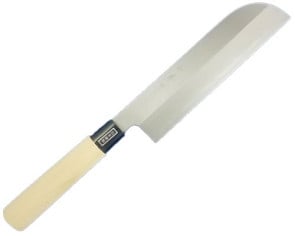
Minonokuni Ume 8.3-inch (210mm) Kama-Usuba
The 210mm Ume kama-usuba is a full-size Kansai vegetable knife for a cook who preps vegetables in quantity and wants a forgiving steel to learn on. Its length handles cucumber and daikon sheets for sushi, and its tip handles the garnish work.Kama-usuba knives are lighter than a square usuba of the same length because the spine is rounded down toward the tip. The flat section of the edge does the push cutting and katsuramuki, and the point reaches into a vegetable for carving and scoring.
Which Line?The three standard Minonokuni lines suit different cooks. Ume is the most forgiving and the best for learning to sharpen, which makes it a good choice for a novice or a cook new to single-bevel knives. The Take 210mm kama-usuba is the sweet spot for cooks ready for harder white steel, and the Matsu 210mm kama-usuba is for experienced hands.The Ume 180mm kama-usuba is lighter. For square-tipped work at this length, see the Ume 210mm usuba. See the knife shapes guide for the square and pointed usuba. Learn More$135.00 -

Minonokuni Ume 7.1-inch (180mm) Left-Handed Kama-Usuba
This left-handed kamagata usuba is an introductory knife for left-handed cooks curious about traditional single-bevel Japanese knives. The bevel is on the left face, and the curved spine leads to a pointed tip in the Kansai style.The kama-usuba is the chisel-ground relative of the santoku shape. It is designed for slicing, dicing and mincing vegetables with push cuts, while the tip gives the precision for garnishes and decorative cuts. At 180mm, it is comfortable on a home board.
A Forgiving IntroductionUme is the most forgiving of our three standard lines and the best for learning to sharpen. A left-handed cook trying single-bevel knives for the first time will find the softer carbon steel tolerant while technique develops. We stock it. A cook who later wants a harder edge can move to the Take 180mm left-handed kama-usuba.The right-handed version is the Ume 180mm kama-usuba. For a square tip, see the Ume 180mm left-handed usuba. The kama-usuba appears in our kitchen knife shapes guide. Learn More$125.00 -

Minonokuni Ume 7.1-inch (180mm) Kama-Usuba
The kama-usuba is the Kansai-style vegetable knife, with a curved spine that ends in a point. This 180mm Ume version is a good introduction for a cook who wants both push-cutting power and a tip for detail work.The flat length of the edge slices and dices vegetables with straight push cuts and handles katsuramuki. The pointed tip carves decorative garnishes, scores mushroom caps and trims around blemishes. Together, they make one knife cover most vegetable prep.
Learning on UmeUme is the most forgiving of the three standard Minonokuni lines. It is the line we recommend to a novice and the best for learning to sharpen a single bevel, which includes keeping the tip of a kama-usuba fine. When a harder edge is wanted, the Take 180mm kama-usuba is the next step.The Ume 210mm kama-usuba is longer. For square-tipped work, see the Ume 180mm usuba. Left-handed cooks should choose the Ume 180mm left-handed kama-usuba. The knife shapes guide covers both forms of usuba. Learn More$87.25 -

Minonokuni Ume 8.3-inch (210mm) Left-Handed Usuba
For the left-handed cook dedicated to vegetable preparation, this Ume 210mm usuba is ground for the left hand. The single bevel sits on the left face, which gives straight push cuts and even katsuramuki sheets when the knife is held as a left-handed cook naturally holds it.The 210mm length handles long daikon and whole heads of cabbage, and the tall blade gives the knuckles clearance above the board. Slices separate fully because the flat edge meets the board along its whole length.
Ume for Left-Handed CooksUme is the most forgiving of our three standard lines and the best one to learn sharpening on. A long single bevel takes time to sharpen evenly, so that tolerance is useful on this size. We stock left-handed Ume knives, and the Ume 180mm left-handed usuba is the shorter option.The right-handed version is the Ume 210mm usuba. A left-handed cook ready for harder white steel can look at the Take 180mm left-handed usuba. See the knife shapes guide for the usuba. Learn More -

Minonokuni Ume 8.3-inch (210mm) Usuba
Long daikon and whole cabbages are easier with a 210mm usuba, and the Ume version puts that length within reach of a cook still learning the shape. The tall, flat blade also scoops the cut vegetables off the board for the pan.The longer edge gives more room for katsuramuki, so the sheet stays on the blade as it unrolls. For julienne, stack the sheets and push-cut them into fine threads, a technique called sengiri. Each cut should be a straight push forward and down.
Matching the Line to the CookUme is the most forgiving of the three standard Minonokuni lines and the best for learning to sharpen. On a long single bevel, an even edge takes practice to keep, and a softer steel makes that practice easier. The Take 210mm usuba is the sweet spot for cooks ready for a harder edge, and the Matsu 210mm usuba suits experienced hands.Left-handed cooks can order the Ume 210mm left-handed usuba. For a shorter blade, see the Ume 195mm usuba. The Ume 210mm kama-usuba adds a pointed tip. The two forms are compared in our guide to knife shapes. Learn More -

Minonokuni Ume 7.7-inch (195mm) Usuba
The 195mm usuba sits between the compact 180mm and the long 210mm. It gives a little more length for daikon and cabbage than the shorter knife while staying light enough for a home cook to control through a long prep session.The single-bevel blade cuts vegetables with a straight downward push, with no wedging action to crack a carrot or bruise a herb. That clean separation is what makes the usuba suited to fine julienne, paper-thin slices and katsuramuki sheets for garnish.
A Size Only in UmeThis in-between length is offered only in the Ume line. Ume is the most forgiving of the three standard Minonokuni lines and the best for learning to sharpen, which makes this knife a good fit for a cook who wants a bit more blade but is still building skills. A cook ready for harder white steel can compare the Take 210mm usuba.The Ume 180mm usuba is shorter and the Ume 210mm usuba longer. For a pointed tip, see the Ume 180mm kama-usuba. Our knife shapes guide covers the usuba. Learn More$104.00 -

Minonokuni Ume 7.1-inch (180mm) Left-Handed Usuba
A left-handed cook starting with traditional Japanese vegetable knives will find this Ume usuba a fantastic first knife. The bevel is on the left side of the blade, so katsuramuki sheets come off even and push cuts fall straight when it is held in the left hand.At 180mm, the knife suits a home board. It slices, dices and minces vegetables with straight push cuts, and the flat edge meets the board along its length so that slices separate fully. It is not designed for rocking cuts, which a chef’s knife handles better.
Why Ume for a First UsubaUme’s steel is the most forgiving of our three standard lines and the best for learning to sharpen. For a cook already familiar with chisel-ground hocho and looking for a harder steel with a longer-lasting edge, the Take 180mm left-handed usuba is the step up. We stock left-handed models in both lines.The right-handed model is the Ume 180mm usuba. The Ume 210mm left-handed usuba is longer, and the Ume 180mm left-handed kama-usuba adds a pointed tip. The knife shapes guide explains the shape. Learn More$125.00

