
You have no items in your shopping cart.
Knives
How would you like to shop?
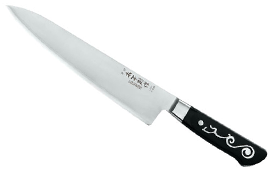
Chef's Knives
Chopping, slicing, and mincing
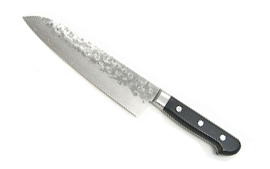
Santoku Knives
Japanese all-purpose blade
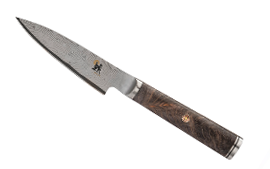
Paring Knives
Peeling and detail work
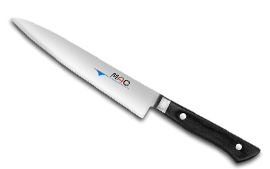
Utility Knives
Sandwiches and small produce
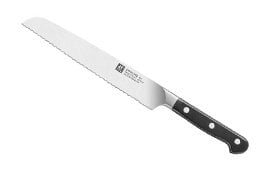
Bread Knives
Crusty loaves and soft bread
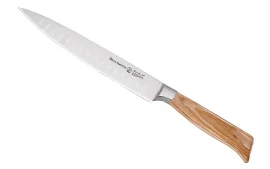
Carving and Slicing
Roasts, ham, and brisket
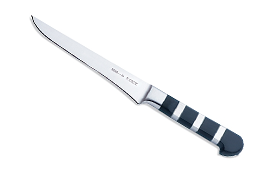
Boning Knives
Removing meat from the bone
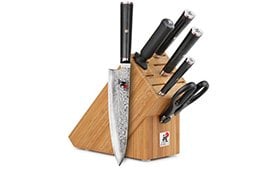
Knife Sets
Outfitting a kitchen or giving a gift
Shop All Shapes
Fillet, nakiri, yanagi, cleavers, steak, oyster, and every other shape we carry
European Makers
Professional and Commercial
Not sure where to start?
What will you cut most often?
What is your budget per knife?
Which edge style do you want?
All Knives
-

Glestain K Series 8.3-inch (210mm) Sujihiki
A 210mm sujihiki is a compact slicer, short enough to work on a home cutting board and long enough to portion a pork tenderloin, a duck breast or a side of fish into even slices. This K Series model has a bolster and no end cap, which keeps it light and quick in the hand.A sujihiki is narrower than a gyuto, so less steel touches the food on each stroke. Glestain adds dimples to the face, which further reduce drag and keep thin slices of meat or fish from sticking to the blade. The asymmetrical grind pushes each slice away cleanly, which helps when plating slices in a neat row.Cooks who carve a roast at home now and then will find this length easier to store and handle than the long professional slicers.
Choosing a Sujihiki LengthFor larger roasts and whole fish, see the 240mm and 270mm KE Series Sujihiki. The table below lists every Glestain sujihiki, and our guide to kitchen knife shapes explains how a sujihiki differs from a yanagi and a carving knife. Learn More -

Glestain K Series 8.3-inch (210mm) Left-Handed Gyuto
This is the lighter of Glestain’s two 210mm left-handed gyutos. It has a bolster and no end cap, so the balance sits slightly forward, and the blade is ground as a mirror image of the right-handed knife, with the dimples on the left face.In the left hand it tracks straight and sheds food the way the right-handed Glestain does in the right, which a symmetrical knife sharpened for the left hand cannot do. Sliced potatoes and onions stay on the board instead of climbing the blade, and the 210mm length works on any standard cutting board.This knife will change the way you cut. Food glides from the blade with ease, which improves your speed and the quality of your cuts. This knife is truly a game changer, and we recommend it to any working cook or serious home cook.Glestain gyutos are available with an end cap and bolster (in the KE Series), without an end cap or bolster (in the SO Series) and with a bolster but no end cap (as with this model). The bolster is a tapered piece of steel that connects the choil of the blade to the handle. It improves the appearance of the knife and makes it more comfortable to use and to hold. The end cap adds heft to the knife, which can be desirable for those who like a heavier knife, but it also changes the balance and the weight distribution of the blade. In a 240mm gyuto I like the added weight at the end of the handle. When it comes to the 210mm size I prefer this model, the K Series gyuto.
Comparing Left-Handed GyutosThe KE Series 210mm Left-Handed Gyuto adds the end cap for more weight at the hand. For a longer blade, see the 240mm and 270mm Left-Handed Gyutos. Our kitchen knife shapes guide explains how a gyuto is used. Learn More$198.00 -

Glestain K Series 8.3-inch (210mm) Gyuto
The K Series 210mm gyuto has the same blade as the KE Series 721TK without the stainless end cap. Removing the cap makes the knife lighter and moves the balance toward the blade, and it is the less expensive way to own a 210mm Glestain.I actually prefer a knife to be a bit blade heavy. While many chefs consider the balance of a knife in their hand, I prefer to think of it as how the knife feels when I’m cutting. A slightly blade heavy knife feels perfectly balanced when I start applying pressure to the food being cut. Since I can’t juggle, and this isn’t a throwing knife, the balance in my hand means very little to me, and I prefer this knife.The dimples release slices of onion, potato and cucumber, and the asymmetrical grind keeps each cut moving cleanly into the next.This is a knife that suits home cooks and line cooks equally, and one that rarely comes back to us after purchase.
Choosing a 210mm GlestainFor more heft at the hand, choose the KE Series 210mm Gyuto. The SO Series 210mm Gyuto is lighter still, with no bolster, and the Ice Handle 210mm Gyuto has a stainless handle. Left-handed cooks can choose the K Series 210mm Left-Handed Gyuto. See our guide to kitchen knife shapes for more on the gyuto. Learn More$181.00 -

Glestain K Series 7.5-inch (190mm) Left-Handed Santoku
At 190mm, this left-handed santoku is longer than most santoku blades, which gives a left-handed cook more reach for cabbage, squash and large onions while keeping the flat edge that suits push cuts.The dimples on the left face make the biggest difference on a santoku, which is used with a straight push more than a rocking motion. Sliced vegetables fall away from the steel, and the mirrored asymmetrical grind keeps the blade on line in the left hand.An asymmetrical blade cannot be converted to the other hand, so left-handed cooks need the left-handed model to get this geometry.
Other Left-Handed KnivesThe K Series 170mm Left-Handed Santoku is more compact. For a chef’s knife with more curve, see the K Series 210mm Left-Handed Gyuto. Our kitchen knife shapes guide explains the santoku and the gyuto. Learn More$170.00 -

Glestain K Series 7.5-inch (190mm) Gyuto
The Glestain 7.5 in. (190mm) Gyuto is an excellent all purpose knife. The balance is blade forward and the shorter length makes it very nimble and easy to use. Learn More$156.00 -

Glestain K Series 6.7-inch (170mm) Left-Handed Santoku
The Glestain 6.7 in. (170mm) Left Handed Santoku is good to use on fruits and vegetables. Learn More -

Glestain K Series 6.7-inch (170mm) Santoku
A santoku is used mostly with a straight push cut, with the blade driven down and forward through the food, and that motion is where Glestain’s dimples help most. Each slice of potato, cucumber or onion drops off the face instead of riding up it, so the next cut starts on a clear blade.The 170mm blade is compact and tall, with a flatter edge than a gyuto. It suits dicing vegetables, mincing herbs and slicing boneless meat and fish, and it fits easily on a small cutting board. The asymmetrical grind pushes each slice away from the knife, which keeps a rhythm of fast, even cuts.The K Series has a bolster and no end cap. Glestain is bought by home cooks and professionals alike, and this santoku suits a home cook who wants one compact knife as well as a professional who keeps a santoku for vegetable work.
Choosing a SantokuFor a smaller blade, see the K Series 160mm Santoku; for an all-stainless handle, the Ice Handle 170mm Santoku. Left-handed cooks can choose the 170mm Left-Handed Santoku. If you prefer a rocking cut, a 210mm gyuto has more curve. Our guide to kitchen knife shapes compares the santoku and the gyuto. Learn More -

Glestain K Series 6.3-inch (160mm) Santoku
The 160mm santoku is the smallest santoku Glestain makes, a compact knife for cooks with smaller hands, small cutting boards or limited counter space. It handles nearly every daily task, from slicing a tomato to mincing garlic and dicing an onion.On a short blade, the dimples still make a difference. Slices of cucumber and potato release instead of sticking, and the asymmetrical grind sends them off the blade so you can keep cutting without stopping to clear it. The flat edge suits push cuts, and the tall blade gives knuckle clearance over the board.The K Series handle has a bolster and no end cap, which keeps this knife light and easy to control.
Comparing Santoku SizesThe K Series 170mm Santoku is slightly longer, and the Ice Handle 170mm Santoku has a stainless handle. Our guide to kitchen knife shapes explains how a santoku compares with a gyuto. Learn More -

Glestain K Series 5.5-inch (140mm) Left-Handed Offset Utility Knife
The Left-Handed Offset Utility Knife lets a left-handed cook work with a short, thin Glestain blade while keeping the knuckles clear of the board. The blade drops below the line of the handle, and it is ground as the mirror image of the right-handed 814TUK, with the dimples on the left face.The long, even curve of the edge keeps most of the blade in contact with the board, so it dices and slices quickly for its size. It handles shallots, herbs, peppers and boneless chicken, and suits cooks who want a smaller knife without changing how they cut.Because Glestain builds the asymmetry into the steel, the left-handed model is the only way to get the geometry working in the left hand.
Other Left-Handed KnivesThe straight 140mm Left-Handed Utility Knife suits in-hand work, and the 170mm Left-Handed Santoku is a larger all-purpose knife. Our kitchen knife shapes guide covers utility knives. Learn More -

Glestain K Series 5.5-inch (140mm) Offset Utility Knife
The offset utility knife gives you the control of a short, thin blade with the knuckle clearance of a chef’s knife. Its blade drops below the line of the handle, so your hand stays clear of the cutting board while you dice an onion or slice a pepper.The edge has a long, even curve, and nearly the whole blade meets the board on each cut, which speeds up board work for a knife this size. It is short enough for precise trimming, and it is a top pick for anyone looking to prepare an entire meal with a blade under 6 inches, a task that would be impossible with most utility knives.The dimples keep slices from sticking, and the K Series handle, with a bolster and no end cap, keeps the knife light. For cooks who find a chef’s knife too large but want to keep their usual cutting technique, it is a good choice.
Choosing an Offset Utility KnifeFor a longer blade, see the K Series 210mm Offset Utility Knife. Left-handed cooks can choose the 140mm Left-Handed Offset Utility Knife. The straight 140mm Utility Knife suits in-hand work. Our guide to kitchen knife shapes explains utility knives. Learn More

