
You have no items in your shopping cart.
Knives
How would you like to shop?
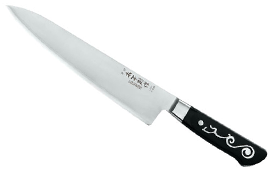
Chef's Knives
Chopping, slicing, and mincing
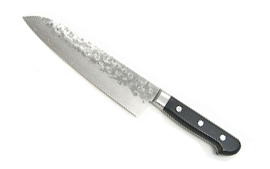
Santoku Knives
Japanese all-purpose blade
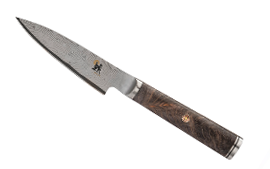
Paring Knives
Peeling and detail work
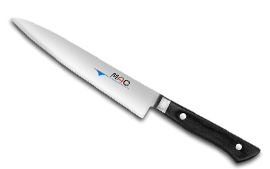
Utility Knives
Sandwiches and small produce
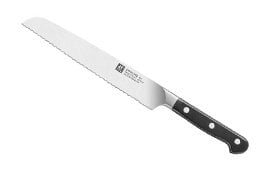
Bread Knives
Crusty loaves and soft bread
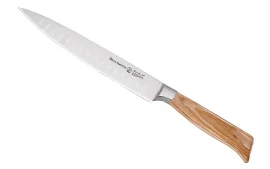
Carving and Slicing
Roasts, ham, and brisket
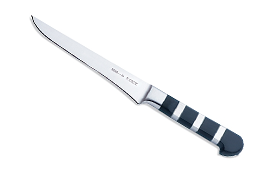
Boning Knives
Removing meat from the bone
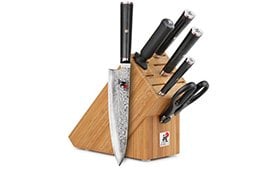
Knife Sets
Outfitting a kitchen or giving a gift
Shop All Shapes
Fillet, nakiri, yanagi, cleavers, steak, oyster, and every other shape we carry
European Makers
Professional and Commercial
Not sure where to start?
What will you cut most often?
What is your budget per knife?
Which edge style do you want?
All Knives
-

F. Dick 1905 10-inch Bread Knife
A slight curve along the edge helps this 10-inch 1905 bread knife roll through a crusty loaf in long strokes. Its serrations are long and sharp, with a wide bevel between them for durability, and the length clears a large country loaf in one pass.The reduced bolster leaves room to choke up on the blade with a pinch grip, which gives more control when slicing thin. Each knife is tapered from spine to edge and checked for balance, so it saws evenly rather than pulling to one side. It slices sourdough, rye and soft sandwich bread alike.The 10-inch length also suits splitting cake layers and slicing large tomatoes. A long blade also lets the cook cut a wide loaf without sawing back and forth.For everyday loaves, the 1905 8.5-inch bread knife is easier to store, and the 1905 12.5-inch bread knife handles the largest breads. An offset alternative for sandwiches is the ProDynamic 7-inch offset serrated knife. Learn More$113.10 -

F. Dick ExpertGrip 2K 8.25-inch Breaking Knife
High-volume breaking work wears on the hand, and this 8.25-inch knife pairs F. Dick’s breaking blade with the cushioned ExpertGrip 2K handle. It breaks hogs, lamb and deer into subprimals and cleans tendon and fat from the pieces.The two-component handle has a hard core with a soft outer shell, so the grip stays secure through grease and moisture without becoming hard on the palm. Our staff call it a “double pour” handle. F. Dick molds it so there is no gap where the blade enters. The curved, narrow blade is made for the long, flowing strokes of breaking.At 8.25 inches, the blade reaches through a pork shoulder or a leg of lamb in one stroke, and the tip stays close enough to follow a seam. The soft shell also absorbs some of the shock of repeated pulling cuts.The 10-inch ExpertGrip 2K breaking knife handles beef. For a handle with a thumb rest and pronounced guard, choose the ErgoGrip 8.25-inch breaking knife, which is also offered with a granton edge. Learn More$22.10 -

F. Dick ErgoGrip 10-inch Scimitar
Butchers in grocery meat departments and beef processors portion steaks with a scimitar, and this 10-inch ErgoGrip model is sized for that counter work. It trims the fat cap and tail, removes silver skin and scrap, and then cuts even steaks.The long, upswept curve lets the edge roll through a steak in one motion, so the cut face stays smooth. A polished blade sheds residue, and the ErgoGrip handle has an extra-wide thumb rest and a pronounced guard for a secure grip on long strokes.The 10-inch length is easier to steer than the 12-inch model when trimming a strip or tenderloin, and it still finishes most steaks in one stroke.The 12-inch ErgoGrip scimitar handles whole primals and wider steaks. For a rounded tip, see the 10-inch bull nose butcher knife. Both scimitars fit the F. Dick Scimitar Knife Sheath, and we are glad to test the sheath on another knife for fit if you call. Our guide to kitchen knife shapes covers scimitars. Learn More$39.65 -

F. Dick ErgoGrip 12-inch Scimitar
Cutting steaks from whole primal cuts is the job of a 12-inch scimitar, and this ErgoGrip version is used at grocery butcher counters, in slaughterhouses and on beef processing floors. It also trims fat and silver skin before portioning.Twelve inches of curved edge crosses a whole ribeye or strip loin and finishes a steak in one stroke, which keeps the cut surface smooth and the thickness even. The rounded spine and the ErgoGrip guard and thumb rest make the long blade safer to handle, and the polished surface is easy to clean.The long blade also trims the fat cap from a whole rib before portioning, so the cutter can move from trimming to steaks without changing knives. That speeds up a busy counter.The 10-inch ErgoGrip scimitar is easier to control on smaller cuts. For a rounded nose at the same length, the 12-inch bull nose butcher knife is the alternative. Protect the edge with the F. Dick Scimitar Knife Sheath. Learn More$45.50 -

F. Dick ErgoGrip 12-inch Bull Nose Butcher Knife
The longest bull nose knife in the ErgoGrip line, this 12-inch blade trims and portions whole beef primals, and seafood processors also use it to break down large fish such as bluefin tuna.A long, rounded-tip blade makes a full cut across a wide piece without restarting the stroke. The broad nose adds weight at the front and keeps the tip from catching, and the tall blade holds a straight line through dense meat or a tuna loin. The ErgoGrip handle’s guard and thumb rest add security on a knife this size.On a tuna loin, the long, tall blade takes clean, even blocks without tearing the flesh, which keeps the cut surface bright.A black-handled version carries the same blade for color-coded stations. For smaller cuts, the 10-inch bull nose butcher knife is easier to handle, and the 12-inch scimitar offers a sweeping curve at the same length. Store it in a 12-inch wide blade guard. Learn More$45.50 -

F. Dick ErgoGrip 12-inch Bull Nose Butcher Knife, Black Handle
This black-handled bull nose knife slices through thick, tough cuts with the leverage of a 12-inch curved blade, and it removes skin, fat and cartilage as it goes. The blade is identical to the standard ErgoGrip version; the black handle suits plants and kitchens that assign colors to stations.A rounded nose gives a safe, controlled start to each stroke, and the long edge takes a wide steak or a large fish loin in a single pull. The edge is laser-tested for sharpness, and the balanced handle limits hand fatigue on long runs. The finger guard keeps the hand away from the blade.The long edge takes a full steak from a wide rib or a whole tuna loin in one draw, and the rounded nose keeps the tip from catching on the board.If handle color does not matter, the standard 12-inch bull nose butcher knife is the same knife. Shorter bull nose lengths and the ErgoGrip scimitars are in the table below, and our knife shapes guide explains the profiles. Learn More -

F. Dick ErgoGrip 10-inch Breaking Knife
Breaking primal cuts out of a hanging side of beef is the classic job for a 10-inch breaking knife, and this ErgoGrip model has the length to make those cuts in long, single strokes. Elk and moose hunters use the same reach in the field.The upswept, pointed blade lets the knife follow seams between muscles and glide through meat without sawing. Ten inches puts more edge into each pull, which means fewer strokes on a round or chuck. The ErgoGrip handle gives a secure hold with a pronounced guard, a point that matters when a knife is pulled toward the body all day.On a beef round, the long blade separates the top, bottom and eye along their natural seams in a few clean pulls.The 10-inch granton edge breaking knife has the same profile with hollows that cut down on sticking. For hogs and deer, the 8.25-inch ErgoGrip breaking knife is easier to steer. Cutters who prefer a cushioned handle pick the ExpertGrip 2K 10-inch breaking knife. Learn More$32.50 -
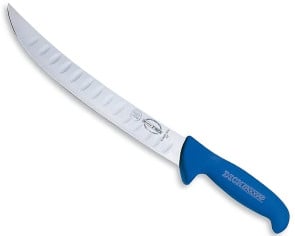
F. Dick ErgoGrip 10-inch Granton Edge Breaking Knife
Designed with a beef butcher in mind, this 10-inch breaking knife takes the primal cuts out of a hanging side, and the granton hollows along its blade keep meat from clinging as it goes. Hunters dressing deer and elk use it for the same reason.A breaking knife works by long, pulling strokes, and a flat blade can drag on fat and moisture. The hollows, which F. Dick calls Kullenschliff, put air between steel and meat, so the cut stays smooth through brisket, chuck and the fat cap of a rib. The narrow, upswept profile lets the edge follow seams between muscles.The 10-inch length also gives a full stroke through a whole chuck roll without restarting the cut.Cutters working hogs or smaller game choose the 8.25-inch granton edge breaking knife. The plain-edge 10-inch ErgoGrip breaking knife suits lean cuts, and the ExpertGrip 2K 10-inch breaking knife offers a softer handle. Our kitchen knife shapes guide explains how breaking knives differ from butcher knives. Learn More$37.70 -

F. Dick ErgoGrip 11-inch Extra-Wide Butcher Knife
At 3.8 inches tall, the blade on this 11-inch butcher knife feels closer to a cleaver than a slicer, and it is made for cutting large slabs of meat. The handle is just as substantial, about 1.5 by 1 inch where the palm sits.The strongly curved, pointed blade follows what is called the American style. Its long, sweeping edge glides through a steak or a rib section in a flowing movement and keeps the hand in a comfortable position. The weight of the blade does some of the work on thick cuts.A blade of this weight and height also clears the board easily on long draws, and the flat face carries cut pieces off the table. It suits plants and shops that cut large slabs, ribs and whole primals every day.For a narrower blade at a similar size, the 10-inch and 12-inch ErgoGrip butcher knives are lighter in the hand. The ErgoGrip wide trimming knife shares the broad profile in a shorter length. Our knife shapes guide has more on butcher knife styles. Learn More$101.40 -
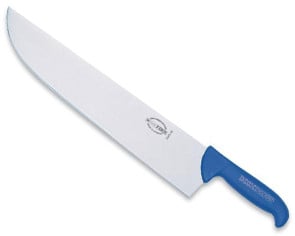
F. Dick ErgoGrip 14-inch Butcher Knife
The longest butcher knife in the ErgoGrip range, this 14-inch ErgoGrip butcher knife is for trimming fat and breaking down whole primal cuts where reach matters more than nimbleness.Fourteen inches of edge crosses the full width of a beef side or a whole brisket, so the cutter can separate it without restarting the stroke. The wide blade adds stiffness and a broad face for moving large pieces. The ErgoGrip handle has a pronounced guard and a wide thumb rest for a secure hold on a long knife.The long edge also turns large roasts and briskets into even slices without sawing.For most counter work, the 12-inch ErgoGrip large butcher knife or 12-inch butcher knife is easier to manage. Large seafood such as tuna can also be broken down with the 12-inch bull nose butcher knife. A knife this long belongs in a F. Dick Knife Scabbard with Belt when not in use. Learn More$60.45

