
You have no items in your shopping cart.
Glestain Knives
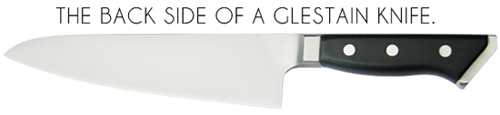
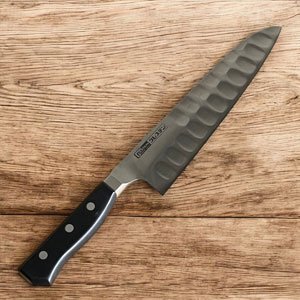
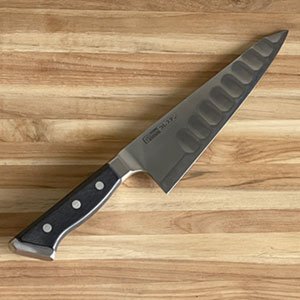
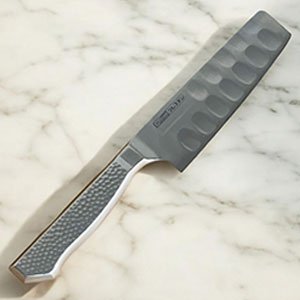
Glestain Knives are instantly recognizable by the rectangular scallops running down one side of the blade. This design of a Glestain knife is not only beautiful, but extremely functional. As you'll see in the demonstration video; this is the only design that truly works to keep starchy foods, like potatoes and cheese, from clinging to the blade this greatly increases speed when dicing and chopping. Glestain's proprietary Acuto stainless steel holds a razor sharp edge and is very easy to resharpen. It is a Molybdenum Vanadium steel set to a rockwell hardness of 58/59. Glestain knives are in a class of their own; you will not be disappointed with its superior performance.
For Left Handed Customers: We carry many left handed Glestain knives, and can custom order any knife in left handed. For more information, please e-mail us.
-

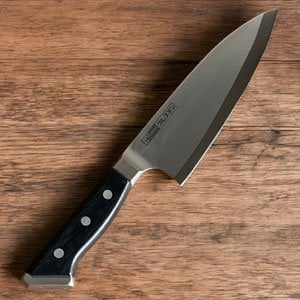
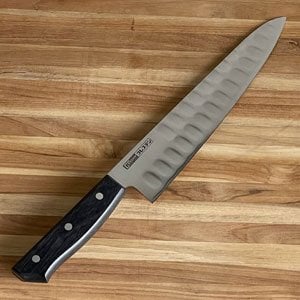
Glestain K Series 5.5-inch (140mm) Utility Knife
The Glestain K Series 5.5 in. (140mm) Utility Knife features scallops to prevent foods sticking to the knife while slicing and cutting. Great to use on small to medium sized items. Learn More -

Glestain K Series 5.5-inch (140mm) Left-Handed Utility Knife
The 140mm Left-Handed Utility Knife is a petty knife ground for the left hand. It is a nimble tool for detailed work that calls for control, and its small blade reaches into tight spaces, which suits delicate produce and small fruits and vegetables.Glestain makes the blade as a mirror image of the right-handed 014TK, with the dimples on the left face, so it cuts straight and releases thin slices in a left-handed grip. A left-handed Glestain cannot be reground for the right hand, and the reverse is also true, so it is important to buy the model for the hand that will hold the knife.Left-handed cutlery is hard to find, which makes this knife a thoughtful gift for a left-handed cook.
Other Left-Handed KnivesFor knuckle clearance on the board, see the 140mm Left-Handed Offset Utility Knife. For larger work, see the 170mm Left-Handed Santoku and the 210mm Left-Handed Gyuto. Our kitchen knife shapes guide explains utility and petty knives. Learn More$122.00 -

Glestain KE Series 5.9-inch (150mm) Honesuki
The honesuki is the Japanese boning knife for poultry. Its stiff, triangular 150mm blade has a pointed tip for finding the joints of a chicken or duck and a tall heel that gives the hand room above the board. Use it in place of a gyuto to break down whole birds, bone out thighs and trim pork.The dimples keep raw chicken from clinging to the blade, so the knife moves cleanly along the bone and the meat comes away without tearing. The asymmetrical grind helps the edge follow the carcass closely. The KE Series bolster and end cap give the knife weight and a secure grip when working with slippery poultry.A honesuki works around bones and through joints; it is not built for chopping through bone.
Choosing a Boning KnifeFor larger birds and heavier boning, see the KE Series 190mm Garasuki. The Ice Handle 150mm Honesuki has a stainless handle, and left-handed cooks can choose the 150mm Left-Handed Honesuki. Our kitchen knife shapes guide explains how a honesuki differs from a Western boning knife. Learn More$174.00 -
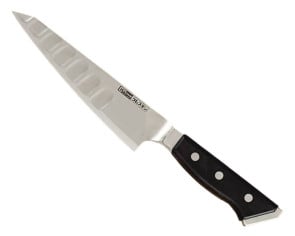
Glestain KE Series 5.9-inch (150mm) Left-Handed Honesuki
The 150mm Left-Handed Honesuki is the Glestain poultry boning knife ground for the left hand. Like the right-handed 415TK, it has a stiff triangular blade with a pointed tip for finding joints and a tall heel for knuckle clearance; the asymmetry and the dimples are mirrored for a left-handed grip.Use it on chicken and duck to separate legs and thighs and bone out breasts, and to trim pork. The dimples keep raw meat from clinging, and the mirrored grind lets the edge follow the bone in a left-handed cut. The KE Series bolster and end cap give a firm, weighted grip.Left-handed boning knives are hard to find, and an asymmetrical blade cannot be reground for the other hand, so this is the right choice for a left-handed butcher or cook.
Other Left-Handed Boning KnivesFor heavier work, see the KE Series 190mm Left-Handed Garasuki. All Glestain boning and fish knives are compared below, and our guide to knife shapes covers the honesuki. Learn More$190.00 -

Glestain Ice Handle 5.9-inch (150mm) Honesuki
Raw poultry is the strongest argument for a metal handle, and the Ice Handle honesuki puts Glestain’s 150mm poultry boning blade on an all-stainless handle that is easy to clean and sanitize. There is no wood to absorb juices and no seam at the blade.Use it to break down chicken, duck and pork in place of your gyuto. The triangular blade has a pointed tip for joints and a tall heel for knuckle clearance, and the dimples keep raw meat from sticking. The textured M Series handle stays secure in a hand slick with fat.For butcher counters, poultry processors and home cooks who break down whole birds, it is a practical, hygienic boning knife.
Other HonesukiThe KE Series 150mm Honesuki has a wood handle with bolster and end cap. For larger birds, see the 190mm Garasuki. Our kitchen knife shapes guide explains boning knives. Learn More$162.00 -

Glestain K Series 5.5-inch (140mm) Offset Utility Knife
The offset utility knife gives you the control of a short, thin blade with the knuckle clearance of a chef’s knife. Its blade drops below the line of the handle, so your hand stays clear of the cutting board while you dice an onion or slice a pepper.The edge has a long, even curve, and nearly the whole blade meets the board on each cut, which speeds up board work for a knife this size. It is short enough for precise trimming, and it is a top pick for anyone looking to prepare an entire meal with a blade under 6 inches, a task that would be impossible with most utility knives.The dimples keep slices from sticking, and the K Series handle, with a bolster and no end cap, keeps the knife light. For cooks who find a chef’s knife too large but want to keep their usual cutting technique, it is a good choice.
Choosing an Offset Utility KnifeFor a longer blade, see the K Series 210mm Offset Utility Knife. Left-handed cooks can choose the 140mm Left-Handed Offset Utility Knife. The straight 140mm Utility Knife suits in-hand work. Our guide to kitchen knife shapes explains utility knives. Learn More$124.00 -

Glestain K Series 5.5-inch (140mm) Left-Handed Offset Utility Knife
The Left-Handed Offset Utility Knife lets a left-handed cook work with a short, thin Glestain blade while keeping the knuckles clear of the board. The blade drops below the line of the handle, and it is ground as the mirror image of the right-handed 814TUK, with the dimples on the left face.The long, even curve of the edge keeps most of the blade in contact with the board, so it dices and slices quickly for its size. It handles shallots, herbs, peppers and boneless chicken, and suits cooks who want a smaller knife without changing how they cut.Because Glestain builds the asymmetry into the steel, the left-handed model is the only way to get the geometry working in the left hand.
Other Left-Handed KnivesThe straight 140mm Left-Handed Utility Knife suits in-hand work, and the 170mm Left-Handed Santoku is a larger all-purpose knife. Our kitchen knife shapes guide covers utility knives. Learn More$135.00 -

Glestain K Series 6.7-inch (170mm) Santoku
A santoku is used mostly with a straight push cut, with the blade driven down and forward through the food, and that motion is where Glestain’s dimples help most. Each slice of potato, cucumber or onion drops off the face instead of riding up it, so the next cut starts on a clear blade.The 170mm blade is compact and tall, with a flatter edge than a gyuto. It suits dicing vegetables, mincing herbs and slicing boneless meat and fish, and it fits easily on a small cutting board. The asymmetrical grind pushes each slice away from the knife, which keeps a rhythm of fast, even cuts.The K Series has a bolster and no end cap. Glestain is bought by home cooks and professionals alike, and this santoku suits a home cook who wants one compact knife as well as a professional who keeps a santoku for vegetable work.
Choosing a SantokuFor a smaller blade, see the K Series 160mm Santoku; for an all-stainless handle, the Ice Handle 170mm Santoku. Left-handed cooks can choose the 170mm Left-Handed Santoku. If you prefer a rocking cut, a 210mm gyuto has more curve. Our guide to kitchen knife shapes compares the santoku and the gyuto. Learn More -

Glestain K Series 6.7-inch (170mm) Left-Handed Santoku
The Glestain 6.7 in. (170mm) Left Handed Santoku is good to use on fruits and vegetables. Learn More -

Glestain 5.9-inch (150mm) Curved Roasting Fork
The Glestain curved roasting fork holds a roast, a turkey or a ham steady while you carve, and lifts and serves the slices afterward. Its curved tines cradle the meat and keep it from shifting under a long slicing stroke.Pair it with a Glestain slicer, such as the KE Series 240mm Sujihiki or the 270mm Sujihiki, for carving at the table or a buffet station. The fork is sold on its own.A carving fork keeps your hand clear of the blade and away from hot meat, which makes carving safer as well as neater. Our guide to kitchen knife shapes covers carving forks along with the knives they work with. Learn More$152.00

