
You have no items in your shopping cart.
Knives
How would you like to shop?
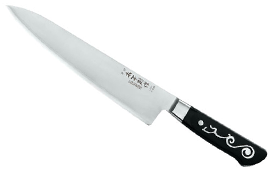
Chef's Knives
Chopping, slicing, and mincing
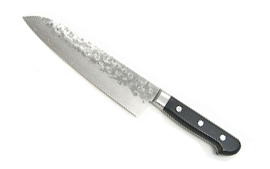
Santoku Knives
Japanese all-purpose blade
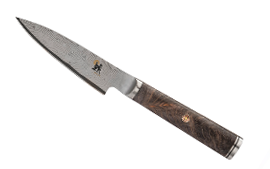
Paring Knives
Peeling and detail work
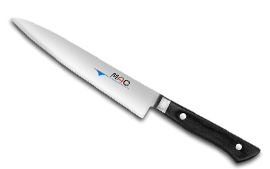
Utility Knives
Sandwiches and small produce
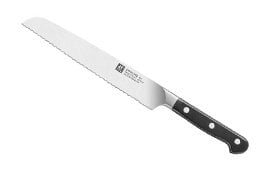
Bread Knives
Crusty loaves and soft bread
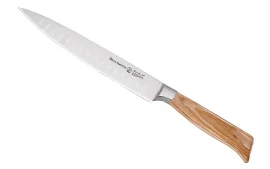
Carving and Slicing
Roasts, ham, and brisket
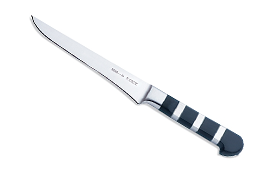
Boning Knives
Removing meat from the bone
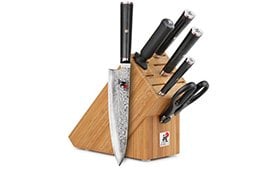
Knife Sets
Outfitting a kitchen or giving a gift
Shop All Shapes
Fillet, nakiri, yanagi, cleavers, steak, oyster, and every other shape we carry
European Makers
Professional and Commercial
Not sure where to start?
What will you cut most often?
What is your budget per knife?
Which edge style do you want?
All Knives
-

F. Dick 1778 9.4-inch Chef’s Knife
F. Dick’s 1778 series is the company’s tribute to its founding year, and this 9.4-inch chef’s knife is its centerpiece. Its shape and profile put it close to a Japanese gyuto, with a flatter edge and a pointed tip suited to push cuts and long slicing strokes.The blade is built in the Japanese kasumi style, with a very hard cutting core clad in softer, stain-resistant layers. That construction allows a thin, keen edge that lasts a long time between sharpenings, and it takes a fine polish on high-grit stones. It is a knife for a cook who sharpens by hand and wants a Japanese-style edge from a European maker.The 1778 santoku offers the same steel in a shorter, taller blade for vegetables, and the 1778 4.7-inch paring knife covers small work. For a tougher, softer edge that tolerates a honing steel and heavy use, look at the Premier Plus 9-inch chef’s knife. Our guide to kitchen knife shapes compares chef’s knives and gyuto. Learn More$495.00 -

F. Dick 1778 4.7-inch Paring Knife
A 4.7-inch blade sits between a paring knife and a small utility knife, and the 1778 version is sized for peeling, trimming and slicing small produce on a board. In Japanese terms it is a petty knife.The hard kasumi-style blade takes a fine edge that cuts cleanly through tomato skins and citrus peel without tearing. Small knives do a great deal of in-hand work, and a keen edge that lasts means fewer trips to the stones. The plum tree wood handle is warm in the hand and matches the other knives in the series.The small size also makes it a good knife for cutting at the counter without a board.It pairs naturally with the 1778 9.4-inch chef’s knife and the 1778 santoku for a three-knife set. For a softer, more forgiving paring knife that can be honed on a steel, the Premier Plus 3.5-inch paring knife is a durable alternative. The comparison table lists the 1778 knives side by side. Learn More$390.00 -

F. Dick 1778 6.7-inch Santoku
Paper-thin slices of cucumber, onion and fruit are what this 1778 santoku does best. The 6.7-inch blade is tall and flat, so it works with a straight push or a forward slice rather than a rocking motion, and the height gives room for the knuckles.Like the rest of the 1778 series, it pairs a very hard cutting core with softer outer layers in the kasumi style. The result is a thin edge that holds its sharpness for a long time between sharpenings. Each plum wood handle is unique, which makes every knife in the series a little different from the next.For longer slicing and larger produce, the 1778 9.4-inch chef’s knife adds reach. The 1778 4.7-inch paring knife handles peeling and small cuts. Cooks who want a santoku with a granton edge and a tougher steel can compare the 1905 7-inch granton edge santoku. Our knife shapes guide explains the santoku profile. Learn More$495.00

