
You have no items in your shopping cart.
Knives
How would you like to shop?
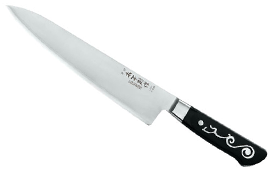
Chef's Knives
Chopping, slicing, and mincing
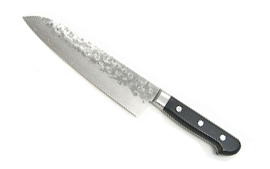
Santoku Knives
Japanese all-purpose blade
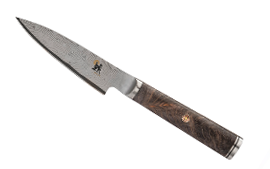
Paring Knives
Peeling and detail work
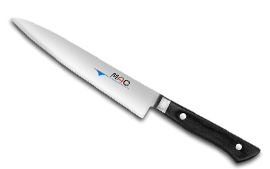
Utility Knives
Sandwiches and small produce
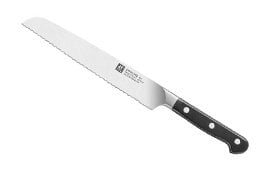
Bread Knives
Crusty loaves and soft bread
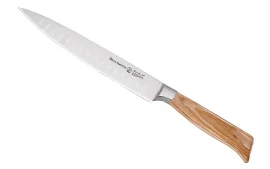
Carving and Slicing
Roasts, ham, and brisket
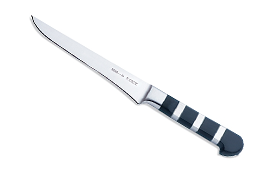
Boning Knives
Removing meat from the bone
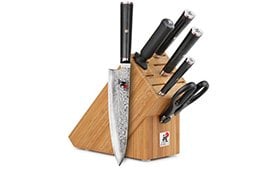
Knife Sets
Outfitting a kitchen or giving a gift
Shop All Shapes
Fillet, nakiri, yanagi, cleavers, steak, oyster, and every other shape we carry
European Makers
Professional and Commercial
Not sure where to start?
What will you cut most often?
What is your budget per knife?
Which edge style do you want?
All Knives
-
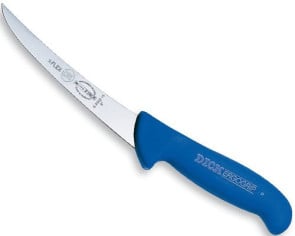
F. Dick ErgoGrip 6-inch Semi-Flexible Boning Knife
Duck, chicken and turkey all break down well with a 6-inch semi-flexible blade, and this ErgoGrip knife handles all three. The extra inch over the 5-inch model helps on a turkey breast and on the longer bones of a leg.Semi-flex means the blade gives a little when it meets a bone and then springs back. The cutter can follow a curve without the knife wandering, and there is still enough stiffness to cut through a joint. The curved edge is easier to slide along a bone than a straight one and offers more cutting length for each pull.On a turkey, the longer blade follows the breastbone from end to end and frees each half of the breast in a single pass.For smaller birds and tight joints, the 5-inch semi-flexible boning knife is quicker. When the work calls for a blade that bends further, such as removing silver skin, choose the 6-inch curved flexible boning knife. The 7-inch semi-flexible boning knife adds length for larger cuts and filleting. Learn More$18.20 -

F. Dick ErgoGrip 5-inch Straight Stiff Boning Knife
Deer hunters who remove the backstrap themselves want a blade that stays straight while it runs along the spine, and this 5-inch stiff boning knife does that job well. The same stiffness helps on pork shoulders, beef chuck and any cut where the knife has to push through connective tissue.With no flex, the blade goes where the hand points it. That control makes clean separations along seams and around the hip and shoulder joints, and it lets the tip pop a joint without folding. The straight edge suits flat bones and long, even cuts.On a deer, run the tip down both sides of the spine, then lift the loin away with long strokes against the ribs.For tighter work on birds, the 4-inch straight stiff boning knife is quicker in the hand. For longer seams on a whole loin, the 6-inch straight stiff boning knife adds reach. Cutters who prefer an upswept tip for poultry choose the 5-inch curved stiff model instead. Learn More$16.90 -
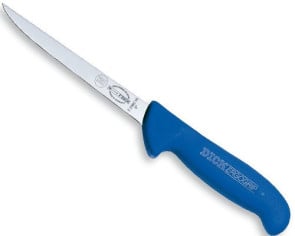
F. Dick ErgoGrip 6-inch Straight Stiff Boning Knife
For pork butts, beef chuck and venison loins, a 6-inch straight stiff boning knife gives the reach to follow a seam in one pass and the rigidity to stay on line. Hunters who bone out their own deer use this length to take the backstrap off the spine.A stiff blade does what the hand tells it. It pushes through fascia and pries at joints, and it holds a flat bone without flexing away. The straight edge keeps contact along the blade bone of a shoulder, and the narrow profile turns easily inside a cut.On a pork butt, the narrow blade turns around the blade bone and follows it out without tearing the meat around it.Stepping down to the 5-inch straight stiff boning knife gives more control in tight spots. For poultry, the curved 6-inch stiff boning knife adds edge length, and the 6-inch wide stiff boning knife brings a heavier blade for seaming larger cuts. Flexible options are in the comparison table below. Learn More$18.20 -
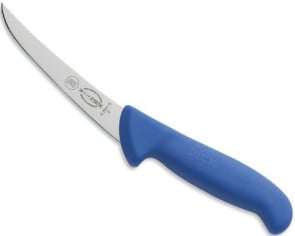
F. Dick ErgoGrip 5-inch Curved Stiff Boning Knife, Blue Handle
Separating wings and legs on chicken and other poultry is the job this 5-inch curved stiff blade was shaped for. Its upswept tip slips into the joint, and its rigid spine lets the cutter lever the joint apart without the blade bending.The thumb rest on the ErgoGrip handle gives the cutter a place to press when the knife is held like a dagger, which is how professional meat cutters hold a boning knife for most of a shift. The curve adds edge length for drawing cuts along the thigh and keel, so the knife works quickly on a poultry line.Five inches is short enough to turn inside a chicken carcass and long enough to free the thigh in a single pull.The same blade is sold with a black handle and a red handle for plants that assign handle colors to stations or to raw and cooked product. For larger birds and pork, the 6-inch curved stiff boning knife gives more reach. Learn More$16.90 -

F. Dick ErgoGrip 5-inch Curved Stiff Boning Knife, Black Handle
Some poultry plants and butcher shops keep black-handled knives for a single station or product, and this is the black version of F. Dick’s 5-inch curved stiff boning knife. The blade matches the blue and red versions exactly.Its stiff spine holds firm when the knife pries a joint open, and the curved edge gives a long draw for following the thigh bone or freeing breast meat. Held in a reverse grip, the knife lets the thumb rest on the handle take pressure off the wrist through long runs of birds.Five inches turns easily inside a chicken carcass, and the stiff blade keeps its line when a joint resists.Color coding is set by each operation, so check the plan before ordering. The blue-handled version and red-handled version are the same knife, and the 6-inch curved stiff boning knife extends the blade for turkeys and pork. Our knife shapes guide covers boning knife profiles in more detail. Learn More$16.90 -

F. Dick ErgoGrip 5-inch Curved Stiff Boning Knife, Red Handle
A red handle makes this curved stiff boning knife easy to tell apart on a cutting table, where a color-coded plan may assign red to raw meat. Underneath the color, it is the same 5-inch F. Dick blade as the blue and black versions.The blade is built for the joints of poultry and small pork cuts. Its rigid spine keeps the tip on target when it opens a hip or shoulder, and the curve puts more edge into each pulling cut. Hunters also like a bright handle that is easy to find when it is set down outdoors.The short, stiff blade turns easily inside a bird and keeps its line when a joint resists the tip.The blue and black handles carry the identical blade. For a longer reach on turkeys or pork loins, the 6-inch curved stiff boning knife is the next size up, and the comparison table lists the flexible and straight options. Learn More$16.90 -

F. Dick ErgoGrip 6-inch Curved Stiff Boning Knife
Separating wings and legs from chicken is quick work with a curved stiff blade, and this 6-inch ErgoGrip knife extends the reach of the 5-inch model for turkey and pork. The rigid spine pries joints apart, and the upswept tip finds them.Meat cutters hold a boning knife like a dagger for much of the day. The ErgoGrip thumb rest gives the thumb a place to sit in that grip, so pressure goes into the cut. The curve also lengthens the edge, so each draw along the thigh or keel removes more meat.Six inches gives one-pass cuts along a turkey breast and enough reach to free the leg at the hip.The 5-inch curved stiff boning knife is better in tight joints and is available with blue, black or red handles. For work that needs the blade to bend around bone, the 6-inch curved flexible boning knife is the choice. The boning section of our knife shapes guide covers the profiles. Learn More$18.20 -

F. Dick Superior 2.5-inch Bird’s Beak Peeling Knife
Peeling and garnishing fruit and vegetables is the job of this 2.5-inch Superior bird’s beak knife. Its inward-curving blade follows round produce as it turns in the hand, which suits tourné cuts and peeling apples, potatoes and citrus.Curved peeling knives are difficult to resharpen, so cooks who use them daily keep more than one on hand, and this knife is a practical choice for that. The short blade gives precise control for fluting mushrooms and removing blemishes from fruit.The short blade also cores strawberries and removes the eyes from potatoes quickly. It fits easily in a knife roll beside larger knives. For a garnish station, it is a tool worth keeping spares of.For a flat-edged peeler, the Superior 3-inch sheep’s foot parer cuts thin garnish strips. A forged bird’s beak is the Premier Plus 2.75-inch bird’s beak paring knife. The table below compares the Superior small knives. Learn More$13.35 -

F. Dick Superior 3-inch Sheep’s Foot Paring Knife
A sheep’s foot blade has a flat edge and a rounded spine that curves down to meet it, and this 3-inch Superior parer uses that shape for peeling and for cutting small, thin strips for garnish. It is a useful tool for working with fruits and vegetables.The flat edge meets the board along its full length, so julienne strips and brunoise come out even. With no sharp point, the knife is also safer for in-hand work such as peeling citrus or trimming strawberries. It suits a cook who does a lot of garnish work.The flat edge also suits slicing mushrooms and shallots on the board. A garnish station can keep one beside a bird’s beak knife to cover both curved and straight cuts.For curved peeling, the Superior 2.5-inch bird’s beak knife follows round produce. A pointed parer is the Superior 4-inch paring knife, and our knife shapes guide covers paring knife shapes. Learn More$13.35 -

F. Dick Superior 4-inch Paring Knife
This 4-inch Superior paring knife has one of the finest, thinnest edges we sell, which makes it a nimble knife for precise cutting of meat and produce. It handles peeling, trimming and small slicing jobs with control.A thin blade passes through food with little resistance, so it slices radishes paper-thin, trims fat from a chop and cuts clean segments of citrus. The 4-inch length gives a bit more reach than a standard parer while staying easy to use in the hand.The fine edge also suits peeling ginger and slicing garlic thinly. It is a good knife for a cook who does a lot of detailed prep, such as cutting garnishes or trimming vegetables for a plated dish.A close relative is the Superior 4-inch larding and paring knife. For peeling round produce, the Superior 2.5-inch bird’s beak peeling knife is better shaped, and the Superior 3-inch sheep’s foot parer has a flat edge for garnish strips. Learn More$14.30

