You have no items in your shopping cart.
Knives
How would you like to shop?
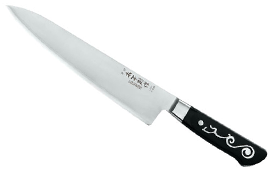
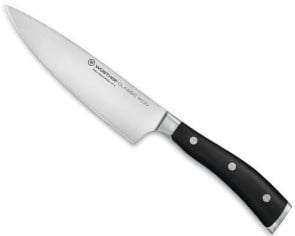
Chef's Knives
Chopping, slicing, and mincing
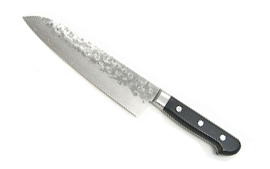
Santoku Knives
Japanese all-purpose blade
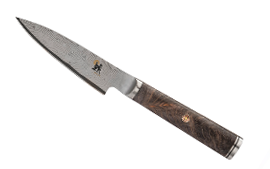
Paring Knives
Peeling and detail work
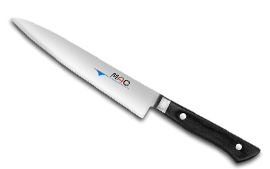
Utility Knives
Sandwiches and small produce
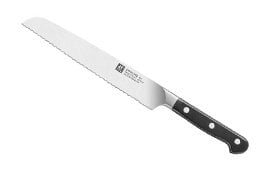
Bread Knives
Crusty loaves and soft bread
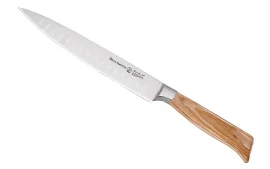
Carving and Slicing
Roasts, ham, and brisket
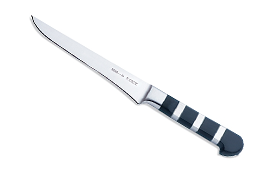
Boning Knives
Removing meat from the bone
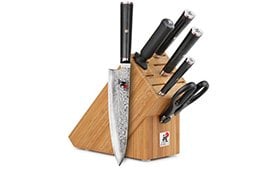
Knife Sets
Outfitting a kitchen or giving a gift
Shop All Shapes
Fillet, nakiri, yanagi, cleavers, steak, oyster, and every other shape we carry
European Makers
Professional and Commercial
Not sure where to start?
What will you cut most often?
What is your budget per knife?
Which edge style do you want?
All Knives
-
Wüsthof Classic Ikon 6-inch Chef's Knife
Six inches of blade on Ikon’s contoured handle makes a chef’s knife that feels quick and light in the hand. It is the size for a small apartment kitchen or a cook with smaller hands, and it takes care of an onion or a boneless chicken breast with little effort.We recommend Classic Ikon to customers who wrap their whole hand around the handle; the rounded shape fills the palm, and it stays secure when you move up to a pinch grip on the blade. This knife also has no heel bolster. Its edge ends right at the handle, which means every inch of it can go across a whetstone or through a guided sharpener without grinding away a lump of steel first.Choosing a length is the first question customers bring us. The 6-inch trades reach for control. We like to keep a 6-inch chef’s knife alongside a larger one, to use as a utility knife or to hand to a second cook helping in the kitchen. Step up to the Classic Ikon 8-inch for larger batches, or compare the Classic 6-inch, which pairs this blade length with the original riveted handle and a full bolster. Our guide to knife shapes helps match a blade to the way you cook. Learn MoreRegular Price: $159.95
Special Price $127.95
-

Wüsthof Classic 4.5-inch Asian Utility Knife
This Wüsthof Classic Asian utility knife takes the length of a small utility knife and gives it a taller, 1.2-inch blade with a gently curved edge. The added height gives your knuckles room above the board, so the knife can mince garlic and chop herbs with a rocking motion as well as slice.It is a good size for the small, frequent jobs of a weeknight, such as a few cloves of garlic or a knob of ginger. The wide blade also scoops what you have cut and carries it to the pan, which a narrow utility knife cannot do.On the board, the curved edge rocks easily, and the flat face of the blade crushes a garlic clove before mincing. For a narrower blade that slices and trims, see the Classic 4.5-inch utility knife. The Classic 5-inch hollow edge santoku is the next size up for chopping, and both come together in the Classic 2-piece Asian knife set. Our kitchen knife shapes guide covers Asian-style blades. Learn More$114.95 -

Wüsthof Classic 7-inch Hollow Edge Craftsman Knife
Wüsthof designed the Classic craftsman as a hybrid of a chef’s knife, a curved boning knife and a slicing knife. The 7-inch blade has a gently curved edge and a pointed tip that follows the contour of a bone, which lets one knife break down a chicken and then slice the cooked meat.It suits cooks who buy whole cuts and prefer to keep one knife at the board for the job. The blade is 1.6 inches tall, narrower than a chef’s knife, so it moves around joints and under silver skin, and hollows along the sides help slices release.For vegetables, keep a full-size chef’s knife alongside it, since the narrower blade does not scoop or rock as well. Dedicated boning is easier with the Classic 5-inch boning knife. The Classic Ikon 7-inch craftsman offers this design with the rounded Ikon grip, and our knife shapes guide describes the three shapes it borrows from. Learn More$169.95 -

Wüsthof Classic 10-inch Super Slicer
Wüsthof’s Super Slicer is a 10-inch serrated slicer with a rounded tip and an outwardly curved edge of wide, scalloped serrations. Those scallops cut through a crusty loaf, but they also glide through a beef tenderloin, a ham or a brisket without tearing the surface, which makes it two knives in one. Look closely and you will see that the scallops protrude from the edge and are not cut into it, so the cutting is done by smooth knife edges and the jagged teeth of a typical serrated knife never touch the food. In effect it is a reverse-scalloped bread knife, with a gentle serration that cuts without tearing.The 1.6-inch blade is taller than a typical bread knife, so it stays straight through a tall loaf or a layer cake, and the length handles a whole watermelon or a pineapple. The rounded tip is safer for slicing at the table.One knife for the holiday roast and the bread basket saves drawer space. Carving purists may prefer the straight edge of the Classic 9-inch carving knife, and serious bread bakers the Classic 9-inch double-serrated bread knife. For Ikon’s rounded grip, choose the Classic Ikon 10-inch Super Slicer. Our Kitchen Knife Shapes guide covers slicers. Learn More$169.95 -

Wüsthof Classic 7-inch Hollow Edge Nakiri
A nakiri is a Japanese vegetable knife with a straight, rectangular blade. The Wüsthof Classic 7-inch hollow edge nakiri brings that shape to a forged German knife on the familiar riveted handle. Because there is no curve to the edge, each downward stroke cuts all the way through a bunch of scallions.Use it to slice onions, shred cabbage for slaw and cut squash into even planks. Its tall blade keeps your knuckles clear and doubles as a scoop for the cutting board. Hollows along the sides help thin slices fall away, and the edge is ground fine for vegetables.Since it is built for produce, pair it with a chef’s knife or boning knife for meat. Compare the Classic 7-inch santoku, whose rounded tip handles more varied work, and the Classic Ikon 7-inch nakiri with its contoured grip. The Kitchen Knife Shapes guide explains the nakiri and usuba. Learn More$169.95 -

Wüsthof Classic 7-inch Hollow Edge Santoku
Santoku means three virtues in Japanese, taken to mean slicing, dicing and mincing, and Wüsthof’s Classic 7-inch is the full-size version of this all-purpose knife. Its flat edge and rounded tip suit an up-and-down push cut, which many cooks find easier to learn than rocking a chef’s knife. The blade is long enough for a large onion or a head of broccoli.At 1.8 inches, the blade gives knuckle clearance and lifts chopped vegetables off the board in one sweep. Hollows ground into each face let slices of zucchini and potato fall free, and the edge is ground thinner than on Wüsthof’s German-profile knives.Customers choosing between this santoku and an 8-inch chef’s knife can decide by technique. Rocking cooks prefer the chef’s knife’s curved edge; push-cutters prefer the santoku. See the Classic 8-inch chef’s knife for comparison, or the Classic Ikon 7-inch santoku if you prefer Ikon’s rounded grip. Our guide to knife shapes covers the santoku in detail. Learn More$169.95 -

Wüsthof Classic 5-inch Hollow Edge Santoku
The Wüsthof Classic 5-inch hollow edge santoku is a compact Japanese-style knife for everyday vegetables. Its short, wide blade dices an onion and minces garlic, and the flat profile suits a straight up-and-down cut. It is also a good alternative to a utility knife; the blade is taller, which leaves more room between your hand and the board and makes chopping more comfortable.A row of oval hollows along the blade traps a thin layer of air between steel and food, so slices of potato drop off the blade cleanly. Wüsthof grinds its santokus to a finer angle than its chef’s knives, which suits thin, precise slicing.At 5 inches, it suits a compact cutting board and anyone who wants a second knife for quick jobs, and its short blade is easy to control as you build speed with knife skills. It is also a good knife to have on hand when children like to help in the kitchen. It also makes a good gift, since the size and shape are unusual enough that the recipient is unlikely to own one already. Rinse and dry it after cutting acidic foods such as tomatoes. For more length, the Classic 7-inch hollow edge santoku handles larger produce, and the Classic Ikon 5-inch santoku is the contoured-handle alternative. Our kitchen knife shapes guide explains how a santoku differs from a chef’s knife. Learn More$149.95 -

Wüsthof Classic 8-inch Half Bolster Chef's Knife
Wüsthof’s Classic 8-inch Half Bolster chef’s knife, also called the demi-bolster, has the familiar Classic handle and blade with one change. The bolster stops short of the heel, so the edge runs all the way back to the handle.That matters in two ways. The heel of the blade touches the board, so it can do heavy work such as splitting a hard squash. It is also simpler to maintain. A full bolster eventually has to be ground down as the blade wears with sharpening, and this knife never needs that.The knife is a little lighter than the standard Classic 8-inch, with the same 1.9-inch width and triple-riveted handle. It suits customers who like the shape of the Classic 8-inch chef’s knife and sharpen their own knives. The Classic Ikon 8-inch offers the same sharpening advantage on a contoured handle. Our kitchen knife shapes guide explains how bolster styles differ. Learn More$169.95 -

Wüsthof Classic 8-inch Extra Wide Chef's Knife
Knuckle clearance is the reason to choose this knife. The Wüsthof Classic 8-inch Extra Wide chef’s knife has a blade about a third of an inch taller than the regular Classic 8-inch. That extra height gives your knuckles more clearance above the board, which makes a difference for cooks with large hands and for anyone who chops with a fast rocking motion.The wide blade also works as a bench scraper. Turn it on its side to carry chopped onions or herbs from the board to the pan, or press down with the flat to crush garlic cloves. The added steel shifts a little more weight into the blade, which helps it drop through firm vegetables.Customers comparing it with the standard Classic 8-inch decide by hand size and technique. If your knuckles graze the board with a standard chef’s knife, choose the Extra Wide. For a longer blade, see the Classic 10-inch, and for a lighter knife, the Classic 6-inch. Our knife shapes guide compares the chef’s knife with wider Asian shapes such as the santoku. Learn More$199.95 -

Wüsthof Classic 12-inch Hollow Edge Flexible Salmon Slicer
The ultimate specialty knife designed solely for the paper-thin slicing of this delicate cut of fish. Learn More$199.95