
You have no items in your shopping cart.
Knives
How would you like to shop?
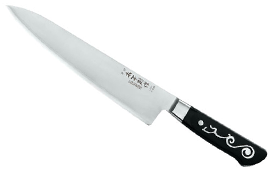
Chef's Knives
Chopping, slicing, and mincing
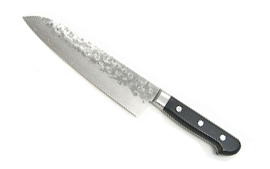
Santoku Knives
Japanese all-purpose blade
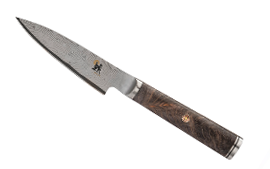
Paring Knives
Peeling and detail work
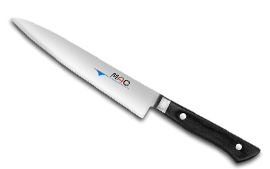
Utility Knives
Sandwiches and small produce
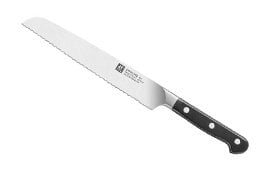
Bread Knives
Crusty loaves and soft bread
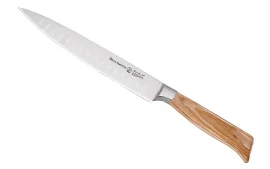
Carving and Slicing
Roasts, ham, and brisket
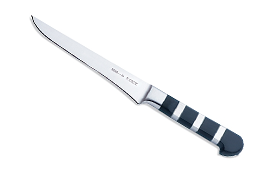
Boning Knives
Removing meat from the bone
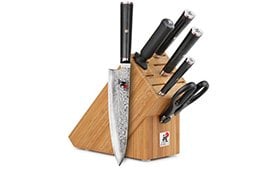
Knife Sets
Outfitting a kitchen or giving a gift
Shop All Shapes
Fillet, nakiri, yanagi, cleavers, steak, oyster, and every other shape we carry
European Makers
Professional and Commercial
Not sure where to start?
What will you cut most often?
What is your budget per knife?
Which edge style do you want?
All Knives
-
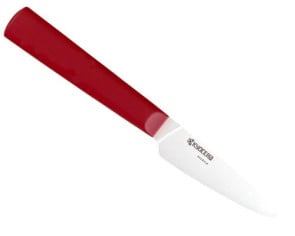
Kyocera Innovation White 3-inch Ceramic Paring Knife, Red Handle
A red handle is easy to spot in a crowded drawer, and in the color-coding scheme many kitchens follow it also marks the knife kept for raw meat. At 3 inches, this Innovation White paring knife suits the small trimming jobs in that category, such as cutting the tendon from a chicken tenderloin or scoring the fat cap on a pork chop.Ceramic gives a clean slice through boneless meat and fat. The blade will not rust, and Kyocera’s testing credits the Innovation ceramic with double the edge life of the brand’s earlier blades. It is still brittle. Keep the tip away from bones and cartilage, which call for a steel boning knife.Customers ask us how a ceramic paring knife gets resharpened. Diamond is the only abrasive that works. The RSD-01 sharpener handles home touch-ups. Kyocera’s authorized repair service, EVERSHARP, handles chipped tips and worn edges; Kyocera’s sharpening service page has the request form.
Matching Red-Handled KnivesThe 4.5-inch Utility Knife and 5.5-inch Santoku carry the same red handle for larger cuts. Prefer another color? The paring knife is also sold in black and blue. Learn More$40.00 -
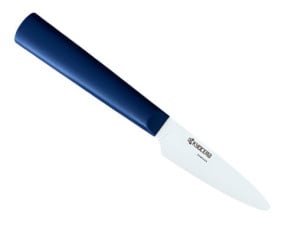
Kyocera Innovation White 3-inch Ceramic Paring Knife, Blue Handle
Deveining shrimp calls for a fine point that can follow the back of each shell without tearing the meat. With a 3-inch ceramic blade, this blue-handled paring knife is suited to that kind of small, exact cut, and it is just as useful for scoring scallops or trimming a citrus segment.In the color-coding many kitchens use to separate tasks, blue marks the knives kept for raw fish and seafood, so the handle can do double duty as a label. Kyocera says its zirconia and alumina blade outlasts the brand’s earlier ceramic knives by a factor of two. Lemon juice and brine have nothing to corrode.We sell Kyocera as an authorized dealer, something buyers check with us before ordering. Kyocera only honors its limited warranty on knives bought through authorized resellers.
Choosing a Paring Knife ColorFor general produce work, pick the black-handled version, or choose the red-handled one for raw meat. To color-code a second length, the Innovation White 4.5-inch Utility Knife, Blue Handle and the Innovation White 5.5-inch Santoku, Blue Handle match it. Learn More$40.00 -
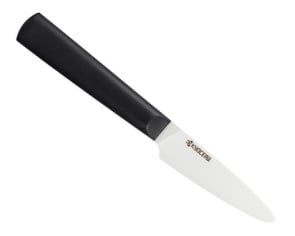
Kyocera Innovation White 3-inch Ceramic Paring Knife, Black Handle
Most paring work happens off the board, with the food in one hand and the knife in the other. This knife pairs a short, pointed 3-inch blade with a handle shaped for that kind of control, whether the job is peeling a kiwi, cutting the eyes out of a potato or trimming the stem from a strawberry.Kyocera worked with the Tokyo designer Yohei Kuwano on the handle. It narrows toward the blade so the fingers can choke up for fine cuts, and its rounded underside and thicker ends are shaped to keep a wet hand from slipping. Kyocera describes the blade material, a blend of zirconia and alumina, as the next step after its Innovation Black ceramic. Acidic fruit cannot corrode or stain it.Customers ask us how these knives are sharpened. A ceramic edge needs diamond. The Kyocera Diamond Wheel Sharpener keeps it in shape at home, and EVERSHARP, Kyocera’s authorized repair shop, restores dull or chipped blades (see Kyocera’s sharpening service page).
Other Handle Colors and SizesHandle colors include blue and red as well. For a black blade, see the Innovation Black 3-inch Paring Knife. When the job moves to the board, the Innovation White 4.5-inch Utility Knife gives more length. Learn More$40.00 -
Global Classic 3-inch Paring Knife
Most paring is done in the hand rather than on the board: peeling an apple, coring a strawberry, trimming the eyes from a potato. The GSF-46 is a 3-inch knife sized for that work, small enough to control with the thumb braced against the fruit and short enough that the tip stays where the cook aims it.The short, straight blade turns smoothly around a round fruit for peeling and cuts small segments from citrus. On the board, it handles a few garlic cloves or a sliced shallot when a larger knife would be more than the job needs. Its handle is compact as well, so the knife sits in the palm without crowding the fingers.
3-inch or 3.5-inch?The GSF-46 is the better choice for in-hand peeling and smaller hands. The Global Classic 3.5-inch Paring Knife has a slightly longer blade that works better on the board. The GSF-46 also comes paired with a chef’s knife in the Global Classic 2-Piece Chef’s and Paring Knife Set and with a utility knife in the Global Classic 2-Piece Paring and Utility Knife Set. The kitchen knife shapes guide describes paring knife styles. Learn MoreRegular Price: $54.95
Special Price $43.96
-
Global Classic 4.5-inch Asian Utility Knife
Small jobs that are too big for a paring knife and too fiddly for a chef’s knife suit the GS-58. Its 4.5-inch blade is taller than a typical utility knife, which leaves room for the knuckles on the board, and the edge curves up to a fine point.That combination gives the knife two working ends. The curved edge rocks through a handful of herbs or a few cloves of garlic, and slices shallots, scallions and small vegetables with push cuts. The pointed tip trims sinew from chicken and works around the seed of a mango.
Choosing a Small Global KnifeFor peeling and coring in the hand, a paring knife such as the Global Classic 3.5-inch Paring Knife is easier to manage. For more blade on the board, the Global 40th Anniversary 6-inch Kiritsuke Utility Knife adds length. The Knife Merchant kitchen knife shapes guide covers utility knives. Learn MoreRegular Price: $79.95
Special Price $63.96
-
Global Classic 3.5-inch Paring Knife
The GS-38 is a 3.5-inch paring knife that works both in the hand and on the cutting board. The extra half inch over a 3-inch parer gives enough edge to slice a lime, mince a shallot or halve cherry tomatoes on the board, while the blade stays short enough to peel and core in the hand.The pointed tip hulls strawberries and scores the skin of a tomato before blanching, and the narrow blade turns easily when trimming mushrooms. It is the paring knife in the Global Classic 3-Piece Asian Chef’s Knife Set and the 3-Piece Santoku Knife Set, and it also comes in the 5-Piece Magnetic Knife Bar Set.
Choosing a Global Paring KnifeFor mostly in-hand peeling, the shorter Global Classic 3-inch Paring Knife is easier to manage. For a small knife that also does board work, choose the GS-38. A knife a size up, the Global Classic 4.5-inch Asian Utility Knife, handles larger fruit and small proteins. Our knife shapes guide covers paring and utility knives. Learn More -
Global Classic Forged 8.5-inch Carving Knife
Carving a turkey, a holiday ham or a standing rib roast at the table goes better with a blade thinner than a chef’s knife and long enough to slice in one stroke. The GF-37 is the carving knife in Global’s Classic Forged line, with a 22 cm blade and the extra weight of a forged knife to keep it steady through dense, cooked meat.The narrow blade produces even slices with less tearing than a wide knife, and the length means fewer back-and-forth strokes, which keeps the slices neat and the juices in the meat. The pointed tip follows the breastbone of a turkey and works around the hip joint to free the thigh. It slices cooked meat off the bone, but it is not meant to cut through bone.
Carving Knife or Slicer?The GF-37 suits cooked roasts and poultry. For raw fish and very thin slices, a longer, lighter blade such as the Global Classic 10-inch Sujihiki does finer work. Our guide to carving, slicing and other knife shapes explains the differences. Learn MoreRegular Price: $179.95
Special Price $143.96
-
Global Classic Forged 8.25-inch Heavyweight Chef’s Knife
Butternut squash, celery root and whole pineapples resist a light knife. The GF-33 is the heavyweight chef’s knife in Global’s Classic Forged line, and its extra mass carries the edge through dense produce and thick rinds with less pressure from the hand.It keeps the familiar chef’s profile of the Classic line, with enough curve for rocking cuts and a flat stretch near the heel for push cuts through roots and cabbage. The added mass also steadies the blade when splitting a chicken through the joints. It is still a thin-edged Japanese knife, though, and should not be driven through bones or frozen food.
Forged or Classic?Choose the GF-33 if you like a knife with some heft or cut a lot of hard vegetables. If you value a light knife for long sessions of mostly onions, herbs and proteins, the stamped Global Classic 8-inch Chef’s Knife will tire the hand less. The full range is compared in the table below, and the Knife Merchant knife shapes guide covers chef’s knives in more depth. Learn MoreRegular Price: $195.95
Special Price $156.76
-
Global Classic Forged 6.25-inch Stiff Boning Knife
Trimming a brisket, breaking down a pork shoulder or seaming apart a beef round takes a boning knife that holds its line under pressure. The GF-31 has a stiff 16 cm blade from Global’s Classic Forged line, heavier than the Classic boning knife, so it pushes through connective tissue and along heavy bones without bending.The narrow blade and pointed tip give the control boning work requires when separating muscles along their seams or trimming fat. The weight helps the knife track straight through long cuts. It is still a thin-edged knife and should work around bones, not chop through them.
Stiff or Flexible?Choose the GF-31 for beef and larger pork cuts. For poultry, pork loin and fish, where a blade that bends along the bone does a cleaner job, choose the Global Classic 6.25-inch Flexible Boning Knife. The table below sets out every Global boning and fillet knife, and our guide to boning, fillet and other knife shapes explains the differences. Learn MoreRegular Price: $149.95
Special Price $119.96
-
Global Classic 7-inch Hollow Ground Santoku
A santoku cuts mainly with a downward push rather than a rock, and the G-80 is built for that motion. Its 18 cm blade has a nearly flat edge that meets the board along most of its length, a tip that drops down to meet the edge, and rows of hollow-ground flutes above the edge that help slices of potato, cucumber and zucchini fall away instead of sticking.The tall blade leaves room for the knuckles and works as a scoop for moving chopped vegetables. It handles boneless proteins as well, from slicing chicken thighs to cutting fish into portions. Because the edge is so flat, it is less suited to the rocking cut many Western cooks use on herbs; cooks who mince by rocking may prefer a chef’s knife.
Santoku or Chef’s Knife?Choose the G-80 for straight push cuts and vegetable-heavy cooking. Choose the Global Classic 8-inch Chef’s Knife if you rock-chop or want a longer slicing stroke. For a vegetable knife with a squared tip, see the Global 7-inch Hollow Ground Vegetable Knife. The G-80 is also included in the Global Classic 3-Piece Santoku Knife Set. The Knife Merchant shapes guide covers santoku and chef’s knives side by side. Learn MoreRegular Price: $149.95
Special Price $119.96


