
You have no items in your shopping cart.
Knives
How would you like to shop?
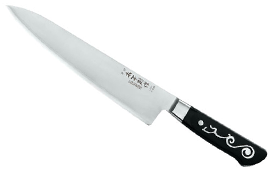
Chef's Knives
Chopping, slicing, and mincing
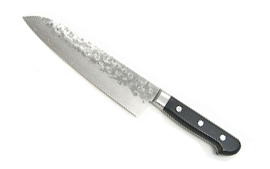
Santoku Knives
Japanese all-purpose blade
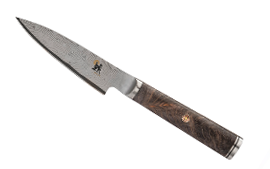
Paring Knives
Peeling and detail work
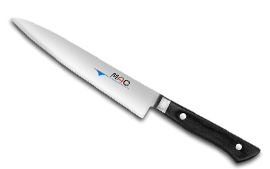
Utility Knives
Sandwiches and small produce
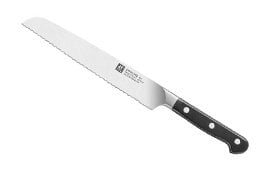
Bread Knives
Crusty loaves and soft bread
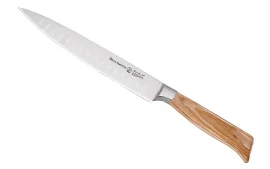
Carving and Slicing
Roasts, ham, and brisket
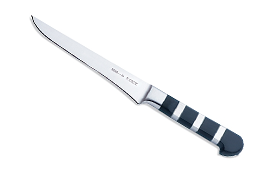
Boning Knives
Removing meat from the bone
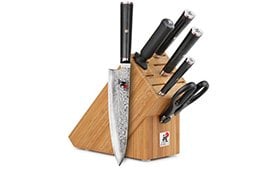
Knife Sets
Outfitting a kitchen or giving a gift
Shop All Shapes
Fillet, nakiri, yanagi, cleavers, steak, oyster, and every other shape we carry
European Makers
Professional and Commercial
Not sure where to start?
What will you cut most often?
What is your budget per knife?
Which edge style do you want?
All Knives
-

Kyocera Innovation White 5-inch Ceramic Tomato Knife, Black Handle
A ripe tomato has a slick skin over soft flesh, and a plain edge tends to slide across the skin and press the tomato flat before it cuts. This 5-inch Innovation White tomato knife has a micro-serrated ceramic edge that catches the skin on the first stroke, so slices come away clean. Kyocera also recommends it for other tough-skinned fruits and vegetables and for bread, which makes it a natural choice for plums, peppers and dinner rolls.Ceramic does not react with the acid in tomatoes or citrus, so the cut surfaces keep their color and taste. The handle, designed by Yohei Kuwano, tapers toward the blade and is shaped to stay put in a wet hand.Before ordering, customers check that we are authorized to sell Kyocera. Knife Merchant is an authorized reseller, and Kyocera’s limited warranty excludes knives from unauthorized sellers.
Serrated or Plain Edge?For thin slices of cooked meat or fish, a plain edge such as the Innovation Black 5-inch Slicing Knife leaves a smoother face. For general prep, the Innovation White 4.5-inch Utility Knife is the plain-edge option in this line. Learn More$60.00 -

Shun Premier 4-Piece Steak Knife Set
The Shun Premier 4-Piece Steak Knife Set is for hosts who want the knife on the table to match the steak on the plate. A razor-sharp fine edge glides through the meat and cuts fewer of its fibers, so more of the juices stay inside the steak rather than running onto the plate. Because the edge is not serrated, it slices cleanly instead of tearing, and it is easier to re-sharpen when the time comes. The 5-inch blades are long enough for the largest steak, yet short enough for close control. The hand-hammered tsuchime finish gives each knife the signature Shun Premier look and helps food release. The set of four suits a small dinner party and arrives in a box suitable for gift-giving or storage.
FeaturesFine, non-serrated edge: A clean edge slices rather than tears, so each cut stays neat and the meat stays juicy.Edge retention at the table: Ceramic and glass plates are extremely hard on knife edges, and VG-MAX steel holds its edge for a very long time even with repeated contact against a plate.VG-MAX cutting cores: Shun’s proprietary steel resists wear and corrosion and holds a fine, keen edge.Hammered tsuchime finish: The hand-hammered surface helps food release and gives the set its distinctive appearance.Contoured walnut PakkaWood handles: The handles offer comfort and control and resist moisture.Gift box: The presentation box makes the set ready to give and doubles as storage.Handcrafted in Seki City, Japan: Each Shun knife requires at least 100 individual steps to complete in Seki City, one of Japan’s most important blade-making centers since the 13th century.Free lifetime sharpening: Shun offers free lifetime sharpening for every knife in the set.
Tasks It Handles WellCutting steaks and chops at the tableCutting roast chicken, pork, and lambServing grilled and barbecued meats
Choosing a Shun Premier Table SetTo carve the roast before it reaches the table, pair this set with the Shun Premier 2-Piece Carving Set, whose slicing knife and fork share the same finish and handle. Learn More$499.95 -

Shun Premier 5.5-inch Nakiri
Shun describes the nakiri as a traditional Japanese vegetable knife made for precise preparation, and its 5.5-inch Premier nakiri brings that shape to a compact blade. For a push cut, Shun advises moving the blade down and forward with the edge parallel to the board.The squared tip aids balance and control, and the straight edge cuts extremely thin, uniform slices and makes quick work of everything from leafy greens to root vegetables. The wide, flat blade also scoops chopped ingredients from the board to the pan. The hammered tsuchime finish helps sliced vegetables release from the blade, and the walnut-finish handle matches the rest of the Premier line. It is a natural companion to a Premier chef’s knife.
Premier Chef’s KnifeThe Premier 8-inch Chef’s Knife handles meat and general prep. Learn More$204.95 -

Shun Premier 5.5-inch Santoku
Shun describes its 5.5-inch Premier santoku as top performance in a smaller, lightweight, multipurpose knife, suited to medium-sized kitchen tasks. It slices baby carrots, dices shallots and cuts cold butter or chocolate, and it moves quickly on a small board.The hammered tsuchime finish on the Premier blade helps food release as you cut, and the layered Damascus cladding gives each knife its rippled look. A contoured walnut-finish handle offers comfort and control. It suits cooks with smaller hands and kitchens with limited board space.
Full-Size SantokuThe Premier 7-inch Santoku handles larger produce. Learn More$199.95 -

Shun Premier 6-inch Chef's Knife
The Shun Premier 6-inch Chef’s Knife is for cooks who prefer a shorter, lighter blade. It handles the usual chef’s knife tasks, slicing, dicing, and rocking through herbs, with quick performance and a high degree of control. The compact length suits smaller hands, smaller cutting boards, and cooks who find an 8-inch blade more than they need. The curved belly supports a rocking cut for mincing, and the hand-hammered tsuchime finish on the Shun Premier blade helps food release as you cut.
FeaturesCompact chef’s profile: The 6-inch blade keeps full chef’s knife versatility in a nimble size.Curved belly: The rounded edge supports a rocking motion for fine mincing.VG-MAX cutting core: Shun’s proprietary steel resists wear and corrosion and holds a fine, keen edge.Damascus cladding: Layered stainless steel supports and protects the core.Hammered tsuchime finish: The hand-hammered surface helps food release from the blade while cutting.Contoured walnut PakkaWood handle: The handle offers comfort and control and resists moisture.Handcrafted in Seki City, Japan: Each Shun knife requires at least 100 individual steps to complete in Seki City, one of Japan’s most important blade-making centers since the 13th century.Free lifetime sharpening: Shun offers free lifetime sharpening, so the edge can be professionally restored whenever it needs it.
Tasks It Handles WellDicing onions, peppers, and shallotsMincing herbs, garlic, and gingerSlicing boneless chicken, pork, and fishPrep for one or two people on a small board
Choosing a Shun Premier Chef’s KnifeFor larger produce and bigger batches, the Shun Premier 8-inch Chef’s Knife is the everyday standard. For a compact knife with a straighter edge suited to push cuts, consider the Shun Premier 5.5-inch Santoku. Learn More$199.95 -

Minonokuni Take 5.9-inch (150mm) Left-Handed Deba
A deba ground for the left hand puts the bevel on the left face of the blade, so the edge follows the backbone when a left-handed cook fillets a fish. This Take 150mm deba is that mirror image, and we keep it in stock.The size suits trout, mackerel, small bream and similar fish, and it handles poultry jointing as well. Start at the head with the heavy heel, then work along the frame with the tip. A right-handed deba used in the left hand fights the cook on every pass and leaves meat on the bone, which is why the grind matters more on this knife than on a double-bevel blade.
Choosing TakeThe Take line is our recommendation for a cook who is new to single-bevel knives. Its white steel is ready for professional use, yet it is less brittle than blue steel and will tolerate the occasional misjudged cut while technique develops. A Ume 165mm left-handed deba is the more forgiving option for a cook who expects to spend time learning to sharpen.For larger fish, the Take 165mm left-handed deba and Take 180mm left-handed deba add length and weight. The right-handed version is the Take 150mm deba. The knife shapes guide has more on the deba. Learn More$260.00 -

Minonokuni Take 5.9-inch (150mm) Deba
A 150mm deba covers most fish a home cook will bring home whole, from trout and mackerel to a small snapper, and it is small enough for a standard home cutting board. The Take version is a sound first deba for a cook who wants to learn traditional fish butchery.The thick, heavy blade does the forceful work. Cut through the head and collar with the heel, then switch to the tip to follow the backbone and separate the fillets cleanly from the bone. The single bevel helps the edge ride flat along the frame, so less flesh is left behind.
A Steel That Tolerates LearningWe describe Take as the sweet spot of the Minonokuni range. Its white steel holds a fine edge well enough for professional kitchens, and it is less brittle than the blue steel used in the Matsu deba. That margin matters while a cook is learning how hard to lean on the heel.Other SizesSmaller fish are quicker work with the Take 135mm ko-deba. The Take 165mm deba adds weight for larger fish and for poultry. Left-handed cooks can order the Take 150mm left-handed deba, which we keep in stock. Read about the deba and its uses in our guide to kitchen knife shapes. Learn More$190.00 -

Minonokuni Take 5.3-inch (135mm) Ko-Deba
Ko-deba means small deba. At 135mm, this Take knife is built for fish that a full-size deba would overpower. Horse mackerel, sardines, smelt and small trout are its work. On fish this size, the work is mostly filleting rather than cleaving.The blade tapers from a thick spine near the handle to a fine tip. That taper lets the cook open a small fish along the belly, run the tip down each side of the backbone and lift the fillets with very little flesh left on the frame. It is a light knife, so we do not recommend it for splitting heads or cutting through heavy collars. For that work, use the Take 150mm deba or a larger size.
Why TakeTake sits in the middle of the three standard Minonokuni lines. Its white steel is adequate for professional use but less brittle than the blue steel of the Matsu line, which makes it a sound choice for a cook who is not yet an expert with single-bevel knives. The knife shapes guide shows how the deba compares with Western fillet knives.A cook who processes small fish for a restaurant, or an angler who cleans a cooler of panfish at home, will find the ko-deba quicker to handle than any larger size. Learn More$180.00 -
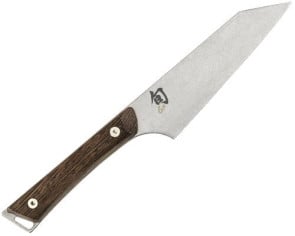
Shun Kanso 5-inch Asian Multi-Prep Knife
Shun calls the 5-inch Kanso Asian multi-prep knife a Japanese-style boning knife, the shape known as a honesuki. The triangular blade and pointed tip work around poultry joints to separate thighs and wings cleanly. Traditional honesukis have a single-bevel edge, and this Kanso version is sharpened on both sides, which makes it approachable for left- and right-handed cooks alike.The same knife handles small fruit and vegetable prep, which is why Shun calls it multi-prep. In the Kanso BBQ set, it takes care of poultry and trimming.
For Larger CutsThe Kanso Boning and Fillet Knife has a longer, curved blade. Learn More$114.95 -

Shun Kanso 5.5-inch Hollow Ground Santoku
The 5.5-inch Kanso santoku is a compact version of the Japanese all-purpose knife, sized for small cutting boards and smaller hands. Its flatter edge favors push cuts through vegetables and boneless meat, and hollow-ground indentations help slices release from the blade.The single-steel AUS10A blade and contoured Tagayasan handle match the rest of the Kanso series. It is a handy second knife beside a chef’s knife, and it is the santoku included in the Kanso 6-piece block set.
Full-Size SantokuThe 7-inch Hollow Ground Santoku adds length and height. Learn More

