
You have no items in your shopping cart.
Best Sellers
-

F. Dick Dickoron Titan 12-inch Oval Coated Steel
Harder knives need a harder steel, and the Dickoron Titan is made for them. Its ultra-hard special coating is three times harder than standard sharpening steels, so it can work knives above 60 Rockwell that a standard rod would barely touch.The coating is slightly more abrasive than other steels, which helps it bring back an edge on hard Japanese knives and Damascus blades evenly. Meat processors also use it for the edge it gives for cutting through beef. For a fine finish, F. Dick recommends following it with the Dickoron Classic, and the oval face keeps the angle steady.For a cook with a mixed roll of German and Japanese knives, it handles the hardest blades in the set.Pair it with the Dickoron Classic 12-inch oval steel for that finishing step. Another rod for hard steels is the F. Dick DarkNitro 12-inch oval steel. A diamond option is the Dickoron Duo diamond and ceramic steel. Learn More$133.25 -
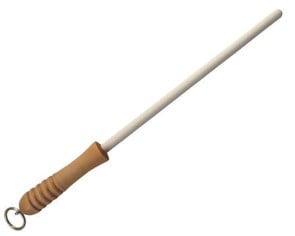
Idahone 12-inch Fine Ceramic Sharpening Rod, Hard Rock Maple Handle
The Idahone 12-inch Fine Ceramic Sharpening Rod is for cooks who maintain a full knife block, from paring knives to long slicers, and want one rod that serves all of them. A honing steel only pushes a rolled edge back into line. This high-alumina ceramic rod removes a small amount of steel, so it sharpens and polishes the edge at the same time. Its finish is comparable to a fine Japanese whetstone, which makes it a maintenance tool between full sharpenings rather than a substitute for them.
What It Does for Your Knives Long working surface: Accommodates 10-inch chef’s knives and slicers as readily as short knives, so one rod covers the whole block. Fine ceramic abrasive: Refreshes a working edge in a few light strokes and leaves a smooth, polished finish. Suited to Japanese and Western knives: Because the rod abrades the edge rather than bending it, it maintains softer German steels and the harder steels of many Japanese knives, which tend to wear or chip rather than roll. Natural maple handle with hanging ring: Provides a secure grip for steady strokes and keeps the rod within reach at the prep station.
Other Sizes and Grits The same rod is available in a shorter length as the Idahone 10-inch Fine Ceramic Sharpening Rod, Hard Rock Maple Handle, and with a black handle as the Idahone 12-inch Fine Ceramic Sharpening Rod, Black Wood Handle. When a knife no longer responds to the fine rod, the Idahone 12-inch Coarse Ceramic Sharpening Rod removes steel faster to restore the edge, and the fine rod then refines it. Learn More$38.25 -

F. Dick 10-inch Oval Diamond Sharpening Steel with Non-Slip Handle
When a regular steel no longer brings an edge back, a diamond rod will, without soaking a stone or learning to hold an angle on one. Diamond is the fastest-cutting rod there is. This F. Dick rod is 600 grit with a solid core, and that construction matters. Diamond pressed into a solid core lasts for years, while hollow rods with an epoxied coating can wear through in six months to a year of regular use.The oval profile puts more of the rod against the blade on each stroke, so it takes fewer strokes, and you can feel the bevel against the rod more clearly. Diamond also works on hard steels that a plain steel rod cannot touch. Its one drawback is a slightly rougher finish, so it is worth following with a few strokes on a ceramic rod such as the Idahone 12-inch Fine Ceramic Sharpening Rod, Black Wood Handle.
Diamond or Steel?For daily upkeep on a knife that is still sharp, a cut steel such as the F. Dick 10-inch Round Fine Cut Sharpening Steel, Red Handle is gentler and removes less metal. Keep the diamond rod for edges that have gone dull. Our Honing Rod Guide covers when each one makes sense. Learn More$66.30 -
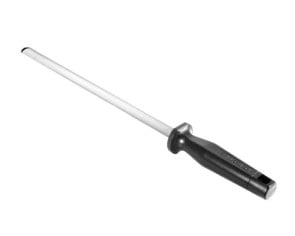
Victorinox 12-inch Oval Diamond Sharpening Steel
The Victorinox 12-inch oval diamond sharpening steel is a 600 grit steel with a hollow rod coated in diamond. Diamond removes metal, so this steel sharpens a dull edge rather than only realigning it.The oval shape gives more contact between the steel and the edge of the blade on each stroke. The black nylon handle is non-slip and comfortable in either hand. It is made in the USA.Use light pressure; diamond cuts quickly, and a few strokes on each side are usually enough. Follow with a fine cut steel or a ceramic rod to smooth the edge.Rinse the rod and wipe it dry after use to keep metal filings from clogging the diamond surface. Never use oil on a diamond steel.For a round, solid-core diamond rod, see the Victorinox 12-inch Round Solid Core Diamond Steel. For daily honing after sharpening, the Victorinox 12-inch Fine Cut Honing Steel. Our Honing Rod Guide explains diamond steels. Learn More$49.40 -

Master Grade 11 in. White Ceramic Rod
The Master Grade ST-3700 receives our top recommendation for a ceramic honing rod.
Please note that a steel honing rod is used to straighten the edge of a knife that has "burred" or rolled over. Ceramic rods are used to remove metal and restore an edge. Knives with a Rockwell hardness of 61 or greater tend to not roll the edges, but will abrade and dull. Ceramic may be the best choice for these knives.
Not all ceramics are equal: At 9 mohs of hardness, the Master Grade ST-3700 is significantly better than others. (Diamonds are 10 mohs). The vast majority of ceramic rods on the market are 8 mohs.
Impact Resistant. Handle is square, so it is less likely to roll off the table. Rubber tip and metal core also help to make this rod more likely to survive a fall. The level of abrasiveness on a ceramic rod is anecdotal as they are textured ceramics that lack a grit that has been sieved to a particular grain size. These are roughly equivalent to a 2000 grit stone. Learn More$49.95 -

Idahone 10-inch Fine Ceramic Sharpening Rod, Black Wood Handle
The Idahone 10-inch Fine Ceramic Sharpening Rod is for cooks who want to keep a sharp knife sharp with a few strokes before each use. A honing steel only pushes a rolled edge back into line. This high-alumina ceramic rod removes a small amount of steel, so it sharpens and polishes the edge at the same time. Its finish is comparable to a fine Japanese whetstone, which makes it a maintenance tool between full sharpenings rather than a substitute for them.
What It Does for Your Knives Fine ceramic abrasive: Refreshes a working edge in a few light strokes and leaves a smooth, polished finish. Suited to harder steels: Because the rod abrades the edge rather than bending it, it suits the harder steels of many Japanese knives, which tend to wear or chip rather than roll. Fewer whetstone sessions: Regular use keeps an edge in service longer, so full sharpenings are needed less often. Compact length: Handles paring knives, utility knives and shorter chef’s knives. For longer blades, the Idahone 12-inch Fine Ceramic Sharpening Rod, Black Wood Handle allows a full stroke from heel to tip.
Choosing a Fine or Coarse Rod The fine rod is the right tool for routine maintenance of a knife that is still sharp. When a knife no longer responds to it, the Idahone 10-inch Coarse Ceramic Sharpening Rod removes steel faster to restore the edge, and the fine rod then refines it. The same fine rod is also available with a natural maple handle as the Idahone 10-inch Fine Ceramic Sharpening Rod, Hard Rock Maple Handle. Learn More$36.45 -
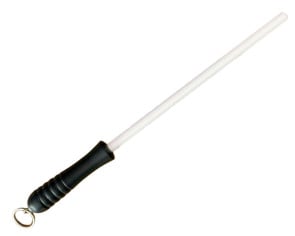
Idahone 12-inch Fine Ceramic Sharpening Rod, Black Wood Handle
The Idahone 12-inch Fine Ceramic Sharpening Rod is for cooks who rely on long knives and want to keep them sharp between full sharpenings. A honing steel only pushes a rolled edge back into line. This high-alumina ceramic rod removes a small amount of steel with each stroke, so it sharpens and polishes the edge at the same time. Its finish is comparable to a fine Japanese whetstone, which makes it a maintenance tool between full sharpenings rather than a substitute for them.
What It Does for Your Knives Long working surface: Gives 10-inch chef’s knives, slicers and sujihiki room for a full stroke from heel to tip, so the entire edge receives even contact. Fine ceramic abrasive: Refreshes a working edge in a few light strokes and leaves a smooth, polished finish. Suited to harder steels: Because the rod abrades the edge rather than bending it, it suits the harder steels of many Japanese knives, which tend to wear or chip rather than roll. Fewer whetstone sessions: Regular use keeps an edge in service longer, so full sharpenings are needed less often.
Other Sizes and Grits For shorter knives or a smaller kitchen, the Idahone 10-inch Fine Ceramic Sharpening Rod, Black Wood Handle offers the same ceramic in a more compact length. The same fine rod is also available with a natural maple handle as the Idahone 12-inch Fine Ceramic Sharpening Rod, Hard Rock Maple Handle. When a knife no longer responds to the fine rod, the Idahone 12-inch Coarse Ceramic Sharpening Rod removes steel faster to restore the edge. Learn More$38.25 -

Idahone 12-inch Coarse Ceramic Sharpening Rod, Hard Rock Maple Handle
The Idahone 12-inch Coarse Ceramic Sharpening Rod is for cooks whose knives have dulled past the point a fine rod or honing steel can recover, but who would rather not set up a whetstone each time an edge fades. Its coarse high-alumina ceramic removes steel faster than Idahone’s fine rods and restores a working edge in a few strokes. The long rod gives a chef’s knife or slicer room to travel its full length without running off the end.
What It Does for Your Knives Coarse ceramic abrasive: Cuts a fresh edge on knives dulled by regular use. A honing steel only straightens a rolled edge. Measured metal removal: The grit is somewhat finer than the coarse rods in Idahone’s V-type sharpeners, so the rod reworks an edge without the heavy stock removal of a sharpening system’s first stage. Long working surface: Accommodates 10-inch chef’s knives and slicers, so each stroke covers the edge from heel to tip. Wood handle with hanging ring: Provides a secure grip for steady strokes and keeps the rod within reach at the prep station.
Using the Coarse and Fine Rods Together The coarse rod does the corrective work, and a fine rod refines the result. Cooks who keep both on hand use the coarse rod when a knife no longer responds to honing, then finish on the Idahone 12-inch Fine Ceramic Sharpening Rod for a smoother, more refined edge. For routine maintenance of a knife that is still sharp, the fine rod alone is the better choice because it removes less steel. Learn More$38.25

