
You have no items in your shopping cart.
Best Sellers
-
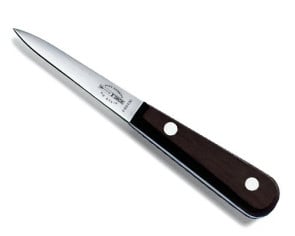
F. Dick 3-inch Oyster Knife
Small, delicate oysters with wavy shells, such as Kumamotos, Olympias and Belons, need a precise knife, and this 3-inch F. Dick oyster knife has a pointed tip and a sharpened edge to find the hinge and cut the adductor muscle cleanly.Most oyster knives have a blunt blade, which can crush a fragile shell. This one has an edge ground into it, so it also opens clams, which need to be cut rather than pried. The pointed tip slips into a tight hinge with little force, and the short blade gives control close to the hand.At a raw bar, a dedicated knife for small oysters also speeds up service. It keeps the presentation neat on the half shell.For larger, heavier oysters, the F. Dick 2.25-inch stainless steel oyster shucker is the counterpart. Protect the hand holding the shell with a folded towel or a cut-resistant glove. Our knife shapes guide covers oyster and clam knives. Learn More$28.60 -

F. Dick Premier Plus 3.5-inch Paring Knife
The Premier Plus paring knife is small and sharp, made for peeling, small cutting jobs and decorating. Its 3.5-inch blade is the size cooks use in the hand for coring and trimming.Paring work happens close to the fingers, so control matters more than length. The short, forged blade stays rigid when it is pushed into a tough apple core or the stem of a tomato. F. Dick has been forging kitchen knives since the 1800s, and this small knife carries the same construction as the larger Premier Plus blades.A paring knife also finishes small tasks at the stove, such as scoring a sausage or cutting a lemon for a final squeeze. Keep one near the range so the chef’s knife stays at the board.A blue-handled version suits color-coded kitchens, and the Premier Plus 4.5-inch paring knife adds reach for grapefruit and small slicing. For tourné cuts, the Premier Plus bird’s beak peeler is the better shape. Learn More$47.45 -

F. Dick 1905 3.5-inch Paring Knife
Peeling, slicing and garnishing fruits and vegetables are the jobs for this 3.5-inch 1905 paring knife. It comes with a keen edge that cuts thin, even tomato slices for a knife this small.A paring knife does much of its work in the hand, and the short blade keeps the tip close to the fingers for control when hulling strawberries or coring tomatoes. The ringed 1905 handle gives a secure grip for that close work.A paring knife also handles small jobs at the stove, such as scoring the skin of a sausage, testing a potato for doneness or cutting a lemon to finish a dish. Keep one near the range so the chef’s knife stays on the board.For tourné cuts and peeling round produce, the curved 1905 3-inch bird’s beak peeler is better shaped. Larger fruit and slicing on the board suit the 1905 6-inch utility knife. The comparison table below lists the 1905 paring and utility knives. Learn More$49.40 -

MAC Chef Series 2.5-inch Bird’s Beak Paring Knife
A bird’s beak parer, also called a tourné knife, has a blade that curves down toward the tip, and the PK-25 is MAC’s version in the thin Chef Series. Cooks trained in classic French technique use it to turn potatoes and carrots into seven-sided tourné cuts; at home it is the knife for peeling apples, coring strawberries and trimming the eyes from potatoes.The curve follows the shape of round fruit and vegetables, so the edge stays in contact as you rotate the food against your thumb. It is also handy for deveining shrimp and scoring citrus peel. For board work such as slicing shallots, a straight parer like the HB-40 is easier to use. Our guide to kitchen knife shapes describes the paring knife family. Learn More$37.95 -

MAC Original 4-inch Paring Knife
The Mac Original 4-inch Paring Knife was designed with comfort in mind. Use this paring knife when peeling, paring or slicing small fruits and vegetables, and you will find that the up-swept handle fits comfortably into your hand. A hole near the rounded tip makes it easy to hang.The rounded tip is a safety feature of the Original Series, and it makes the knife a good choice for a kitchen with several cooks or for anyone who carries a parer loose in a drawer. It is less suited to jobs that need a point, such as coring tomatoes or scoring; the Chef Series HB-40 has a pointed tip for those.The PK-40 is also part of the 2-piece and 3-piece Original sets. Our Kitchen Knife Shapes guide covers the paring knife and its variations. Learn More$33.95 -
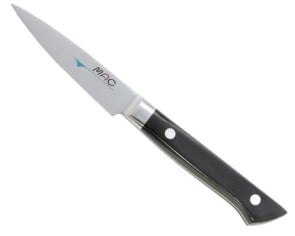
MAC Professional 3.25-inch Paring Knife
The PKF-30 is the shortest knife in the MAC Professional Series, a 3.25-inch parer with a bolster. The short, pointed blade gives close control for in-hand work such as hulling strawberries, peeling shallots and trimming Brussels sprouts, and the bolster gives the fingers a solid stop.Because the blade is short, the hand sits near the tip, which makes it the right parer for fine, careful cuts: segmenting citrus, removing seeds from chiles and scoring the skin of tomatoes before blanching. For slicing small items on the board, a longer parer such as the Chef Series HB-40 or the 5-inch PKF-50 gives more edge to work with.Compare the parers in the table in the Details, or see our Kitchen Knife Shapes guide. Learn More$64.95 -

Mercer Genesis 3.5-inch Paring Knife
The Genesis 3.5-inch Paring Knife handles the small jobs: peeling, coring, deveining shrimp, scoring citrus and trimming garnishes. It is forged, so it has more weight and balance than a stamped parer, and the bolster keeps the fingers from sliding onto the edge.The Santoprene handle grips securely when wet, which matters on a slick apple or a juicy tomato.
Choosing a Paring KnifeFor a riveted handle, see the Renaissance 3.5-inch Paring Knife. The Millennia 3.5-inch Paring Knife is lighter. For peeling round produce, the Genesis 2.5-inch Bird’s Beak Peeler follows the curve. The kitchen knife shapes guide covers paring knives. Learn More$26.55 -

Dexter-Russell Sani-Safe 3.5-inch Net Knife with Sheath
A net knife lives on a fishing boat for cutting through tangled netting and line. Dexter-Russell’s Sani-Safe utility and net knife has a 3.5-inch blade with a scalloped edge that, per Dexter, glides through nets, and Dexter lists line, bait and produce among its other jobs. Ashore it is just as versatile, for food preparation, as a produce knife and even as a box cutter. DEXSTEEL suits a scalloped edge well, since the steel is very tough and the scallops do not bend easily. Fishermen rely on it for net repair, and it is a favorite on shrimp boats for deveining shrimp and gutting fish. This version comes with a sheath, so it can be clipped within reach on deck and stowed safely between uses. The sheath is made in the USA, holds the knife with a very tight fit and clips to the belt, so the knife will not go overboard.
With or Without the Sheath?The same knife without a sheath is the Sani-Safe 3.5-inch Utility and Net Knife, a good spare for the galley or the kitchen. Learn More$15.99 -

Dexter-Russell Traditional 3.25-inch Paring Knife, Carbon Steel
Dexter-Russell’s Traditional 3.25-inch paring knife is the small companion to its classic wood-handled cook’s knives, and shoppers find it by its item number, 15271. Dexter recommends it for peeling fruits and vegetables, cutting cheese and other basic prep.The blade takes a very fine edge and comes back quickly on a honing steel or a fine stone. It develops a gray patina with use and must be dried after washing, so it suits cooks who enjoy looking after their knives. In the hand it is light and nimble, good for hulling strawberries or coring tomatoes, and a handy knife to keep beside the sink for quick jobs. Dexter builds it in Southbridge, Massachusetts, and the Traditional line has long had a following in Northeast kitchens.
A Stain-Free AlternativeFor a parer that needs no special drying, the Sani-Safe 3.25-inch Cook’s Style Paring Knife has the same blade length, and the V-Lo 3.5-inch Paring Knife adds a cushioned grip. Learn More$12.45 -
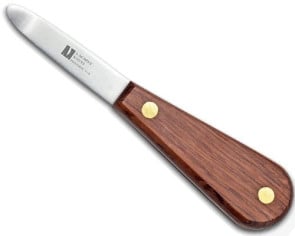
R. Murphy New Haven Elite 2.625-inch Oyster Knife, Rosewood Handle
R. Murphy’s New Haven Elite brings together the curved tip of the New Haven and the weighted, riveted rosewood handle of the Wellfleet. The 2.625-inch blade bends up slightly at the tip, and the hand-polished handle is shaped to fill the palm.A curved tip suits shuckers who open oysters at the hinge. Seat the tip, twist to pop the shell, then let the bend carry the blade along the top shell to release the adductor muscle. R. Murphy shapes the tip to ride slightly high inside the shell, which makes it easier to scrape the muscle free cleanly and leaves the meat intact.We hear from customers deciding between wood and plastic handles. A rosewood handle with brass rivets has more weight in the hand and a finished look, which makes the Elite a natural gift for someone who hosts oyster nights. For heavy commercial use with constant sanitizing, the ECOgrip New Haven shucker is the practical choice. The New Haven with a round wood handle is the lighter, classic version of this blade. If you prefer to open oysters with a pointed blade, the Wellfleet uses the same handle. Our overview of knife shapes includes oyster and clam knives. Learn More$41.50

