
You have no items in your shopping cart.
Yanagi / Sujihiki
One of the traditional Japanese shapes, Yanagi knives are similar to carvers in appearance but can be distinguished by their long thick spines, prominent shinogi lines, and concave back sides. The westernized version of this form is known as Sujihiki. Flat ground and never more than 3mm in width, Sujihiki knives have long, thin, pointed blades that are very comparable to carving knives in both appearance and application.
Sujihikis (also known as Sujibikis) are commonly made in both carbon and stainless steels. Yanagis (also known as Yanagibas) are more commonly made in Carbon Steel. We do have a selection of Stainless Steel Yanagis as well. You can browse our selection of Stainless Steel Yanagis here.
-

Masahiro Shiro-Ko 270mm Yanagiba
The Masahiro Shiro-Ko 270mm Yanagiba is a traditional Japanese slicing knife crafted for flawless, single-stroke cuts of raw fish and proteins. Forged from White #2 steel (Shirogami), this high-purity carbon steel is renowned for achieving exceptional sharpness with ease, delivering the clean, precise cuts essential to sushi and sashimi preparation. With its long, slender 270mm Yanagiba blade, this knife is designed to glide effortlessly through fish in one smooth pull, preserving texture and appearance while minimizing cell damage. The result is beautifully clean slices that reflect the elegance and discipline of Japanese cuisine. A lightweight Paulownia (Empress) wood handle paired with a classic water buffalo horn ferrule provides excellent balance, comfort, and control during extended prep. Refined, responsive, and expertly crafted, the Masahiro Shiro-Ko Yanagiba is an essential tool for chefs and serious home cooks who demand precision, sharpness, and tradition in every slice. Learn More$305.00 -

Kikuichi Kasumi Series 8.25-inch (210mm) Yanagi
The 8.25-inch (210mm) yanagi is the shortest in Kikuichi’s Kasumi range and the most practical for a home kitchen, where a long sashimi knife can overhang a standard cutting board. Kikuichi supplies this size with a saya to protect the edge.The single-bevel blade is hand forged in Kikuichi’s Kasumi construction, a hard White #2 carbon edge joined to a softer carbon steel back. That pairing gives a fine, keen edge for slicing salmon, tuna and yellowtail, and the softer back makes sharpening on whetstones more forgiving. It is a good first traditional knife for a home cook learning to make sashimi and nigiri, and the shorter length is easier to control as that skill develops.
210mm or 240mm?The Kasumi 9.4-inch (240mm) Yanagi gives the longer single stroke professional sushi cooks prefer. For a slicer with a double-bevel edge, see the GC Series Carbon Steel 9.4-inch (240mm) Sujihiki. Learn More$385.00 -
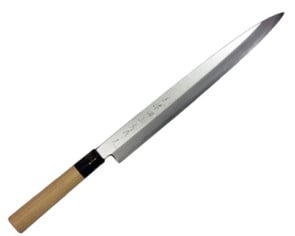
Minonokuni Take 11.8-inch (300mm) Yanagiba
At 300mm, this yanagiba is long enough to cut fillets from larger fish and to slice wide blocks for sashimi without a second stroke. It belongs on a sushi counter or a deep home board where the cook has room to draw the full length of the blade.A long yanagiba is also a precise one. The length lets the cook slow the stroke and control the thickness of each slice, which matters for thin cuts of white fish. It does take practice to keep the tip steady, and a cook coming from a shorter slicer should allow time to adjust.
Take or Matsu at 300mmBoth lines make this length. The blue steel Matsu 300mm yanagi holds an edge longer but is more brittle and suits an experienced cook. Take uses white steel, which is still good enough for professional use and tolerates more, so we suggest it for cooks who are not yet experts in single-bevel knives.For a slightly shorter knife, see the Take 270mm yanagiba. The Take 330mm yanagi is the longest in the line. Our knife shapes guide describes the yanagiba. Learn More -
Global Classic 10-inch Yanagi Sashimi Knife
For sashimi and sushi at home, the G-11R is the traditional Japanese tool in a form that is easy to keep. Its 25 cm yanagi blade is ground on one side only, the way Japanese sashimi knives have long been made, and the back of the blade is slightly hollow so each slice of fish separates and falls away.A yanagi is used with a single long pull from heel to tip. The length lets that one stroke cut through a block of tuna or a salmon fillet, leaving a glossy face on the slice that a sawing motion would tear. The single bevel also steers the blade slightly away from the cut side, which helps slices peel off cleanly. Traditional yanagi are usually carbon steel and need oiling after each use; this one needs only washing and drying.The single-bevel edge is made for the right hand and must be sharpened on whetstones. Cooks new to Japanese sharpening should weigh that before buying.
Which Global Slicer?The Global Classic 12-inch Yanagi Sashimi Knife is the longer version for large loins and sushi counters. The Global Classic 10-inch Sujihiki is ground on both sides, works in either hand and sharpens like a Western knife. See our kitchen knife shapes guide for more on yanagi and sujihiki. Learn MoreRegular Price: $184.95
Special Price $147.96
-

Kikuichi Kasumi Series 9.4-inch (240mm) Yanagi
Kikuichi calls the yanagi the quintessential sashimi knife, and the 9.4-inch (240mm) Kasumi yanagi is the length sushi cooks reach for at the counter. Its long, narrow single-bevel blade slices raw fish in one pulling stroke, which leaves a clean, glossy surface with no torn fibers.Kasumi is Kikuichi’s most popular traditional series, by its own account, and Kikuichi calls a Kasumi yanagi a knife fit for a true professional. Kikuichi hand forges the blade from two pieces of steel, a hard White #2 carbon edge backed by a softer carbon steel jacket, following traditional sword-making technique, which makes the edge keen and the blade forgiving to sharpen. Because it is single bevel, the yanagi rewards a cook who learns traditional sharpening, and it is a natural step for a home cook who already makes sushi and sashimi.
Choosing a Kasumi YanagiThe Kasumi 8.25-inch (210mm) Yanagi suits a home cutting board, and the Kasumi 9.4-inch (240mm) Fuguhiki is thinner for paper-thin slices. Learn More$440.00 -

Minonokuni Ume 11.8-inch (300mm) Yanagiba
The 300mm Ume yanagiba is a long sushi counter knife in the most forgiving steel Minonokuni offers. Its length slices large blocks of fish in one stroke, and it holds its edge through a long session of slicing.A blade this long gives the cook fine control over the thickness and angle of each slice, which matters for thin cuts of white fish and for presentation. It needs space, though, and a cook stepping up from a shorter yanagiba should expect to practice keeping the tip steady.
Why a Forgiving Steel at This LengthA long single bevel takes time to sharpen evenly from heel to tip. Ume’s steel is the easiest of our three standard lines to sharpen and the least likely to chip, so a cook still learning to maintain a long edge will find it more tolerant. When the time comes for a harder edge, the Take 300mm yanagiba and Matsu 300mm yanagi use white and blue steel.For a shorter knife, see the Ume 270mm yanagiba. The knife shapes guide explains the yanagiba. Learn More -

Minonokuni Ume 10.6-inch (270mm) Left-Handed Yanagi
This 270mm yanagi is ground as a true left-handed knife, with the bevel forged and finished on the left side of the blade. A left-handed sushi cook gets the straight, flat slice the shape is designed for, without fighting a blade that steers the wrong way.The 270mm length handles wide blocks of tuna and full salmon fillets in a single stroke. It needs a deeper board than the shorter sizes and a little practice to control the tip, but it rewards a smooth, unhurried draw with clean slices.
Left-Handed and LearningUme is the most forgiving of our three standard lines and the best one on which to learn to sharpen. A left-handed cook who is moving to a longer knife while still developing technique will find the softer carbon steel more tolerant. We keep this knife in stock. The Take 270mm left-handed yanagi is the white steel option for a harder edge.The Ume 240mm left-handed yanagi is shorter. The right-handed model is the Ume 270mm yanagiba. See the knife shapes guide for more on slicers. Learn More -

Minonokuni Ume 10.6-inch (270mm) Yanagiba
A 270mm yanagiba gives a long, even stroke for slicing wide blocks of fish, and the Ume line puts that length in a steel that forgives errors and sharpens easily. It suits a cook moving into restaurant sushi work who wants a longer knife before investing in a harder steel.The long blade has enough weight to glide through the fish while the thin edge makes the cut. Draw it toward you with a relaxed grip and let the length do the work. Pushing down or sawing crushes the fish and dulls the surface of the slice.
Moving Up in LengthThe extra length over the Ume 240mm yanagiba takes practice to control, especially at the tip. A forgiving steel makes that practice less costly, which is why we suggest Ume for a cook building skills. For the same length in harder steel, see the Take 270mm yanagiba.The Ume 300mm yanagiba is the longest in the line. Left-handed cooks can order the Ume 270mm left-handed yanagi. The shapes guide describes how the yanagiba is used. Learn More -

Minonokuni Ume 9.4-inch (240mm) Left-Handed Yanagi
Slicing sashimi left-handed with a standard yanagi does not work, because the bevel is on the wrong side. The Ume 240mm left-handed yanagi is ground the other way, so a left-handed cook can make the clean, single-stroke slices the knife is made for.At 240mm, the blade suits both a home kitchen and a restaurant station. It slices salmon and tuna, and it can cut thin carpaccio of beef. The long blade lets the cut finish in one pull, which leaves the fish with a smooth, bright surface.
The Forgiving LineUme uses the softest steel in our three standard lines. It chips less readily and is the best line for learning to sharpen. For a left-handed cook new to single-bevel knives, those qualities make the learning curve gentler. We stock left-handed Ume knives.The Take 240mm left-handed yanagi is the harder alternative in white steel. For a home board, the Ume 210mm left-handed yanagi is shorter. Read about the shape in the knife shapes guide. Learn More -

Minonokuni Ume 9.4-inch (240mm) Yanagiba
The 240mm yanagiba is the length to learn on for a cook who expects to slice sushi in a restaurant as well as at home. The long, narrow blade cuts a saku of tuna in one draw, and the Ume line makes it the most forgiving way to build the technique.Each slice should come from a single, smooth pull from heel to tip. The length of this knife gives enough blade to finish the cut on most fillets, so the cook does not need to saw back and forth. Keep the pressure light and let the edge do the cutting.
The Ume ChoiceWe describe the three standard lines by who they suit rather than by rank. Ume is the right choice for a novice, being the most forgiving and the best line to learn sharpening on. The Take 240mm yanagiba is the sweet spot for cooks ready for a harder edge, and the Matsu 240mm yanagiba is for experienced hands.Other Ume lengths are the 210mm and 270mm. Left-handed cooks should see the Ume 240mm left-handed yanagi. The knife shapes guide covers slicers. Learn More$92.00


