
You have no items in your shopping cart.
Knives
How would you like to shop?
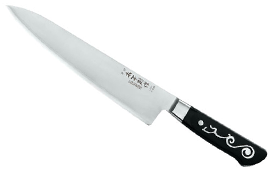
Chef's Knives
Chopping, slicing, and mincing
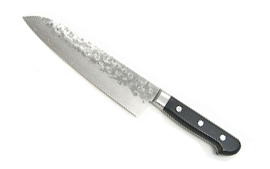
Santoku Knives
Japanese all-purpose blade
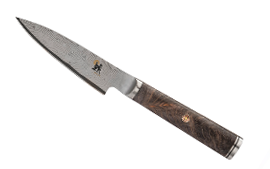
Paring Knives
Peeling and detail work
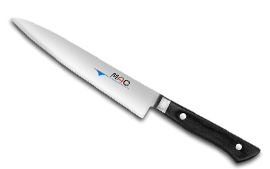
Utility Knives
Sandwiches and small produce
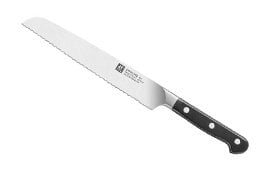
Bread Knives
Crusty loaves and soft bread
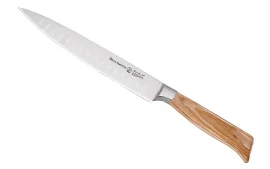
Carving and Slicing
Roasts, ham, and brisket
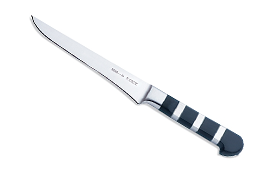
Boning Knives
Removing meat from the bone
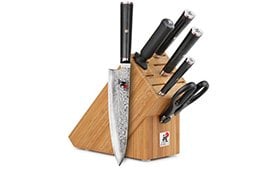
Knife Sets
Outfitting a kitchen or giving a gift
Shop All Shapes
Fillet, nakiri, yanagi, cleavers, steak, oyster, and every other shape we carry
European Makers
Professional and Commercial
Not sure where to start?
What will you cut most often?
What is your budget per knife?
Which edge style do you want?
All Knives
-

Minonokuni Aogami Damascus 5.9-inch (150mm) Petty Knife
A petty knife is the Japanese utility knife, a small companion to a gyuto for work that a large blade makes awkward. This 150mm Aogami Damascus petty peels and trims fruit, minces herbs and slices charcuterie with precision.Its narrow blade gets into tight spaces, such as hulling strawberries, removing the silver skin from a tenderloin or cleaning up a fish fillet. Held in the hand, it handles peeling an apple or shaping a turned vegetable.
Pairing the PettyThe Aogami Damascus petty belongs to our specialty Sakura series. It pairs naturally with the Aogami Damascus 210mm gyuto or 240mm gyuto for a matched set. The Homura 150mm petty is the alternative with a stainless jacket that needs less care.Blue steel is hard and holds a keen edge, but the fine tip is delicate. Avoid prying and keep it off frozen food. The kitchen knife shapes guide covers utility and paring knives. Learn More -

Minonokuni Aogami Damascus 7.1-inch (180mm) Gyuto
A 180mm gyuto is a compact chef’s knife, easy to handle on a small board and quick for everyday prep. This Aogami Damascus version pairs that size with a blue steel edge and a rippled Damascus jacket, so it is as much a pleasure to look at as to use.The double-bevel edge suits right- and left-handed cooks alike. Use it for slicing onions and peppers, dicing shallots and trimming boneless chicken and fish. The gentle curve allows a rocking cut for herbs, and the flatter section near the heel handles push cuts.
Part of the Sakura SeriesThe Aogami Damascus knives belong to our Sakura series, a specialty line that is technically more premium than our standard knives but not necessarily the right fit for every cook. Blue steel is hard and holds an edge a long time, and the thin edge is delicate, so keep it away from bones and frozen food.For more length, see the Aogami Damascus 210mm gyuto. Other 180mm gyuto in blue steel are the Aogami Black 180mm gyuto, with a rustic kurouchi finish, and the Raku 180mm gyuto, with a hammered finish. Our kitchen knife shapes guide explains the gyuto. Learn More$320.00 -

Minonokuni Aogami Damascus 6.7-inch (170mm) Santoku
The santoku, or knife of three virtues, handles slicing, dicing and mincing with a flatter edge and a shorter blade than a gyuto. This 170mm Aogami Damascus santoku suits a cook who works on a smaller board and prefers push cuts to rocking.The flat edge meets the board along most of its length, so slices of onion and carrot separate cleanly. The rounded tip is less likely to catch than a pointed one. Boneless chicken and fish fillets are well within its range.
Comparing 170mm SantokuAogami Damascus is part of our Sakura series, a specialty line, technically more premium than our standard knives but not necessarily the right fit for every cook. Its Damascus jacket gives each knife its own pattern. The Homura 170mm santoku has a stainless jacket for less upkeep, the Aogami Black 170mm santoku a kurouchi finish, and the Raku 170mm santoku Aogami Super steel.For a longer blade with a pointed tip, see the Aogami Damascus 210mm gyuto. For mostly vegetables, the Aogami Damascus 170mm nakiri is flat from end to end. The knife shapes guide explains the santoku. Learn More$318.00 -

Minonokuni Aogami Damascus 6.7-inch (170mm) Nakiri
A nakiri is a double-bevel vegetable knife with a flat edge and a square tip. It push-cuts through cabbage and onions without rocking, and because the edge meets the board along its entire length, each slice separates completely.This 170mm Aogami Damascus nakiri is easier to learn than a single-bevel usuba, since the symmetrical edge cuts straight in either hand. The tall blade also serves as a scoop to carry cut vegetables to the pan.
Nakiri or Usuba?The usuba is the traditional single-bevel vegetable knife, needed for katsuramuki and fine garnish work. The nakiri is the more practical knife for everyday vegetable prep, and its double bevel is more durable. For an usuba in the same series, see the Sakura Damascus 210mm usuba.Aogami Damascus belongs to our Sakura series, a specialty line that is technically more premium but not right for every cook. Other 170mm nakiri are the Homura, with a stainless jacket, the Aogami Black, with a kurouchi finish, and the Raku, in Aogami Super. See the knife shapes guide for the usuba and nakiri. Learn More -

Minonokuni Aogami Damascus 9.4-inch (240mm) Gyuto
At 240mm, this Aogami Damascus gyuto is the length a professional reaches for when the prep list is long. It slices large roasts and whole fish fillets in one stroke and covers a wide board of vegetables quickly, and the extra height gives the knuckles clearance.The longer blade has the weight to move through dense vegetables with less pressure from the cook. On delicate work, choke up to a pinch grip at the bolster and let the front third of the edge do the cutting.
Where It FitsAogami Damascus knives belong to the Sakura series, a specialty line that is technically more premium than our standard knives but not necessarily right for every cook. Its blue steel edge is hard and delicate, so it rewards a cook who sharpens on waterstones and keeps the knife away from bones.For a shorter gyuto, see the Aogami Damascus 210mm gyuto. The Homura 240mm gyuto uses a stainless jacket for easier care, the Aogami Black 240mm gyuto a kurouchi finish, and the Raku 240mm gyuto Aogami Super. The guide to knife shapes explains the gyuto. Learn More -

Minonokuni Aogami Damascus 8.3-inch (210mm) Gyuto
The gyuto is the Japanese chef’s knife, the one knife that can slice and dice vegetables and portion fish and meat. At 210mm, this Aogami Damascus gyuto is long enough for serious slicing yet nimble enough for fine dicing, which makes it a good fit for most home kitchens.Its gentle curve allows both push-cutting and rock-chopping. Slice a roast or a side of salmon with long strokes using the full edge, and use the tip for scoring and fine work around the board. The double bevel works equally well in either hand.
Choosing a Blue Steel GyutoThe Aogami Damascus is part of our Sakura series, a specialty line rather than the default choice. The forge-welded Damascus jacket gives each blade its own pattern. For the same blue steel with a stainless jacket that needs less care, see the Homura 210mm gyuto. The Aogami Black 210mm gyuto has a rustic kurouchi finish, and the Raku 210mm gyuto uses Aogami Super with a hammered finish.Other Aogami Damascus gyuto are the 180mm and 240mm. The knife shapes guide compares the gyuto with the santoku. Learn More$385.00 -
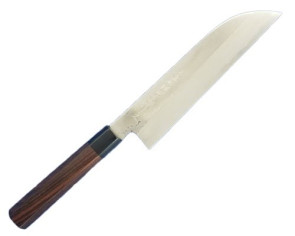
Minonokuni Sakura Damascus 8.3-inch (210mm) Kama-Usuba
The kama-usuba’s pointed, sickle-shaped tip sets it apart from the blunt-tipped Kanto usuba. This 210mm Sakura version gives the agility for decorative cuts (kazari-giri) and detailed vegetable work, along with the length for katsuramuki and long push cuts.The single-bevel edge allows very thin, clean slices that leave vegetables crisp rather than crushed. Use the flat section for sheets and julienne, and the tip for carving garnishes.
Who It SuitsSakura is a specialty line, technically more premium than Matsu, Take or Ume but not necessarily the right knife for every cook. Its blue steel core holds the edge a long time, and its thin tip is the most delicate part of the knife. It belongs with a cook experienced in single-bevel work. For a less brittle edge, compare the Take 210mm kama-usuba; for stainless, the Gin-San 210mm kama-usuba.The square-tipped Sakura Damascus 210mm usuba suits a cook who mostly cuts sheets and julienne. The knife shapes guide explains both forms. Learn More$660.00 -

Minonokuni Sakura Damascus 8.3-inch (210mm) Usuba
The Sakura Damascus usuba is a Kanto-style vegetable knife with a square tip and a long, flat edge. At 210mm, it handles long daikon for katsuramuki and whole heads of cabbage, and it slices vegetables into precise, even pieces with straight push cuts.The single bevel is what makes the paper-thin sheets of katsuramuki possible. Turn the peeled daikon against a still blade, keeping the edge parallel to the axis of the root, and a continuous sheet unrolls. Stack the sheets and push-cut them into fine threads for garnish.
Specialty LineSakura is technically more premium than our standard lines, but it is not necessarily the right usuba for every cook. Its blue steel core holds an edge for a long time, though the thin edge is delicate. Cooks newer to the usuba may prefer the Take 210mm usuba or the Ume 210mm usuba, and the plain blue steel option is the Matsu 210mm usuba.For a pointed tip, see the Sakura Damascus 210mm kama-usuba. The knife shapes guide compares the usuba with the nakiri. Learn More$660.00 -

Minonokuni Sakura Damascus 10.6-inch (270mm) Yanagi
The 270mm Sakura yanagi gives a long, even stroke for slicing sashimi from broad blocks of fish, and its Damascus jacket makes it as much a statement as a tool. The length completes each slice in one pass, which preserves texture and presentation.A long yanagi rewards a relaxed grip and an unhurried draw. Let the weight of the blade carry it through the fish and the edge do the cutting. On a deep board with room to the side, the length lets the cook set the thickness of each slice precisely.
Choosing a 270mm YanagiSakura is one of our specialty lines, technically more premium than the standard lines but not the right choice for everyone. Its blue steel core is hard and delicate, so it belongs with an experienced sushi cook. For the same length in a less brittle steel, see the Take 270mm yanagiba. For a stainless option, see the Gin-San 270mm yanagi.The Sakura 240mm yanagi is the standard counter length. Our guide to kitchen knife shapes covers the yanagi. Learn More$648.00 -

Minonokuni Sakura Damascus 9.4-inch (240mm) Yanagi
This 240mm Sakura yanagi carries the rippled Damascus pattern of the series on a traditional single-bevel slicer. It is suited to skinning and portioning fish fillets and to slicing sashimi and nigiri toppings at the standard counter length.For skinning, lay the fillet skin-side down, hold the tail end of the skin and run the blade flat between skin and flesh. For sashimi, change to a long pull from the heel. The length handles both without a change of knife.
For Experienced HandsSakura is a specialty line. It is more premium than our standard lines but not right for every cook, because its blue steel core is hard and its edge is very thin. A chef already comfortable with single-bevel knives will get the most from it. A cook still learning will be better served by the Take 240mm yanagiba.The Sakura 210mm yanagi is shorter and the Sakura 270mm yanagi longer. The plain-finish blue steel option at this length is the Matsu 240mm yanagiba. See the knife shapes guide for more on slicers. Learn More

