
You have no items in your shopping cart.
Knives
How would you like to shop?
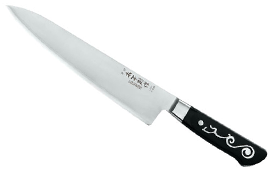
Chef's Knives
Chopping, slicing, and mincing
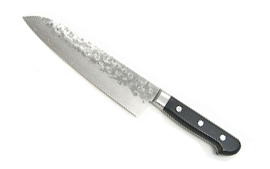
Santoku Knives
Japanese all-purpose blade
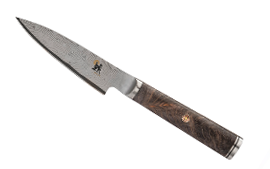
Paring Knives
Peeling and detail work
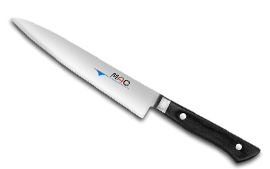
Utility Knives
Sandwiches and small produce
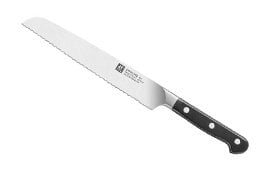
Bread Knives
Crusty loaves and soft bread
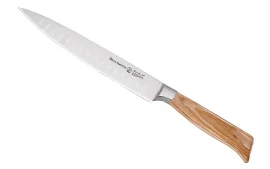
Carving and Slicing
Roasts, ham, and brisket
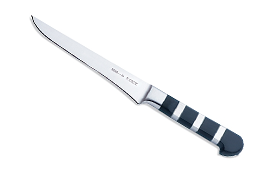
Boning Knives
Removing meat from the bone
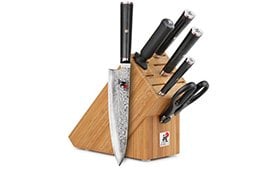
Knife Sets
Outfitting a kitchen or giving a gift
Shop All Shapes
Fillet, nakiri, yanagi, cleavers, steak, oyster, and every other shape we carry
European Makers
Professional and Commercial
Not sure where to start?
What will you cut most often?
What is your budget per knife?
Which edge style do you want?
All Knives
-

Kikuichi GC Series Carbon Steel 10.6-inch (270mm) Sujihiki
Long, single-stroke cuts are the point of a sujihiki, and the 10.6-inch (270mm) GC Series sujihiki gives the most length among Kikuichi’s carbon steel slicers. It carves a whole turkey breast, a prime rib or a side of smoked salmon without sawing, which keeps each slice smooth and even.Kikuichi pitches the GC sujihiki at meat and sushi work, where one clean pull through the food matters more than speed. The 270mm suits carving stations and sushi counters, and it serves home cooks who carve large holiday roasts equally well. Its carbon steel edge is easy to sharpen and should be dried promptly after slicing fish. Because the blade is long and narrow, store it in a saya or a block slot that supports its full length.
Choosing a Slicer LengthThe 9.4-inch (240mm) Sujihiki is easier to store and maneuver. A stainless slicer of the same length is the Kikuichi Molybdenum 10.6-inch (270mm) Sujihiki. Learn More$249.95 -

Kikuichi GC Series Carbon Steel 9.4-inch (240mm) Sujihiki
Kikuichi calls its GC Series sujihiki a great knife for long slices through meats and even sushi rolls, and the 9.4-inch (240mm) length handles most roasts, briskets and fish loins in a single draw.A sujihiki is narrower than a gyuto, so it creates less drag in the cut and leaves a clean, glossy face on sliced meat or fish. It is a Western-style slicer, easier to maintain than a traditional yanagi, which makes it a practical choice for a home cook who carves roasts and slices sashimi. The carbon steel takes a fine edge for clean cuts through raw fish, and it should be wiped dry between slices of wet or acidic foods. Professional cooks use the 240mm at carving stations where a longer knife would be unwieldy.
240mm or 270mm Sujihiki?The 10.6-inch (270mm) Sujihiki adds length for large roasts and whole fish loins. For an all-purpose knife at this length, see the 9.4-inch (240mm) Gyuto. Learn More$219.95 -

Kikuichi GC Series Carbon Steel 7.1-inch (180mm) Santoku
Kikuichi’s SC18 is the santoku of its GC Series carbon steel line, a 7.1-inch (180mm) blade with the flatter edge and rounded tip that suit push cuts and fine dicing. Kikuichi describes the series as sharp, light and tough, and shoppers find this knife by its model number.A santoku is a natural fit for cooks who chop straight down and forward without rocking the knife, and its broad blade scoops ingredients from the board. The carbon steel takes a keen edge and is easy to bring back on a whetstone. It will form a patina, and it needs wiping dry during prep, especially after cutting tomatoes or citrus. It makes a practical single knife for a home cook who mostly prepares vegetables.
Santoku or Gyuto?The 7.1-inch (180mm) Gyuto is the same length with a pointed tip and more curve for rocking cuts. For a longer all-purpose knife, see the 8.25-inch (210mm) Gyuto. Learn More$134.95 -
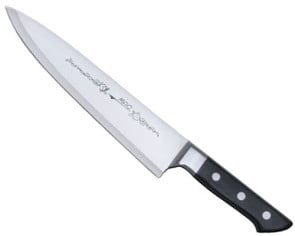
MAC Ultimate 9-inch Chef’s Knife
Cooks who like the weight of a German forged knife but want a thinner Japanese edge are the audience MAC designed the Ultimate Series for. The SBK-95 has the look and feel of a forged German chef’s knife, with a thinner blade.The larger bolster puts more weight behind the edge, which helps when chopping winter squash, breaking down a chicken at the joints or pushing through a pile of root vegetables. The blade is still stamped and thin enough to slice tomatoes cleanly, so the weight serves control rather than brute force. The trade-off is a knife that is heavier in the hand over a long prep list than the Chef or Professional models.The 10.25-inch SBK-105 is the longer Ultimate chef’s knife. For a lighter bolstered knife, compare the Professional MBK-85 and MBK-95. Our kitchen knife shapes guide explains the French chef’s knife shape both lines follow. Learn More$319.95 -

MAC Ultimate 10.25-inch Chef’s Knife
The SBK-105 gives a cook the reach of a 10-inch blade with the heaviest bolster in the MAC lineup. It suits professionals and serious home cooks who want a long knife that feels planted on the board, much like a forged German chef’s knife, while keeping a thin edge.Its length handles a whole brisket, a large cabbage or a stack of melons, and the weight near the handle carries the blade through dense food with less pressure from the wrist. On a small board it is more knife than the work needs; the 9-inch SBK-95 is the shorter Ultimate model.Other Long MAC KnivesThe Professional MBK-110 is a lighter long knife with a bolster, and the Chef Series BK-100 is the lightest of all. Read our guide to knife shapes for more on choosing a chef’s knife length. Learn More$359.95 -
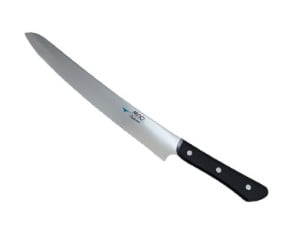
MAC Superior 10.5-inch Bread and Roast Slicer
The SB-105 reverses the usual scallop pattern: the half circles extend outward from the edge, rather than being cut into the blade. That edge cuts smoothly through breads, roasts and cakes, and lets the knife double as a meat slicer.With 10.5 inches of blade, it slices a round of sourdough or a rib roast in long, even strokes. The reversed scallops grip a firm crust without tearing a soft interior, and they leave a cleaner surface on cooked meat than conventional serrations.The Professional MSB-105 is the same length with conventional scallops and a bolster. For a shorter bread knife, see the BS-90. Browse the Superior Series, or see our Kitchen Knife Shapes guide. Learn More$97.95 -

Minonokuni Aogami Damascus 5.9-inch (150mm) Petty Knife
A petty knife is the Japanese utility knife, a small companion to a gyuto for work that a large blade makes awkward. This 150mm Aogami Damascus petty peels and trims fruit, minces herbs and slices charcuterie with precision.Its narrow blade gets into tight spaces, such as hulling strawberries, removing the silver skin from a tenderloin or cleaning up a fish fillet. Held in the hand, it handles peeling an apple or shaping a turned vegetable.
Pairing the PettyThe Aogami Damascus petty belongs to our specialty Sakura series. It pairs naturally with the Aogami Damascus 210mm gyuto or 240mm gyuto for a matched set. The Homura 150mm petty is the alternative with a stainless jacket that needs less care.Blue steel is hard and holds a keen edge, but the fine tip is delicate. Avoid prying and keep it off frozen food. The kitchen knife shapes guide covers utility and paring knives. Learn More -

Minonokuni Aogami Damascus 7.1-inch (180mm) Gyuto
A 180mm gyuto is a compact chef’s knife, easy to handle on a small board and quick for everyday prep. This Aogami Damascus version pairs that size with a blue steel edge and a rippled Damascus jacket, so it is as much a pleasure to look at as to use.The double-bevel edge suits right- and left-handed cooks alike. Use it for slicing onions and peppers, dicing shallots and trimming boneless chicken and fish. The gentle curve allows a rocking cut for herbs, and the flatter section near the heel handles push cuts.
Part of the Sakura SeriesThe Aogami Damascus knives belong to our Sakura series, a specialty line that is technically more premium than our standard knives but not necessarily the right fit for every cook. Blue steel is hard and holds an edge a long time, and the thin edge is delicate, so keep it away from bones and frozen food.For more length, see the Aogami Damascus 210mm gyuto. Other 180mm gyuto in blue steel are the Aogami Black 180mm gyuto, with a rustic kurouchi finish, and the Raku 180mm gyuto, with a hammered finish. Our kitchen knife shapes guide explains the gyuto. Learn More$320.00 -

Minonokuni Aogami Damascus 6.7-inch (170mm) Santoku
The santoku, or knife of three virtues, handles slicing, dicing and mincing with a flatter edge and a shorter blade than a gyuto. This 170mm Aogami Damascus santoku suits a cook who works on a smaller board and prefers push cuts to rocking.The flat edge meets the board along most of its length, so slices of onion and carrot separate cleanly. The rounded tip is less likely to catch than a pointed one. Boneless chicken and fish fillets are well within its range.
Comparing 170mm SantokuAogami Damascus is part of our Sakura series, a specialty line, technically more premium than our standard knives but not necessarily the right fit for every cook. Its Damascus jacket gives each knife its own pattern. The Homura 170mm santoku has a stainless jacket for less upkeep, the Aogami Black 170mm santoku a kurouchi finish, and the Raku 170mm santoku Aogami Super steel.For a longer blade with a pointed tip, see the Aogami Damascus 210mm gyuto. For mostly vegetables, the Aogami Damascus 170mm nakiri is flat from end to end. The knife shapes guide explains the santoku. Learn More$318.00 -

Minonokuni Aogami Damascus 6.7-inch (170mm) Nakiri
A nakiri is a double-bevel vegetable knife with a flat edge and a square tip. It push-cuts through cabbage and onions without rocking, and because the edge meets the board along its entire length, each slice separates completely.This 170mm Aogami Damascus nakiri is easier to learn than a single-bevel usuba, since the symmetrical edge cuts straight in either hand. The tall blade also serves as a scoop to carry cut vegetables to the pan.
Nakiri or Usuba?The usuba is the traditional single-bevel vegetable knife, needed for katsuramuki and fine garnish work. The nakiri is the more practical knife for everyday vegetable prep, and its double bevel is more durable. For an usuba in the same series, see the Sakura Damascus 210mm usuba.Aogami Damascus belongs to our Sakura series, a specialty line that is technically more premium but not right for every cook. Other 170mm nakiri are the Homura, with a stainless jacket, the Aogami Black, with a kurouchi finish, and the Raku, in Aogami Super. See the knife shapes guide for the usuba and nakiri. Learn More

