
You have no items in your shopping cart.
Knives
How would you like to shop?
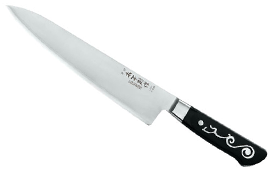
Chef's Knives
Chopping, slicing, and mincing
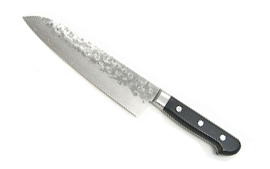
Santoku Knives
Japanese all-purpose blade
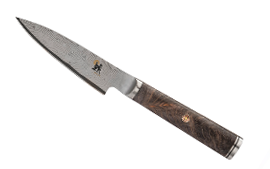
Paring Knives
Peeling and detail work
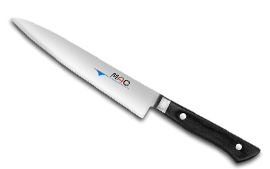
Utility Knives
Sandwiches and small produce
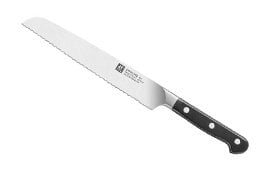
Bread Knives
Crusty loaves and soft bread
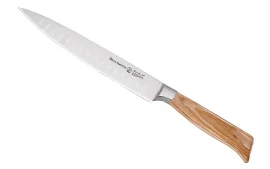
Carving and Slicing
Roasts, ham, and brisket
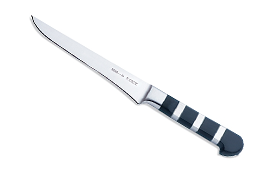
Boning Knives
Removing meat from the bone
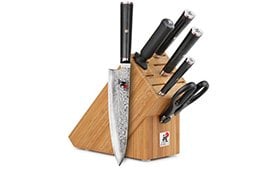
Knife Sets
Outfitting a kitchen or giving a gift
Shop All Shapes
Fillet, nakiri, yanagi, cleavers, steak, oyster, and every other shape we carry
European Makers
Professional and Commercial
Not sure where to start?
What will you cut most often?
What is your budget per knife?
Which edge style do you want?
All Knives
-
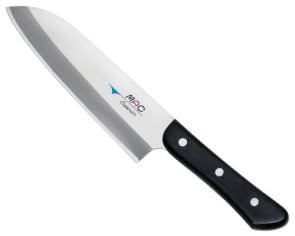
MAC Superior 6.5-inch Santoku
The santoku is the Japanese all-purpose knife: a flat edge for push cuts and chopping, a rounded nose, and a tall blade that keeps the knuckles off the board. The MAC SK-65 is a 6.5-inch santoku in the Superior Series, for cooks who prefer a shorter blade.The MAC Superior Santoku has a thick spine that tapers to a very thin edge, which glides through food with ease. Its large, ergonomically shaped handle feels extremely comfortable in the hand, and a sand-blasted strip runs along the edge of the blade to reduce surface tension and prevent sticking. This knife is a fantastic addition to any collection, and was voted “Favorite Knife” by Food & Wine.It suits cooks who chop more than they rock. Onions, cabbage, carrots and boneless chicken fall to straight down-and-forward cuts, and the height lets you scoop the prep off the board. At 6.5 inches it is shorter than an 8-inch chef’s knife and easier to control on a small board.The Professional MSK-65 adds a bolster and dimples. The SK-65 is paired with a small santoku in the Superior santoku set. Browse the Superior Series, or see our guide to kitchen knife shapes. Learn More$84.95 -
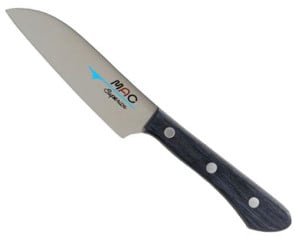
MAC Superior 4-inch Santoku Paring Knife
The SK-40 is a small santoku: a 4-inch blade with a flat edge, a rounded nose and enough height to keep the knuckles off the board. It does the work of a parer for cooks who prefer to cut small items on the board rather than in the hand.The flat edge suits push cuts and fine chopping, so it minces garlic and cuts strawberries or cherry tomatoes neatly. The extra height also lets you scoop food off the board on the side of the blade. Because the tip is blunt, it is not the knife for coring or scoring; a pointed parer such as the HB-40 is better for those.The SK-40 is paired with the 6.5-inch santoku in the Superior santoku set, and with the Professional santoku in the MAC 2-piece santoku set. Our guide to knife shapes explains the santoku shape. Learn More$47.95 -

MAC Superior 2-Piece Santoku Set
Cooks who prefer the santoku shape can have it in two sizes with this Superior set. Tackle mincing, dicing, chopping and slicing with the 6.5-inch santoku, and small, delicate work with the 4-inch santoku paring knife.Both blades have the flat edge, rounded nose and tall profile of the santoku, so the cutting motion is the same at either size: straight push cuts and chopping rather than rocking. The small knife takes the place of a parer for work on the board.For the same pairing with a dimpled, bolstered main knife, see the MAC 2-piece santoku set. Our guide to kitchen knife shapes explains the santoku. Learn More$124.95 -

Minonokuni Gin-San 9.4-inch (240mm) Mioroshi Deba
The 240mm mioroshi deba is a long fish knife for large fish. Its length lets the cook follow the backbone of a big salmon or yellowtail in long strokes, and its slimmer blade can then portion the fillets without switching knives.Compared with a standard deba of similar length, the mioroshi is narrower and lighter at the tip. It still handles the head and collar of large fish through the heel, but it is not a cleaver. Avoid heavy bones and frozen fish.
The Case for Gin-sanGin-san silver steel is stainless, so a long blade that spends hours around water stays free of rust with ordinary drying, and it sharpens with a feel close to carbon steel. It is a specialty line, technically more premium than our standard lines, but not necessarily the right choice for every cook.The shorter Gin-San 195mm mioroshi deba is easier to handle on medium fish. For slicing sashimi from the fillets, pair it with the Gin-San 240mm yanagi. See the knife shapes guide for the deba and yanagi. Learn More -

Minonokuni Gin-San 7.7-inch (195mm) Mioroshi Deba
At 195mm, this mioroshi deba sits between the compact 180mm and the long 240mm. It gives a little more reach along the backbone of a larger fish while staying easy to control, which makes it a sound all-round size for a kitchen that fillets fish daily.A mioroshi blends the deba and the yanagi. Its spine is heavy enough for heads and collars on medium fish, and its slimmer profile glides along the frame and can portion fillets afterward. On very large or heavy-boned fish, a standard deba is still the safer tool.
Why Stainless HereFish work keeps a blade wet, and Gin-san silver steel resists rust while sharpening much like carbon steel. As a specialty line, it is technically more premium than our standard lines, though not the right knife for every cook. A cook comfortable caring for carbon steel may be content with a standard deba from the Take line, such as the Take 195mm deba.The Gin-San 180mm mioroshi deba is shorter, and the Gin-San 240mm mioroshi deba longer. The mioroshi is described alongside the standard deba in our guide to knife shapes. Learn More -

Minonokuni Gin-San 7.1-inch (180mm) Mioroshi Deba
The mioroshi deba is longer and slimmer than a standard deba. It keeps enough weight to cut through the head and collar of a medium fish, but its narrower blade moves more easily along the frame for filleting and can take on light slicing work that would otherwise call for a yanagi.That makes the 180mm a good single knife for a cook who breaks down medium fish such as sea bream, mackerel and small salmon from start to finish. The single bevel follows the backbone closely, and the length helps take each fillet off in fewer strokes.
The Gin-san LineGin-san is our stainless single-bevel line. The silver steel sharpens with much of the feel of carbon steel but resists rust, which suits a cook who works around water all day. It is a specialty line, more premium than our standard lines, but not necessarily the right knife for everyone. A cook who wants a heavier knife for heads should look at the Gin-San 165mm deba.Longer mioroshi deba are the Gin-San 195mm and Gin-San 240mm. The knife shapes guide describes the deba and its relatives. Learn More -

Minonokuni Gin-San 8.3-inch (210mm) Kama-Usuba
For a professional who preps vegetables in quantity and wants a single-bevel knife that will not rust at a wet station, the 210mm Gin-San kama-usuba is the one to consider. The length handles long daikon and whole heads of cabbage, and the Kansai-style pointed tip handles detail work.Push straight down and forward for clean, separated slices, and use katsuramuki to turn daikon into long sheets for garnish. The tip carves vegetable flowers and scores the skin of eggplant. Because the blade is thin and hard, keep it away from frozen food and hard rinds.
Gin-san or Carbon?Gin-san is a specialty line. It sharpens with a feel close to carbon steel but resists rust, so it asks for far less upkeep. That makes it a practical choice for a busy kitchen, though not necessarily the right knife for every cook. In carbon steel, the Take 210mm kama-usuba is the sweet spot of our standard lines, and the Matsu 210mm kama-usuba suits experienced hands.The shorter Gin-San 180mm kama-usuba is easier on a home board. See the kitchen knife shapes guide for the usuba family. Learn More -
Minonokuni Gin-San 7.1-inch (180mm) Kama-Usuba
This Gin-San kamagata usuba is hand-forged to cut vegetables either in the hand or on the board. Its pronounced tip, which the square Kanto usuba lacks, gives precise control for decorative cuts, while the flat length of the edge handles push cuts and katsuramuki.At 180mm, the blade is long enough for nearly any fruit or vegetable without being heavy or cumbersome. Use the edge to slice daikon and cucumber into sheets or fine threads, and the tip to carve garnishes, score mushroom caps or trim a turned carrot.
A Stainless Single BevelGin-san is a stainless steel that can still be hammer-forged the traditional way. It asks far less care than a carbon knife, which makes it a good choice for a cook who prefers a low-maintenance blade. As a specialty line, it is technically more premium than our standard lines but not the right knife for every cook. A cook learning the shape may be better served by the Ume 180mm kama-usuba.For a longer blade, see the Gin-San 210mm kama-usuba. The knife shapes guide explains the square and pointed usuba. Learn MoreRegular Price: $330.00
Special Price $280.00
-

Minonokuni Gin-San 10.6-inch (270mm) Yanagi
The longest Gin-San yanagi is meant for cooks who slice wide blocks of fish for a dining room and want a blade that will not rust between orders. At 270mm, it finishes a slice of salmon or tuna in one long stroke, with length to spare on broader fish.The knife is hand-forged by Minonokuni craftsmen in the kasumi method, with the hard Gin-san edge steel jacketed in a softer stainless steel. That softer jacket is what makes it practical to hammer such a hard steel into a traditional single-bevel blade, and it also makes the knife easier to sharpen than a solid hard blade.
Where It FitsGin-san is a specialty line, technically more premium than Matsu, Take or Ume, but not the right choice for everyone. A long blade asks for a steady hand and room on the board. A cook who wants this length in carbon steel can compare the Take 270mm yanagiba or the Matsu 270mm yanagiba.Shorter Gin-San yanagi are the 210mm and 240mm. For more on the yanagi, see our kitchen knife shapes guide. Learn More -

Minonokuni Gin-San 9.4-inch (240mm) Yanagi
The 240mm Gin-San yanagi brings the standard sushi counter length to a stainless steel that a cook can maintain like carbon steel. It slices a full saku of tuna or a salmon fillet in a single draw and shrugs off the constant moisture of fish work.Gin-san is a stainless steel that can be hammer-forged in the traditional way and ground to a single bevel. That combination is unusual. Most stainless steels are hard to forge and sharpen this way, which is why most traditional yanagi are carbon steel. Here, the cook gets a keen, easily sharpened edge without needing to dry the blade after every slice.
Specialty, Not DefaultWe place Gin-san among our specialty lines. It is more premium than the standard lines, but a cook who already maintains carbon knives without trouble may prefer the Take 240mm yanagiba in white steel. Gin-san is the better match for a kitchen where knives may stay wet, or for a cook who would rather spend less time on care.For a shorter knife, see the Gin-San 210mm yanagi; for more reach, the Gin-San 270mm yanagi. The guide to knife shapes covers the yanagi. Learn More


