
You have no items in your shopping cart.
Knives
How would you like to shop?
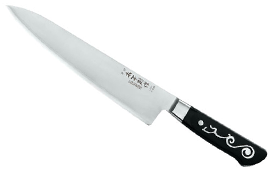
Chef's Knives
Chopping, slicing, and mincing
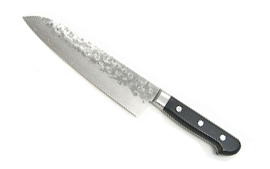
Santoku Knives
Japanese all-purpose blade
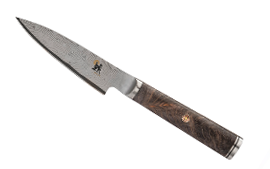
Paring Knives
Peeling and detail work
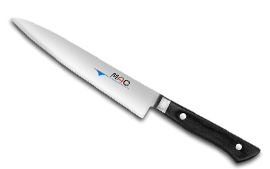
Utility Knives
Sandwiches and small produce
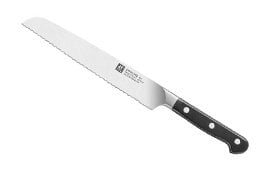
Bread Knives
Crusty loaves and soft bread
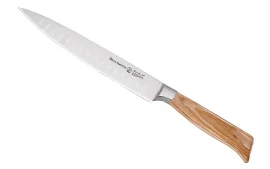
Carving and Slicing
Roasts, ham, and brisket
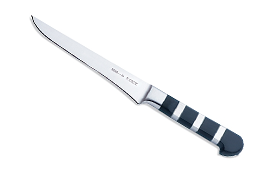
Boning Knives
Removing meat from the bone
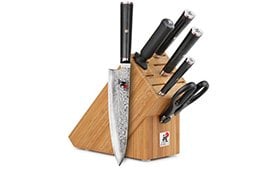
Knife Sets
Outfitting a kitchen or giving a gift
Shop All Shapes
Fillet, nakiri, yanagi, cleavers, steak, oyster, and every other shape we carry
European Makers
Professional and Commercial
Not sure where to start?
What will you cut most often?
What is your budget per knife?
Which edge style do you want?
All Knives
-

Wüsthof Classic Ikon 9-inch Chef's Knife
Nine inches sits between Wüsthof’s standard 8 and 10-inch chef’s knives. The Classic Ikon 9-inch gives a little more reach for slicing a large cabbage or a brisket without the length of a 10-inch blade on a home cutting board.At 1.9 inches, the blade is no taller than the 8-inch, so the extra inch all goes into length. Ikon’s rounded handle suits a full grip and a pinch grip alike, and the heel is free of any bolster, so a sharpener can work the edge from tip to handle. Behind the grip, a rear bolster counterweights the longer blade.When customers ask about chef’s knife sizes, the choice tends to come down to 8 versus 10 inches. The 9-inch suits a cook who has outgrown an 8-inch but works on a standard board. See the Classic Ikon 8-inch chef’s knife for the all-purpose length, and the Classic 10-inch for the longest blade in the range. Our Kitchen Knife Shapes guide explains how blade length affects technique. Learn More$219.95 -

Wüsthof Classic Ikon 3.5-inch Paring Knife
For close work in the hand, Wüsthof’s Classic Ikon 3.5-inch paring knife sets a short blade on the contoured Ikon handle that fills the palm. It trims Brussels sprouts, hulls strawberries, deveins shrimp and pares the skin from a kiwi, jobs where the knife moves in your hand and control matters more than reach.Many paring knives are hard to use because their handles are so small, and the Classic Ikon handle gives you plenty of room to grasp the knife comfortably. Classic Ikon is our suggestion for customers who want an upgraded grip. The rounded handle is comfortable when you hold it fully, as you do for paring, and it stays put when you choke up for a pinch grip. With no bolster at the heel, a sharpener reaches the edge right back to the handle.For a longer paring blade, see the Classic 4-inch paring knife; for straight cuts on the board, the Classic Ikon 3-inch flat cut paring knife. The Ikon 3.5-inch paring knife with a blackwood handle is the same knife in natural wood. Our knife shapes guide describes each paring style. Learn More$114.95 -

Wüsthof Classic Ikon 4.5-inch Utility Knife
Longer than a parer and shorter than a cook’s knife, the Wüsthof Classic Ikon 4.5-inch utility knife fills the gap. It handles the in-between jobs, such as slicing a lemon for a pitcher or trimming a chicken thigh, without the bulk of a full-size blade.The Classic Ikon handle is contoured to fill the palm, a good match for a cook who wraps the whole hand around a small knife, and it stays secure in a pinch grip. Its edge continues all the way to the handle, so the whole length can be sharpened.This size is a sensible first companion to a larger cook’s knife, and it comes paired with one in the Classic Ikon 2-piece cook’s set. Step up to the Classic Ikon 6-inch utility knife for longer slices; for the same length on the riveted Classic handle, the Classic 4.5-inch utility knife. Our guide to kitchen knife shapes explains the utility knife’s role. Learn More$144.95 -

Wüsthof Classic Ikon 6-inch Utility Knife
At 6 inches, the Wüsthof Classic Ikon utility knife has the reach to slice a roll of salami or a ripe melon, with a blade narrow enough to trim fat and silver skin from a pork loin. It is long enough to fillet a small fish or portion meat, and narrow enough to section citrus or cut the pith and seeds from inside a pepper. Reach for it when a chef’s knife is more than the job needs.The 1-inch blade gives a clean, controlled slice, and the straight edge leaves smooth faces on cheese and cured meats. On the Classic Ikon handle, it feels balanced whether you hold it fully in the palm or pinch the blade, and with no bolster at the heel, the full edge stays easy to sharpen.Need something shorter? Try the Classic Ikon 4.5-inch utility knife. For tomatoes and crusty rolls, the Classic Ikon 5-inch serrated utility knife grips better. The Ikon 6-inch utility knife is the blackwood-handled twin, and the Classic 6-inch pairs it with a full bolster. Our knife shapes guide covers the utility knife family. Learn More$169.95 -

Wüsthof Classic Ikon 9-inch Double-Serrated Bread Knife
Small teeth set into each larger serration give the Wüsthof Classic Ikon 9-inch bread knife its double-serrated edge, a design Wüsthof calls precision double serration. The large serrations grip a hard sourdough crust, and the smaller ones cut through the crumb cleanly, so slices come away whole with fewer crumbs on the board.Nine inches covers a wide boule or a long batard, and the edge also slices bagels, focaccia and the domed top off a cake layer. On the Classic Ikon handle, the knife sits securely in a full grip for the sawing motion that bread requires.A double-serrated edge earns its place for customers who bake crusty loaves at home; for soft sandwich bread, the Classic 8-inch bread knife is enough. The Classic 9-inch double-serrated bread knife has this edge on the original riveted Classic handle, and the Classic Ikon 10-inch Super Slicer handles bread and roasts. Our knife shapes guide explains bread knives. Learn More$199.95 -

Wüsthof Classic Ikon 5-inch Hollow Edge Santoku
Five inches of santoku on a Classic Ikon handle makes a small, quick knife for herbs, a single pepper or a few cloves of garlic. Its size suits a compact board or smaller hands, and it lives comfortably beside a larger chef’s knife. On the cutting board, it is a good alternative to a utility knife, with far more knuckle clearance.Shallow hollows ground into the blade keep wet produce from clinging, and the fine edge suits precise slicing. We recommend Classic Ikon to cooks who hold a knife fully by the handle, since the rounded grip fills the palm. Its bare heel is another advantage, because a sharpener can reach every inch of the edge. A short blade is also forgiving as you build confidence.For larger produce, the Classic Ikon 7-inch hollow edge santoku is the full-size version. The Classic 5-inch santoku sets this blade in the riveted Classic handle, and the Classic Ikon 4.5-inch utility knife is a narrower option for slicing. Our knife shapes guide explains the santoku. Learn More$169.95 -

Wüsthof Classic Ikon 7-inch Hollow Edge Santoku
For a Japanese-style all-purpose knife, 7 inches is the standard santoku length, and Wüsthof’s Classic Ikon version puts it on a handle shaped to fill the palm. Use it to slice onions, dice peppers and chop herbs with a straight downward stroke. The length suits a full-size cutting board and a family’s worth of vegetables.Oval dimples on both faces stop thin rounds of potato or cucumber from sticking to the steel. The edge is ground finer than on Wüsthof’s chef’s knives for clean cuts through vegetables and boneless meat, and the 1.8-inch blade height leaves room for your knuckles.If you have never tried a santoku, we recommend giving this shape a place in your kitchen; it may become the knife you reach for first. If you rock your knife as you chop, a chef’s knife like the Classic Ikon 8-inch may suit you better. The Ikon 7-inch hollow edge santoku has this blade with an African blackwood handle, and the Classic Ikon 5-inch is the smaller size. Our kitchen knife shapes guide compares the santoku and the chef’s knife. Learn More$199.95 -

Wüsthof Classic Ikon 5-inch Boning Knife
Deboning chicken thighs, trimming a pork shoulder and peeling silver skin off a tenderloin are the daily work of a boning knife, and this 5-inch Classic Ikon knife is built for them. Its slim, pointed blade slips between meat and bone where a chef’s knife is too wide to follow.A short blade means precise control around joints. Use the point to open connective tissue, then keep the edge tight against the bone as you cut. The Classic Ikon handle keeps the knife steady in a full grip even when your hands are slick from raw meat, and the open heel lets the whole edge be sharpened. The synthetic handle has the look of wood without the discoloration, odor retention and staining that wood can develop around raw meat. Cut along bones, never through them.For larger cuts, the Classic 6-inch flexible boning knife gives more reach. Fish calls for the longer, thinner Classic Ikon 7-inch fillet knife. The Classic 5-inch boning knife pairs this blade with the riveted Classic handle. Our guide to kitchen knife shapes explains boning knives. Learn More$159.95 -

Wüsthof Classic Ikon 5-inch Serrated Utility Knife
Fine serrations let the Wüsthof Classic Ikon 5-inch serrated utility knife bite into a tomato skin, the crust of a baguette or the waxy peel of a lemon without crushing what is underneath. It is the small serrated knife for breakfast and lunch, slicing bagels, splitting rolls and cutting through dry sausage.Serrations keep working long after a plain edge has dulled, which makes this knife a useful companion to a chef’s knife that is saved for prep. Ikon’s rounded handle feels steady whether you wrap your hand around it or pinch the blade.For larger loaves, see the Classic Ikon 9-inch double-serrated bread knife. For straight-edged slicing at a similar length, the Classic Ikon 4.5-inch utility knife. The Classic 5-inch serrated utility knife has this blade on the original riveted handle with a full bolster. Our Kitchen Knife Shapes guide explains when a serrated blade is the better choice. Learn More$144.95 -

Wüsthof Classic Ikon 7-inch Chinese Chef's Knife
Wüsthof’s Classic Ikon Chinese chef’s knife has the tall, rectangular blade of a cleaver, but Wüsthof designs it for slicing and chopping, with bones left to a true cleaver. In Chinese kitchens, this shape is the everyday knife for vegetables, boneless meat and fish, and the 3.2-inch-tall blade doubles as a bench scraper to carry food to the wok.The 7-inch edge slices bok choy, shreds ginger into fine threads and thin-slices pork or beef for a stir-fry. Turn the blade flat to smash garlic or ginger with the heel of your hand. Wüsthof cautions against using it on bones or very hard fruit, such as winter squash; for those jobs, a heavy cleaver is the right tool.The Classic Ikon handle balances the broad blade in a full grip, and with no heel bolster, the whole edge can be sharpened. For chopping through bone, use the Wüsthof 6-inch meat cleaver. For a Japanese approach to vegetables, compare the Classic Ikon 7-inch nakiri. Our Kitchen Knife Shapes guide explains meat and vegetable cleavers. Learn More$299.95

