
You have no items in your shopping cart.
Knives
How would you like to shop?
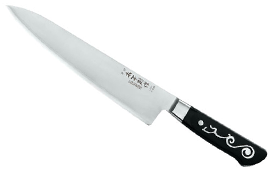
Chef's Knives
Chopping, slicing, and mincing
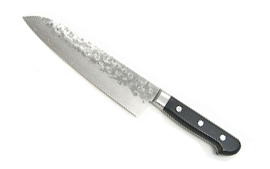
Santoku Knives
Japanese all-purpose blade
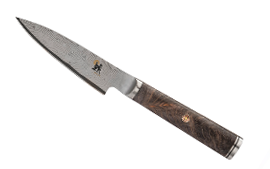
Paring Knives
Peeling and detail work
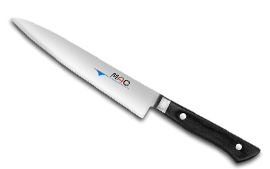
Utility Knives
Sandwiches and small produce
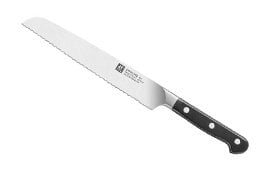
Bread Knives
Crusty loaves and soft bread
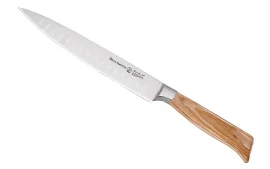
Carving and Slicing
Roasts, ham, and brisket
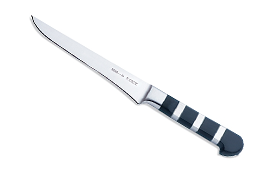
Boning Knives
Removing meat from the bone
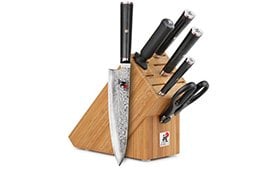
Knife Sets
Outfitting a kitchen or giving a gift
Shop All Shapes
Fillet, nakiri, yanagi, cleavers, steak, oyster, and every other shape we carry
European Makers
Professional and Commercial
Not sure where to start?
What will you cut most often?
What is your budget per knife?
Which edge style do you want?
All Knives
-

Glestain W Series 8.3-inch (210mm) Flexible Fillet Knife
The W Series fillet knife is the smooth-bladed Glestain for fish and silver skin. Its 210mm blade has no dimples, which keeps it as thin as possible, and it is wider at the heel than the K Series sole knife, which gives more backbone for round fish and for trimming meat.That combination suits a cook who moves between filleting a salmon or a snapper and cleaning a pork loin or beef tenderloin without changing knives. The extra width at the heel steadies the blade under the skin of a larger fish, and the thin, smooth face slides cleanly between silver skin and meat.Glestain’s asymmetrical geometry keeps the blade moving with little resistance through each cut. You can also sharpen this knife until it becomes a toothpick (as we often do with our most beloved fillet knives).
Comparing Glestain Fillet KnivesFor a narrower, dimpled blade suited to flatfish, choose the K Series 210mm Flexible Fillet Knife. The 250mm Flexible Fillet Knife is longer. The W Series also includes the 240mm Sujihiki. Our guide to kitchen knife shapes compares fillet and boning knives. Learn More$145.00 -

Glestain K Series 9.8-inch (250mm) Flexible Fillet Knife
The 250mm flexible fillet knife is the longer Glestain sole knife, a multi-purpose flexible slicer. The extra length reaches across larger fish such as salmon and halibut, and the flexible blade follows the frame so the fillet comes off in one piece.Beyond fish, it trims and slices ham and turkey, where its flex lets the blade ride along bone and fat. The dimples sit on one face to keep food from sticking, and the other face is smooth.The K Series handle has a bolster and no end cap, keeping the knife light for long filleting sessions.
Choosing a Fillet LengthThe K Series 210mm Flexible Fillet Knife is better for flatfish and small fish. For portioning fish fillets, see the 240mm Sujihiki. Our kitchen knife shapes guide explains fillet knives. Learn More$199.00 -

Glestain 6.3-inch (160mm) Deba
A deba is the heavy Japanese knife for breaking down whole fish, and the 160mm size suits small and medium fish such as trout, mackerel and snapper. Glestain makes it in stainless steel, which spares you the rust that carbon steel debas invite around a wet fish station.A stainless deba can be given a pronounced secondary bevel, which blunts the precise work the shape is meant for. The Glestain is ground close to a traditional single bevel, with only a small back bevel, so it keeps the acute angle and clean cut of a classic deba. The thick spine and weight let it split heads and work through the small bones of a fish.
Choosing a Deba SizeThe Glestain deba also comes as a 200mm Deba and a 240mm Deba. For filleting flatfish and portioning, pair it with a flexible fillet knife or a sujihiki. Our guide to kitchen knife shapes explains the deba. Learn More -
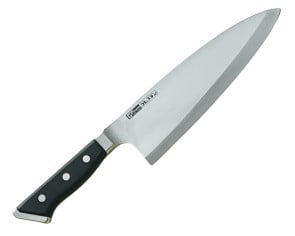
Glestain 7.9-inch (200mm) Deba
The 200mm deba is sized for medium to large fish, from striped bass to salmon. It has the heft to remove heads and collars and the precision to take clean fillets off the frame, and it is made in stainless steel, so it stands up to a wet fish station without rusting.Glestain grinds this deba close to a true single bevel, with only a subtle micro-bevel on the back. That design gives the clean, precise cuts of a traditional carbon steel deba and avoids the performance compromise of a stainless deba with a heavy secondary bevel.It is a good middle size for a cook or fishmonger who works with a range of fish.
Choosing a Deba SizeThe Glestain deba also comes as a 160mm Deba and a 240mm Deba. For filleting flatfish and portioning, pair it with a flexible fillet knife or a sujihiki. Our guide to kitchen knife shapes explains the deba. Learn More$256.00 -

Glestain 9.4-inch (240mm) Deba
For fabricating large, powerful fish such as tuna, swordfish and large salmon, the 240mm deba has the weight and length the job demands. It removes heads and collars, splits frames and takes fillets from fish too large for a smaller deba.The blade has a smooth W Series face and the clean look of a classic deba, in stainless steel that resists rust at the fish station. Its edge is ground close to a single bevel, with only a small back bevel, so it cuts with the precision of a traditional deba.At almost double the carbon content of standard German stainless steel, this knife is over 20% lighter than carbon steel debas of the same size, significantly reducing fatigue during long sessions. A 240mm deba is a professional tool for fishmongers, sushi kitchens and anglers who land large fish.
Choosing a Deba SizeThe Glestain deba also comes as a 160mm Deba and a 200mm Deba. For filleting flatfish and portioning, pair it with a flexible fillet knife or a sujihiki. Our guide to kitchen knife shapes explains the deba. Learn More$306.00 -

Glestain SO Series 9.8-inch (250mm) Serrated Slicer
For a light serrated slicer, the SO Series 250mm puts Glestain’s scalloped serrated blade on the plain Home Series handle, which has squared shoulders and no bolster. It is a lighter knife than the K Series version of the same blade.The serrations grip the bark on brisket and the crust on bread, then the thin blade slices the interior without tearing it. It is a big favorite of participants in BBQ competitions, who use it on brisket and tri-tip, and it works as a bread knife and a cake knife at home. In Japan, Glestain markets this shape for cake.With no bolster, the edge runs straight to the handle, so the full length of the blade is available for slicing. It is easy to touch up the edge with just a honing rod.
Other Serrated SlicersSee the K Series 250mm Serrated Slicer for a bolstered handle, or the SO Series 310mm Serrated Slicer for more length. Every Glestain slicer is compared below, and our kitchen knife shapes guide explains how bread knives and slicers differ. Learn More -

Glestain K Series 9.8-inch (250mm) Serrated Slicer
The 250mm serrated slicer is the Glestain for crust and bark. Its scalloped serrations bite into the crisp exterior of a smoked brisket or a loaf of country bread, and the long, thin blade then slices through the soft interior without crushing it.Glestain sells this shape as a bread and cake knife in Japan, and it does both jobs as well as slicing meat. It handles tri-tip, roast pork and sheet cake equally, which makes it a practical second slicer for a home kitchen and a useful one for barbecue cooks.The K Series handle has a bolster and no end cap, which keeps the knife light and easy to guide through a long cut.
Choosing a Serrated SlicerThe SO Series 250mm Serrated Slicer has the same blade on a plain, bolsterless handle. For longer cuts, see the K Series 310mm Serrated Slicer. For clean slices of rare beef or fish, a plain-edged sujihiki is the better tool. Our guide to kitchen knife shapes compares bread knives and slicers. Learn More$168.00 -
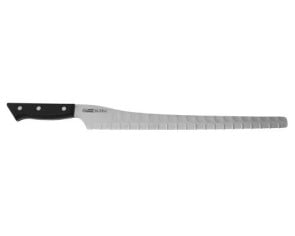
Glestain SO Series 12.2-inch (310mm) Serrated Slicer
The SO Series 310mm serrated slicer is the long Glestain slicer on the light Home Series handle. The plain handle has squared shoulders and no bolster, which keeps weight down on a knife that spends its time making long, steady strokes.This slicer is a big favorite of participants in BBQ competitions. On a brisket, a 310mm blade crosses the whole flat in one pass and keeps the bark on every slice. The scalloped serrations grip crust and bark, and the thin blade does not crush the tender meat beneath.At home it slices large loaves, roasts and layer cakes. The edge between the scallops gives a semi-serrated effect that cuts cleanly with little pressure. It is easy to touch up the edge with just a honing rod.
Other Long SlicersFor a bolstered handle, choose the K Series 310mm Serrated Slicer. The SO Series 250mm Serrated Slicer is shorter. The table below compares every Glestain slicer, and our kitchen knife shapes guide explains bread knives and slicers. Learn More -

Glestain K Series 12.2-inch (310mm) Serrated Slicer
A 310mm serrated blade reaches across a whole brisket, a large boule or a sheet cake. This K Series slicer uses scalloped serrations to start the cut through bark or crust, and its long, thin blade finishes the slice cleanly.The extra length matters most on large cuts. One long stroke through a brisket keeps the slice intact and the bark attached, which shorter knives cannot manage without sawing. The same blade slices bread and delicate pastries and cuts through firm cheese.The handle has a bolster and no end cap. It suits catering, barbecue service and home cooks who handle large roasts and loaves.
Choosing a Serrated SlicerThe SO Series 310mm Serrated Slicer is the lighter, bolsterless version. The K Series 250mm Serrated Slicer is shorter. For slicing without serrations, see the 300mm Sujihiki. Our guide to knife shapes covers bread and slicing knives. Learn More -

Glestain KE Series 12.2-inch (310mm) Salmon Slicer
Cutting smoked salmon and gravlax into thin, translucent slices takes a long, thin, flexible blade, and that is what Glestain’s 310mm salmon slicer provides. The narrow blade flexes to follow the surface of a side of fish, so each slice comes off at an even thickness.Cured salmon is soft and oily, and it clings to a smooth knife. The dimples on this blade reduce that contact, so thin slices release cleanly instead of folding or tearing.It also slices ham, prosciutto and other cured meats, and it suits delis, brunch services and home cooks who cure their own fish.
Choosing a Salmon SlicerFor a longer blade on an all-stainless handle, see the Ice Handle 360mm Salmon Slicer. For portioning fresh fish, a sujihiki has a stiffer blade. Our guide to kitchen knife shapes explains slicing knives. Learn More

