
You have no items in your shopping cart.
Knives
How would you like to shop?
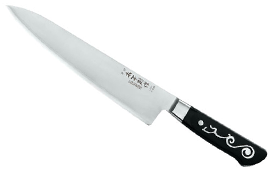
Chef's Knives
Chopping, slicing, and mincing
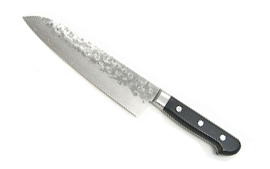
Santoku Knives
Japanese all-purpose blade
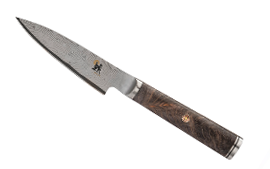
Paring Knives
Peeling and detail work
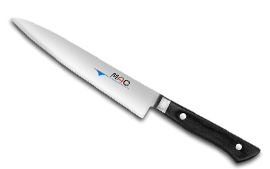
Utility Knives
Sandwiches and small produce
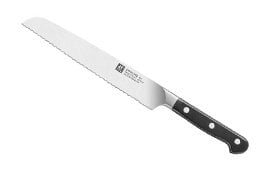
Bread Knives
Crusty loaves and soft bread
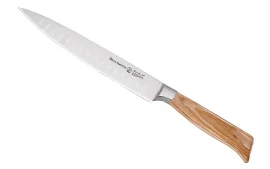
Carving and Slicing
Roasts, ham, and brisket
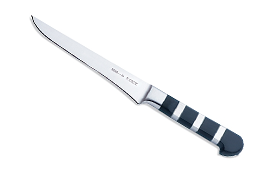
Boning Knives
Removing meat from the bone
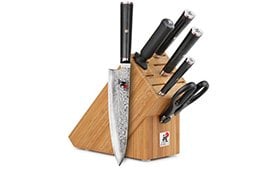
Knife Sets
Outfitting a kitchen or giving a gift
Shop All Shapes
Fillet, nakiri, yanagi, cleavers, steak, oyster, and every other shape we carry
European Makers
Professional and Commercial
Not sure where to start?
What will you cut most often?
What is your budget per knife?
Which edge style do you want?
All Knives
-

Minonokuni Gin-San 7.1-inch (180mm) Mioroshi Deba
The mioroshi deba is longer and slimmer than a standard deba. It keeps enough weight to cut through the head and collar of a medium fish, but its narrower blade moves more easily along the frame for filleting and can take on light slicing work that would otherwise call for a yanagi.That makes the 180mm a good single knife for a cook who breaks down medium fish such as sea bream, mackerel and small salmon from start to finish. The single bevel follows the backbone closely, and the length helps take each fillet off in fewer strokes.
The Gin-san LineGin-san is our stainless single-bevel line. The silver steel sharpens with much of the feel of carbon steel but resists rust, which suits a cook who works around water all day. It is a specialty line, more premium than our standard lines, but not necessarily the right knife for everyone. A cook who wants a heavier knife for heads should look at the Gin-San 165mm deba.Longer mioroshi deba are the Gin-San 195mm and Gin-San 240mm. The knife shapes guide describes the deba and its relatives. Learn More -

Minonokuni Gin-San 7.7-inch (195mm) Mioroshi Deba
At 195mm, this mioroshi deba sits between the compact 180mm and the long 240mm. It gives a little more reach along the backbone of a larger fish while staying easy to control, which makes it a sound all-round size for a kitchen that fillets fish daily.A mioroshi blends the deba and the yanagi. Its spine is heavy enough for heads and collars on medium fish, and its slimmer profile glides along the frame and can portion fillets afterward. On very large or heavy-boned fish, a standard deba is still the safer tool.
Why Stainless HereFish work keeps a blade wet, and Gin-san silver steel resists rust while sharpening much like carbon steel. As a specialty line, it is technically more premium than our standard lines, though not the right knife for every cook. A cook comfortable caring for carbon steel may be content with a standard deba from the Take line, such as the Take 195mm deba.The Gin-San 180mm mioroshi deba is shorter, and the Gin-San 240mm mioroshi deba longer. The mioroshi is described alongside the standard deba in our guide to knife shapes. Learn More -

Minonokuni Gin-San 9.4-inch (240mm) Mioroshi Deba
The 240mm mioroshi deba is a long fish knife for large fish. Its length lets the cook follow the backbone of a big salmon or yellowtail in long strokes, and its slimmer blade can then portion the fillets without switching knives.Compared with a standard deba of similar length, the mioroshi is narrower and lighter at the tip. It still handles the head and collar of large fish through the heel, but it is not a cleaver. Avoid heavy bones and frozen fish.
The Case for Gin-sanGin-san silver steel is stainless, so a long blade that spends hours around water stays free of rust with ordinary drying, and it sharpens with a feel close to carbon steel. It is a specialty line, technically more premium than our standard lines, but not necessarily the right choice for every cook.The shorter Gin-San 195mm mioroshi deba is easier to handle on medium fish. For slicing sashimi from the fillets, pair it with the Gin-San 240mm yanagi. See the knife shapes guide for the deba and yanagi. Learn More

