
You have no items in your shopping cart.
Knives
How would you like to shop?
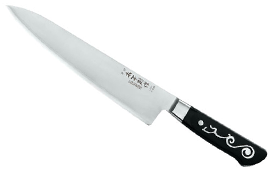
Chef's Knives
Chopping, slicing, and mincing
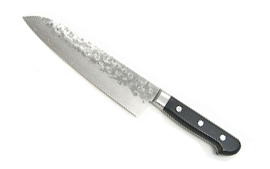
Santoku Knives
Japanese all-purpose blade
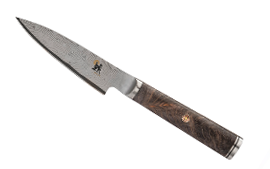
Paring Knives
Peeling and detail work
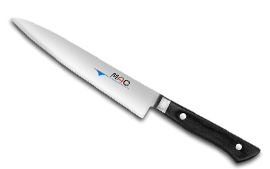
Utility Knives
Sandwiches and small produce
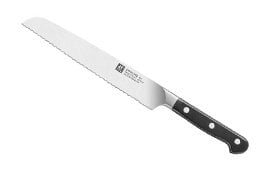
Bread Knives
Crusty loaves and soft bread
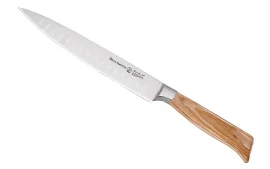
Carving and Slicing
Roasts, ham, and brisket
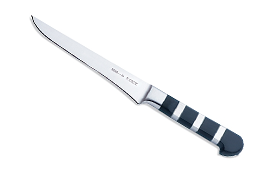
Boning Knives
Removing meat from the bone
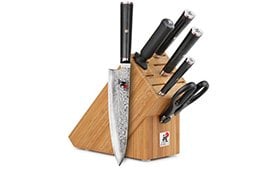
Knife Sets
Outfitting a kitchen or giving a gift
Shop All Shapes
Fillet, nakiri, yanagi, cleavers, steak, oyster, and every other shape we carry
European Makers
Professional and Commercial
Not sure where to start?
What will you cut most often?
What is your budget per knife?
Which edge style do you want?
All Knives
-

Made In 2-Piece Japanese Damascus Steel Knife Set
The Made In 2-Piece Japanese Damascus Steel Knife Set pairs the two blades that cover most of a home cook’s prep: the gyuto for meat, fish, and general cutting, and the nakiri for vegetables. Both are forged in Seki, Japan, with VG-10 cores inside 66 layers of Damascus steel, so they share the same sharp 15-degree edge, balance, and hand-finished handles.
What Each Knife Does8-inch gyuto: The all-purpose blade for slicing proteins, dicing onions, and mincing herbs.6.6-inch nakiri: A tall, flat-edged vegetable knife that makes clean straight-down cuts through onions, carrots, and cabbage.
Why It PerformsMatched steel and edges: Both knives share the same VG-10 core and 15-degree edge, so they cut and sharpen the same way.Two complementary shapes: The gyuto handles slicing and rocking cuts; the nakiri handles push cuts and chopping.Full tang, polymer handles: Balanced knives with handles that resist slipping and staining.
Choosing the Right Made In SetFor a third, more compact all-purpose blade, the Made In 3-Piece Japanese Damascus Steel Knife Set adds the santoku. Each knife is also sold on its own: the Made In 8-inch Japanese Damascus Steel Gyuto and the Made In 6.6-inch Japanese Damascus Steel Nakiri. Learn More -
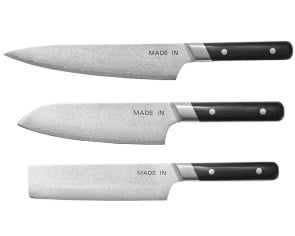
Made In 3-Piece Japanese Damascus Steel Knife Set
The Made In 3-Piece Japanese Damascus Steel Knife Set gives you the three classic Japanese kitchen shapes in one matched set. The gyuto handles slicing and general prep, the santoku is a nimble everyday blade, and the nakiri is built for vegetables. All three are forged in Seki, Japan, with VG-10 cores inside 66 layers of Damascus steel and 15-degree edges.
What Each Knife Does8-inch gyuto: The longest blade, for slicing meat and fish and for larger prep jobs.6.6-inch santoku: A compact all-purpose knife with a flat edge and rounded tip for push cuts.6.6-inch nakiri: A tall, flat vegetable knife for clean straight-down chopping.
Why It PerformsOne steel, one edge: All three share the VG-10 core and 15-degree edge, so they cut and sharpen alike.Three shapes, three cutting styles: Rocking, push cutting, and straight chopping are each covered by the shape best suited to them.Full tang, polymer handles: Balanced knives with handles that resist slipping and staining.
Choosing the Right Made In SetIf you want only a chef’s knife and a vegetable knife, the Made In 2-Piece Japanese Damascus Steel Knife Set includes the gyuto and nakiri. Each knife is also sold individually: the Made In 8-inch Japanese Damascus Steel Gyuto, the Made In 6.6-inch Japanese Damascus Steel Santoku, and the Made In 6.6-inch Japanese Damascus Steel Nakiri. Learn More -
Made In 6.6-inch Japanese Damascus Steel Nakiri
A nakiri is a Japanese vegetable knife with a tall, rectangular blade and a fully flat edge. Because the whole edge meets the board at once, each straight downward cut separates an onion slice or a stack of greens completely, without the connected strands a curved edge can leave. The Made In 6.6-inch Japanese Damascus Steel Nakiri is built for that kind of chopping.The tall blade keeps knuckles clear of the board and doubles as a scoop for carrying chopped vegetables to the pan. It is a push-cutting knife, so cooks who rock a blade through herbs will find the flat edge takes some adjustment.
Nakiri, Santoku or Gyuto?The 6.6-inch Japanese Damascus Santoku keeps a flat edge but adds a rounded tip for meat and fish, and the 8-inch Japanese Damascus Gyuto is the full-size all-purpose knife. Choose the nakiri if most of your prep is produce. Our Kitchen Knife Shapes guide covers the nakiri alongside the usuba, its single-bevel relative. Learn MoreRegular Price: $199.00
Special Price $169.95
-
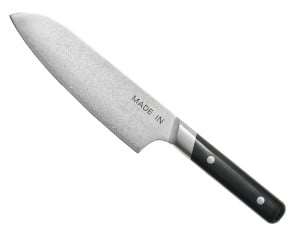
Made In 6.6-inch Japanese Damascus Steel Santoku
Santoku is usually translated as “three virtues,” for slicing, dicing and mincing. The Made In 6.6-inch Japanese Damascus Steel Santoku packs that range into a blade shorter than a chef’s knife, which is easier to control on a small board or in a smaller hand.Its flat edge and rounded tip suit forward push cuts through vegetables and boneless proteins, with enough curve near the tip to mince garlic. The blade is tall enough to scoop up what has been cut.
Santoku or Gyuto?The 8-inch gyuto gives more length for slicing roasts and large squash, and the nakiri is the specialist for vegetables. For a Western blade from Made In, the 8-inch Olive Wood Chef Knife is forged in France with a curved edge for rocking. Our overview of kitchen knife shapes compares all of them. Learn More$199.00 -
Made In 8-inch Japanese Damascus Steel Gyuto
A gyuto is the Japanese form of the chef’s knife, the blade a cook reaches for first for most prep. The Made In 8-inch Japanese Damascus Steel Gyuto has a thin blade and a fairly flat edge profile, so it suits push and pull cuts through onions and carrots, and still rocks gently for mincing.It handles proteins as well as produce. A thin edge slices a roast without tearing the crust and portions fish cleanly. The hard stainless core holds a finer edge than Made In’s French-made knives, and the layered Damascus cladding gives each blade its own grain pattern.
Gyuto, Santoku or Nakiri?The 6.6-inch Japanese Damascus Santoku has a shorter blade and a flatter edge for straight up-and-down chopping, and the 6.6-inch Japanese Damascus Nakiri has a squared tip made for vegetables. Choose the gyuto if you want one knife for both proteins and produce. For a Western-style blade with a slightly wider edge angle, see the French-made Made In 8-inch Forged Olive Wood Chef Knife. Our guide to kitchen knife shapes explains how these profiles differ. Learn MoreRegular Price: $239.00
Special Price $199.95
-
Made In 4-Piece Forged Olive Wood Steak Knife Set
A straight-edged steak knife slices a ribeye cleanly where a serrated one tears the meat fibers, and it can be honed and resharpened like any kitchen knife. The Made In 4-Piece Forged Olive Wood Steak Knife Set brings four of them to the table, with olive wood handles that sit well beside good dinnerware.The curved tip follows the bone of a chop and trims fat neatly, and the full tang gives each knife a solid, balanced feel in the hand.
Four or Eight?Four knives suit a couple or a small family. The 8-Piece Olive Wood Steak Knife Set is the same knife in a count for a full table. Steak knives are one of the shapes covered in our knife shapes guide. Learn MoreRegular Price: $249.00
Special Price $199.95
-
Made In 8-Piece Forged Olive Wood Steak Knife Set
Dinner for eight calls for a full set of matching steak knives. The Made In 8-Piece Forged Olive Wood Steak Knife Set is the same straight-edged French knife as the 4-piece set, in a count for a full table.Serrated steak knives saw through meat. A straight edge draws through a pork chop or a strip steak in one pass and leaves a clean face on the slice, and it comes back to sharp on a honing rod, which a serrated edge does not.
Choosing the Set SizeFor two to four people, the 4-Piece Olive Wood Steak Knife Set covers the table. Olive wood grain varies from handle to handle, so each knife in the set looks slightly different. Our guide to kitchen knife shapes includes steak knives. Learn MoreRegular Price: $449.00
Special Price $349.95


