
You have no items in your shopping cart.
Knives
How would you like to shop?
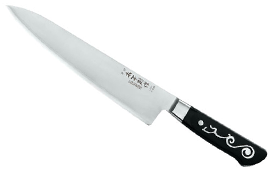
Chef's Knives
Chopping, slicing, and mincing
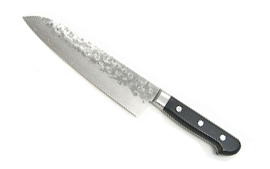
Santoku Knives
Japanese all-purpose blade
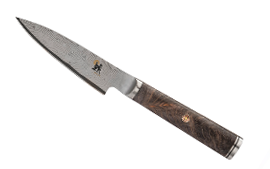
Paring Knives
Peeling and detail work
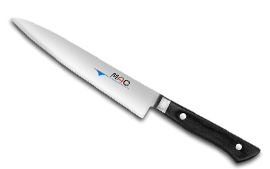
Utility Knives
Sandwiches and small produce
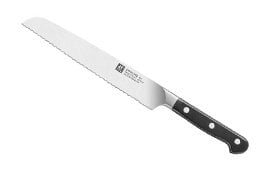
Bread Knives
Crusty loaves and soft bread
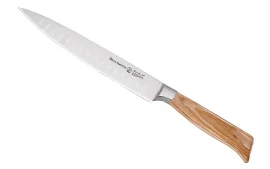
Carving and Slicing
Roasts, ham, and brisket
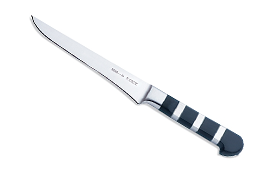
Boning Knives
Removing meat from the bone
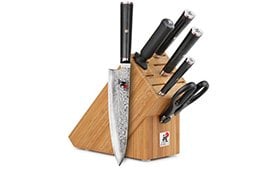
Knife Sets
Outfitting a kitchen or giving a gift
Shop All Shapes
Fillet, nakiri, yanagi, cleavers, steak, oyster, and every other shape we carry
European Makers
Professional and Commercial
Not sure where to start?
What will you cut most often?
What is your budget per knife?
Which edge style do you want?
All Knives
-
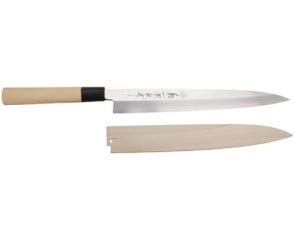
Kikuichi Kasumitogi Series 10.6-inch (270mm) Yanagi
Kikuichi describes Kasumitogi as another single-bevel traditional series, hand forged in the sword-making tradition from two pieces of steel, and shoppers search for it as the Kikuichi Kasumitogi yanagi. This 10.6-inch (270mm) yanagi is the long professional size, made for slicing whole fish loins and large blocks of tuna in a single draw.The edge is White #3 carbon steel at 57 to 60 HRC, a little softer than the White #2 of Kikuichi’s Kasumi series. A softer edge sharpens more quickly on whetstones, which makes this a practical working knife for a busy sushi counter where knives are touched up daily. The long blade suits experienced cooks with room to work, and Kikuichi supplies the Kasumitogi series without a saya.
Kasumitogi or Kasumi?For a harder White #2 edge, see the Kasumi 9.4-inch (240mm) Yanagi. A double-bevel slicer at 270mm is the GC Series Carbon Steel 10.6-inch (270mm) Sujihiki. Learn More$345.00 -
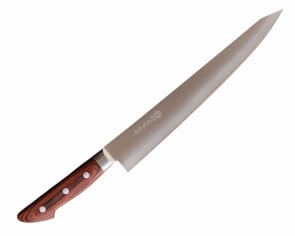
Kikuichi WG Series Elite Warikomi Gold 10.6-inch (270mm) Sujihiki
The 10.6-inch (270mm) Elite Warikomi Gold sujihiki is the long slicer of the series, made for prime rib, whole turkey breasts and sides of smoked salmon. A blade this long finishes each slice in one pull, which keeps the cut face smooth and the portions even.Kikuichi pairs a hardened VG1 stainless edge with softer outer layers in a warikomi construction, and describes the line as light and comfortable, a real benefit on a long blade held through an evening of carving. The Western handle suits cooks who carve at a buffet station or a holiday table. Store it in a saya or a block slot deep enough for the full blade, since a long, thin tip is easy to bend in a crowded drawer.
270mm or 240mm?The Elite Warikomi Gold 9.4-inch (240mm) Sujihiki is easier to store and to maneuver through fish. A matching Kikuichi 270mm Sujihiki Magnet Saya protects the edge. Learn More$319.95 -
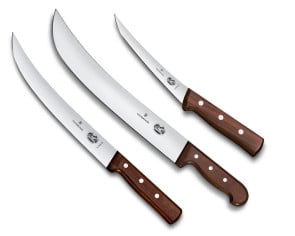
Victorinox Hardwood 3 Pc Large Butcher Set
Master your meat fabrication with the Victorinox Hardwood 3-Piece Butcher Set. This expertly curated collection features a 6-inch Semi-Stiff Curved Boning Knife for precision, a 10-inch Breaking Knife for efficient cuts, and a powerful 12-inch Scimitar, all crafted with durable hardwood handles for superior control and lasting performance. Learn More -

Minonokuni Ume 11.8-inch (300mm) Yanagiba
The 300mm Ume yanagiba is a long sushi counter knife in the most forgiving steel Minonokuni offers. Its length slices large blocks of fish in one stroke, and it holds its edge through a long session of slicing.A blade this long gives the cook fine control over the thickness and angle of each slice, which matters for thin cuts of white fish and for presentation. It needs space, though, and a cook stepping up from a shorter yanagiba should expect to practice keeping the tip steady.
Why a Forgiving Steel at This LengthA long single bevel takes time to sharpen evenly from heel to tip. Ume’s steel is the easiest of our three standard lines to sharpen and the least likely to chip, so a cook still learning to maintain a long edge will find it more tolerant. When the time comes for a harder edge, the Take 300mm yanagiba and Matsu 300mm yanagi use white and blue steel.For a shorter knife, see the Ume 270mm yanagiba. The knife shapes guide explains the yanagiba. Learn More -

Minonokuni Ume 10.6-inch (270mm) Left-Handed Yanagi
This 270mm yanagi is ground as a true left-handed knife, with the bevel forged and finished on the left side of the blade. A left-handed sushi cook gets the straight, flat slice the shape is designed for, without fighting a blade that steers the wrong way.The 270mm length handles wide blocks of tuna and full salmon fillets in a single stroke. It needs a deeper board than the shorter sizes and a little practice to control the tip, but it rewards a smooth, unhurried draw with clean slices.
Left-Handed and LearningUme is the most forgiving of our three standard lines and the best one on which to learn to sharpen. A left-handed cook who is moving to a longer knife while still developing technique will find the softer carbon steel more tolerant. We keep this knife in stock. The Take 270mm left-handed yanagi is the white steel option for a harder edge.The Ume 240mm left-handed yanagi is shorter. The right-handed model is the Ume 270mm yanagiba. See the knife shapes guide for more on slicers. Learn More -

Minonokuni Ume 10.6-inch (270mm) Yanagiba
A 270mm yanagiba gives a long, even stroke for slicing wide blocks of fish, and the Ume line puts that length in a steel that forgives errors and sharpens easily. It suits a cook moving into restaurant sushi work who wants a longer knife before investing in a harder steel.The long blade has enough weight to glide through the fish while the thin edge makes the cut. Draw it toward you with a relaxed grip and let the length do the work. Pushing down or sawing crushes the fish and dulls the surface of the slice.
Moving Up in LengthThe extra length over the Ume 240mm yanagiba takes practice to control, especially at the tip. A forgiving steel makes that practice less costly, which is why we suggest Ume for a cook building skills. For the same length in harder steel, see the Take 270mm yanagiba.The Ume 300mm yanagiba is the longest in the line. Left-handed cooks can order the Ume 270mm left-handed yanagi. The shapes guide describes how the yanagiba is used. Learn More -

MAC Chef Series 10-inch Chef’s Knife with Dimples
A 10-inch blade covers a whole cabbage, a large watermelon or a brisket in one stroke, and the TH-100 does it with the thin, light Chef Series build. It suits line cooks and caterers who prep in volume and want the reach of a long knife without the weight of a forged one.The dimples sit above the edge along the full length, where long slicing strokes through potatoes and eggplant would otherwise leave food stuck to the steel. With no bolster, the heel can be sharpened all the way back, and the knife is easy to control in a pinch grip for its size.If 10 inches feels like more blade than your board allows, the TH-80 has the same dimpled blade in 8 inches. The BK-100 is this knife without dimples, and the Ultimate SBK-105 adds weight for cooks who want a heavier long knife.See our overview of chef’s knife shapes for how blade length affects control. Learn More$149.95 -

Minonokuni Take 13-inch (330mm) Yanagi
The 330mm is the longest yanagi Minonokuni makes in the Take line. It is a specialist’s knife for large fish, such as whole loins of tuna and wide sides of salmon, where even a 300mm blade would need a second stroke to finish the slice.The length gives a long, slow stroke, and the cook controls the thickness of each slice through the angle of the blade. On a board of ordinary depth, it can be unwieldy, so we suggest it for a sushi counter or a kitchen that slices large fish daily.
Why TakeThe Take line uses white steel. It is good enough for professional use and less brittle than blue steel, and on a blade this long, a little extra tolerance in the edge is worth having. White steel also returns to a keen edge quickly on a waterstone, which shortens the time spent maintaining a long single bevel.For a more manageable length, see the Take 300mm yanagiba or the Take 240mm yanagiba. The knife shapes guide covers the yanagi and other slicers.As with every Take knife, the blade is forged and finished by hand, and minor marks from that work are a normal part of the knife. Learn More$300.00 -
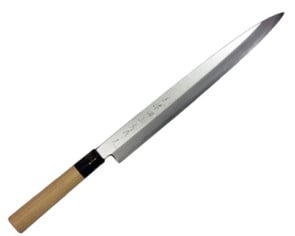
Minonokuni Take 11.8-inch (300mm) Yanagiba
At 300mm, this yanagiba is long enough to cut fillets from larger fish and to slice wide blocks for sashimi without a second stroke. It belongs on a sushi counter or a deep home board where the cook has room to draw the full length of the blade.A long yanagiba is also a precise one. The length lets the cook slow the stroke and control the thickness of each slice, which matters for thin cuts of white fish. It does take practice to keep the tip steady, and a cook coming from a shorter slicer should allow time to adjust.
Take or Matsu at 300mmBoth lines make this length. The blue steel Matsu 300mm yanagi holds an edge longer but is more brittle and suits an experienced cook. Take uses white steel, which is still good enough for professional use and tolerates more, so we suggest it for cooks who are not yet experts in single-bevel knives.For a slightly shorter knife, see the Take 270mm yanagiba. The Take 330mm yanagi is the longest in the line. Our knife shapes guide describes the yanagiba. Learn More -

Minonokuni Take 10.6-inch (270mm) Left-Handed Yanagi
A left-handed sushi chef who needs a longer slicer can choose this Take 270mm yanagi, which we stock. The blade is ground for the left hand, with the bevel on the left face and the hollow back on the right.The long, weighted blade should glide through the fish under its own weight while the thin edge makes the cut. Draw from heel to tip in a single stroke. Pressing down or sawing will crush the flesh and spoil the surface of the slice.
Take for Left-Handed CooksTake is the sweet spot of the Minonokuni range. Its white steel is ready for professional work and less brittle than blue steel, so it is a good choice for a left-handed cook who has some experience but is not yet an expert with single-bevel knives. A cook who would rather learn on the most forgiving steel can choose the Ume 270mm left-handed yanagi.The Take 240mm left-handed yanagi is shorter and easier on a home board. The right-handed version is the Take 270mm yanagiba. The knife shapes guide explains the yanagi. Learn More

