
You have no items in your shopping cart.
Knives
How would you like to shop?
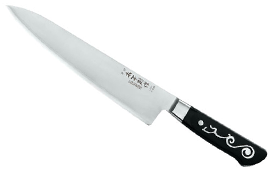
Chef's Knives
Chopping, slicing, and mincing
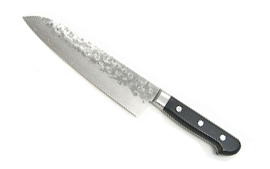
Santoku Knives
Japanese all-purpose blade
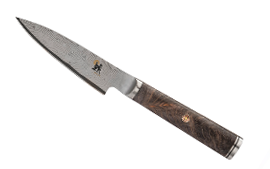
Paring Knives
Peeling and detail work
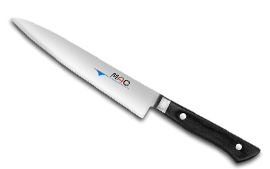
Utility Knives
Sandwiches and small produce
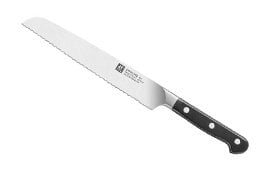
Bread Knives
Crusty loaves and soft bread
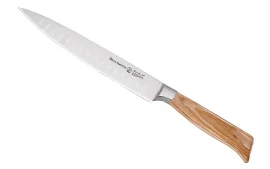
Carving and Slicing
Roasts, ham, and brisket
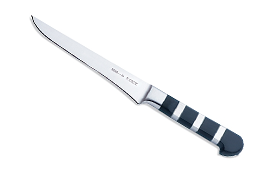
Boning Knives
Removing meat from the bone
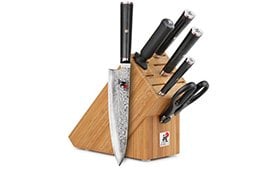
Knife Sets
Outfitting a kitchen or giving a gift
Shop All Shapes
Fillet, nakiri, yanagi, cleavers, steak, oyster, and every other shape we carry
European Makers
Professional and Commercial
Not sure where to start?
What will you cut most often?
What is your budget per knife?
Which edge style do you want?
All Knives
-

Minonokuni Gin-San 8.3-inch (210mm) Kama-Usuba
For a professional who preps vegetables in quantity and wants a single-bevel knife that will not rust at a wet station, the 210mm Gin-San kama-usuba is the one to consider. The length handles long daikon and whole heads of cabbage, and the Kansai-style pointed tip handles detail work.Push straight down and forward for clean, separated slices, and use katsuramuki to turn daikon into long sheets for garnish. The tip carves vegetable flowers and scores the skin of eggplant. Because the blade is thin and hard, keep it away from frozen food and hard rinds.
Gin-san or Carbon?Gin-san is a specialty line. It sharpens with a feel close to carbon steel but resists rust, so it asks for far less upkeep. That makes it a practical choice for a busy kitchen, though not necessarily the right knife for every cook. In carbon steel, the Take 210mm kama-usuba is the sweet spot of our standard lines, and the Matsu 210mm kama-usuba suits experienced hands.The shorter Gin-San 180mm kama-usuba is easier on a home board. See the kitchen knife shapes guide for the usuba family. Learn More -
Minonokuni Gin-San 7.1-inch (180mm) Kama-Usuba
This Gin-San kamagata usuba is hand-forged to cut vegetables either in the hand or on the board. Its pronounced tip, which the square Kanto usuba lacks, gives precise control for decorative cuts, while the flat length of the edge handles push cuts and katsuramuki.At 180mm, the blade is long enough for nearly any fruit or vegetable without being heavy or cumbersome. Use the edge to slice daikon and cucumber into sheets or fine threads, and the tip to carve garnishes, score mushroom caps or trim a turned carrot.
A Stainless Single BevelGin-san is a stainless steel that can still be hammer-forged the traditional way. It asks far less care than a carbon knife, which makes it a good choice for a cook who prefers a low-maintenance blade. As a specialty line, it is technically more premium than our standard lines but not the right knife for every cook. A cook learning the shape may be better served by the Ume 180mm kama-usuba.For a longer blade, see the Gin-San 210mm kama-usuba. The knife shapes guide explains the square and pointed usuba. Learn MoreRegular Price: $330.00
Special Price $280.00
-

Minonokuni Gin-San 9.4-inch (240mm) Yanagi
The 240mm Gin-San yanagi brings the standard sushi counter length to a stainless steel that a cook can maintain like carbon steel. It slices a full saku of tuna or a salmon fillet in a single draw and shrugs off the constant moisture of fish work.Gin-san is a stainless steel that can be hammer-forged in the traditional way and ground to a single bevel. That combination is unusual. Most stainless steels are hard to forge and sharpen this way, which is why most traditional yanagi are carbon steel. Here, the cook gets a keen, easily sharpened edge without needing to dry the blade after every slice.
Specialty, Not DefaultWe place Gin-san among our specialty lines. It is more premium than the standard lines, but a cook who already maintains carbon knives without trouble may prefer the Take 240mm yanagiba in white steel. Gin-san is the better match for a kitchen where knives may stay wet, or for a cook who would rather spend less time on care.For a shorter knife, see the Gin-San 210mm yanagi; for more reach, the Gin-San 270mm yanagi. The guide to knife shapes covers the yanagi. Learn More -

Minonokuni Gin-San 8.3-inch (210mm) Yanagi
A stainless yanagi that sharpens like a carbon one is the reason to choose this knife. The Gin-San 210mm slices sashimi with the long pull stroke of a traditional single-bevel blade, and it tolerates the wet conditions of a sushi station far better than carbon steel.The 210mm length suits a home board or a compact station. Start each slice at the heel and draw the blade toward you in one motion, so the fish is cut rather than pressed. The hollow back keeps the slice from sticking, and the result has the bright, smooth surface that sashimi calls for.
Choosing Gin-sanGin-san is one of our two specialty lines. It is technically more premium than Matsu, Take or Ume, though not necessarily the best fit for every cook. It suits a cook who values low maintenance, or who slices fish in a humid kitchen. For learning on a forgiving steel, the Ume 210mm yanagiba is the better start; for the keenest carbon edge, the Matsu 210mm yanagiba.Longer Gin-San yanagi are the 240mm and 270mm. The knife shapes guide explains how the yanagi compares with other slicers. Learn More -
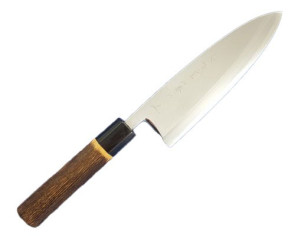
Minonokuni Gin-San 6.5-inch (165mm) Deba
Gin-san is the Minonokuni line for a cook who wants a traditional single-bevel deba without the daily rust watch of carbon steel. The silver steel blade is stainless, yet it sharpens on a waterstone with much of the feel of a carbon blade, which is why we class Gin-san as a specialty line rather than a simple step up.At 165mm, the deba handles medium fish and whole poultry. The heavy heel removes heads and cuts through collars, and the thinner forward edge follows the backbone to take off clean fillets. The single bevel keeps the edge flat against the frame, so little flesh is left behind.
Is Gin-san the Right Choice?Gin-san is technically more premium than our standard lines, but it is not the right knife for every cook. A cook who keeps a knife roll near a wet sink, or works where a blade may sit damp between tasks, gains the most from it. A cook learning to sharpen a single bevel may be better served by the Ume 165mm deba, and one who wants the longest-lasting edge by the blue steel Matsu 165mm deba.For filleting medium fish with a longer, slimmer blade, see the Gin-San 180mm mioroshi deba. Our kitchen knife shapes guide covers the deba. Learn More -
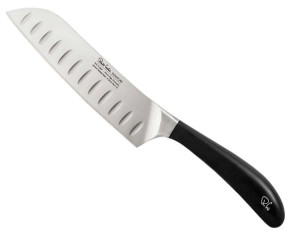
Robert Welch Signature 7 in. Santoku Knife
The Robert Welch Signature 7-inch Santoku is a masterclass in functional design, specifically engineered to bridge the gap between heavy-duty European durability and the nimble precision of Japanese blade shapes. Handling this knife reveals a weight distribution that favors the bolster, providing a secure, grounded feel during rapid dicing. The blade is forged from high-carbon German X50CrMoV15 stainless steel, a choice that ensures significant corrosion resistance while maintaining a keen 15° edge angle—sharper than the traditional 20° European standard. In practical application, the Granton edge (scalloped indentations) performs exactly as intended: creating minute air pockets between the steel and the food. When slicing through dense starches like potatoes or aqueous vegetables like cucumbers, the food falls away cleanly rather than vacuum-sealing to the blade face. This significantly increases prep speed. The handle, developed in collaboration with professional chefs, features a unique thumb-rest and a curved profile that fits the palm's natural contours. Unlike flat-sided handles, the Signature handle encourages a proper pinch grip, reducing the mechanical stress on the carpal tunnel during high-volume repetitive tasks. This is a tool designed for those who find standard handles too cumbersome or those whose grip strength is a primary concern in the kitchen. Learn More$77.50 -

Robert Welch Signature 9 in. Carving Knife
Master the Art of the Perfect Slice with Award-Winning Ergonomics The Robert Welch Signature 9-inch Carving Knife is more than a kitchen tool; it is a precision instrument designed to move through proteins with zero resistance. When you first grip the handle, the tactile feedback is immediate. Developed in consultation with professional chefs, the ergonomic handle features a unique bolster that provides a secure thumb rest and a comfortable finger guard, ensuring your hand doesn't fatigue during high-volume slicing tasks. The 9-inch blade is forged from high-quality X50CrMoV15 German stainless steel, hardened to 55-56 HRC. This specific hardness provides the ideal balance between extreme sharpness and the toughness needed to avoid chipping when navigating around poultry bones or dense holiday roasts. During testing, the long, thin profile of the blade allowed for long, sweeping strokes that produce uniform, restaurant-quality slices without the jagged 'sawing' effect common with shorter, duller blades. Whether you are carving a delicate smoked salmon fillet or a heavy prime rib, the weight distribution of this knife remains centered in the palm. The blade is ground at a precise 15° angle, offering a level of sharpness that rivals Japanese cutlery while maintaining the robustness of European steel. This is the definitive tool for the host who values presentation and the chef who demands technical reliability. Learn More$70.95 -

MAC Superior 8.5-inch Fillet Knife
The Mac Superior 8.5-inch Fillet Knife has a long, narrow blade that is slightly flexible, giving you more control when cutting meat or fish. Due to its size and shape, it works as a fillet knife or a carving knife.The extra length over the FK-70 suits larger fish such as salmon and striped bass, and the blade can follow the backbone in one pass. The slight flex also helps when removing skin, and at the table it slices a roast or a ham.For a firmer, straight blade, compare the BNS-80. Browse the Superior Series, or see our guide to knife shapes. Learn More$104.95 -

MAC Ultimate 8.5-inch Wide Heavy Chef’s Knife
The SDK-85 features an extra wide blade and a thick spine like a yo-deba, a Western-handled version of the Japanese fish knife. MAC lists it as the Ultimate Series heavy cleaver, and it is built for cutting up fish and chicken, jobs that would strain a thin chef’s knife.The wide blade and extra weight let it split chicken backs, cut through fish collars and portion whole fish, while the long edge still slices and dices vegetables like a chef’s knife. It is a heavy knife; for fine mincing and long prep lists, a thin chef’s knife such as the MBK-85 is less tiring.For traditional single-bevel fish knives, compare the MAC deba and the fish cleaver. Our kitchen knife shapes guide explains the deba and the cleaver shapes. Learn More$359.95 -
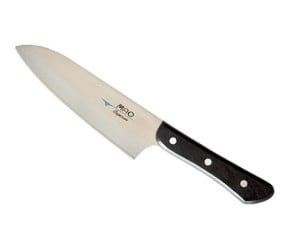
MAC Superior 6.5-inch Vegetable Cleaver
A tall, thin blade lets you chop vegetables with a straight downward stroke and carry them to the pan on its face. The MAC SD-65 is a 6.5-inch vegetable cleaver in the Superior Series, good for chopping, mincing and slicing vegetables and fruit.Its height gives full knuckle clearance, and the gently rounded edge allows a short rocking motion for herbs and garlic. The SD-65 is a vegetable knife: the blade is thin and is not meant for bone.For a flat-edged vegetable knife, compare the nakiri JU-65 and the Professional MJU-65. Our guide to knife shapes explains vegetable cleavers and nakiri. Learn More$114.95


