
You have no items in your shopping cart.
Deba
De(Fat) Ba(Knife)
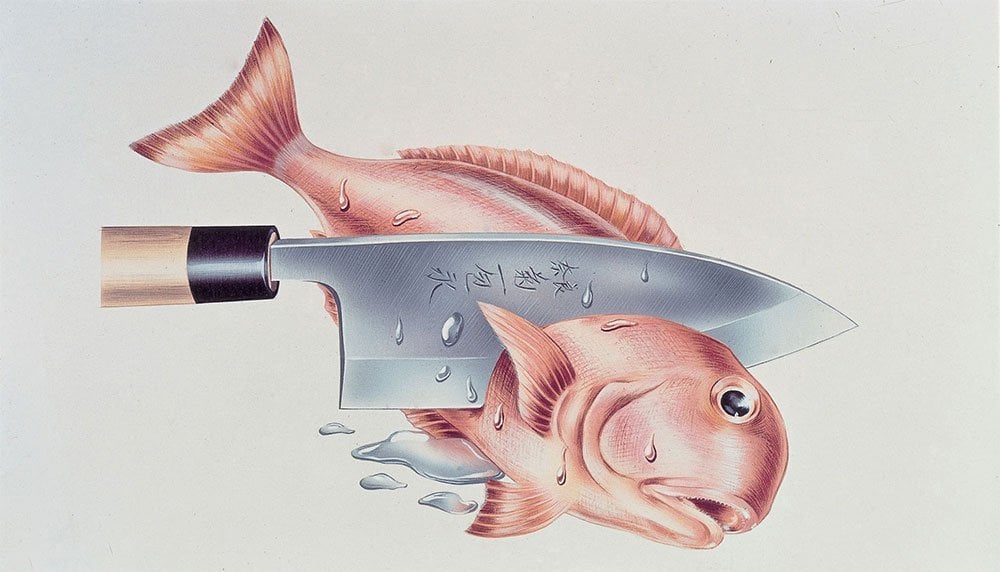
This traditional Japanese knife shape is ideal for butchering and filleting fish as its unique shape cuts cleanly and precisely preserving delicate flesh. Deba knives can also be used on poultry, vegetables, and meat although we do not recommend using it for breaking dense bones as the ultra-hard Japanese steel is subject to chipping and pitting. Keep in mind that Deba knives are typically single sided, but some more westernized debas are made with a double-bevel meaning that both sides are angled. Note that the term yo-deba may be used by certain makers to refer to a knife that is particularly thick, but this definition maintains no correlation to the standard deba characteristics.
-

Minonokuni Gin-San 9.4-inch (240mm) Mioroshi Deba
The 240mm mioroshi deba is a long fish knife for large fish. Its length lets the cook follow the backbone of a big salmon or yellowtail in long strokes, and its slimmer blade can then portion the fillets without switching knives.Compared with a standard deba of similar length, the mioroshi is narrower and lighter at the tip. It still handles the head and collar of large fish through the heel, but it is not a cleaver. Avoid heavy bones and frozen fish.
The Case for Gin-sanGin-san silver steel is stainless, so a long blade that spends hours around water stays free of rust with ordinary drying, and it sharpens with a feel close to carbon steel. It is a specialty line, technically more premium than our standard lines, but not necessarily the right choice for every cook.The shorter Gin-San 195mm mioroshi deba is easier to handle on medium fish. For slicing sashimi from the fillets, pair it with the Gin-San 240mm yanagi. See the knife shapes guide for the deba and yanagi. Learn More -

Minonokuni Gin-San 7.7-inch (195mm) Mioroshi Deba
At 195mm, this mioroshi deba sits between the compact 180mm and the long 240mm. It gives a little more reach along the backbone of a larger fish while staying easy to control, which makes it a sound all-round size for a kitchen that fillets fish daily.A mioroshi blends the deba and the yanagi. Its spine is heavy enough for heads and collars on medium fish, and its slimmer profile glides along the frame and can portion fillets afterward. On very large or heavy-boned fish, a standard deba is still the safer tool.
Why Stainless HereFish work keeps a blade wet, and Gin-san silver steel resists rust while sharpening much like carbon steel. As a specialty line, it is technically more premium than our standard lines, though not the right knife for every cook. A cook comfortable caring for carbon steel may be content with a standard deba from the Take line, such as the Take 195mm deba.The Gin-San 180mm mioroshi deba is shorter, and the Gin-San 240mm mioroshi deba longer. The mioroshi is described alongside the standard deba in our guide to knife shapes. Learn More -

Minonokuni Gin-San 7.1-inch (180mm) Mioroshi Deba
The mioroshi deba is longer and slimmer than a standard deba. It keeps enough weight to cut through the head and collar of a medium fish, but its narrower blade moves more easily along the frame for filleting and can take on light slicing work that would otherwise call for a yanagi.That makes the 180mm a good single knife for a cook who breaks down medium fish such as sea bream, mackerel and small salmon from start to finish. The single bevel follows the backbone closely, and the length helps take each fillet off in fewer strokes.
The Gin-san LineGin-san is our stainless single-bevel line. The silver steel sharpens with much of the feel of carbon steel but resists rust, which suits a cook who works around water all day. It is a specialty line, more premium than our standard lines, but not necessarily the right knife for everyone. A cook who wants a heavier knife for heads should look at the Gin-San 165mm deba.Longer mioroshi deba are the Gin-San 195mm and Gin-San 240mm. The knife shapes guide describes the deba and its relatives. Learn More -
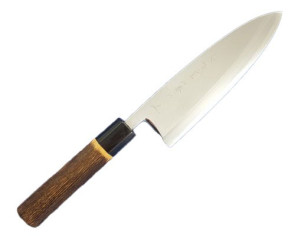
Minonokuni Gin-San 6.5-inch (165mm) Deba
Gin-san is the Minonokuni line for a cook who wants a traditional single-bevel deba without the daily rust watch of carbon steel. The silver steel blade is stainless, yet it sharpens on a waterstone with much of the feel of a carbon blade, which is why we class Gin-san as a specialty line rather than a simple step up.At 165mm, the deba handles medium fish and whole poultry. The heavy heel removes heads and cuts through collars, and the thinner forward edge follows the backbone to take off clean fillets. The single bevel keeps the edge flat against the frame, so little flesh is left behind.
Is Gin-san the Right Choice?Gin-san is technically more premium than our standard lines, but it is not the right knife for every cook. A cook who keeps a knife roll near a wet sink, or works where a blade may sit damp between tasks, gains the most from it. A cook learning to sharpen a single bevel may be better served by the Ume 165mm deba, and one who wants the longest-lasting edge by the blue steel Matsu 165mm deba.For filleting medium fish with a longer, slimmer blade, see the Gin-San 180mm mioroshi deba. Our kitchen knife shapes guide covers the deba. Learn More

