You have no items in your shopping cart.
Minonokuni Knives
Authentic Japanese blades (hochoes) hand-forged using traditional Japanese methods of old-world craftsmanship; Minonokuni knives are part of a project designed to preserve and protect the master/apprentice relationship. Even as demand for Japanese knives has grown; the skilled masters are aging, and it has been difficult to keep apprentices. While the methods of construction mastered over the centuries have changed very little, the methods of bringing the pieces to market is dramatically different. Then Knife Merchant was asked to assist by bringing knives from various masters in different types of material to market, so that the craftsmen can concentrate on their work and keep the apprentice fully employed, without the burden of stopping production to make sales. Minonokuni is the name of a prefecture (state) that existed in the days of the Samurai. It encompassed a wide area including Seki-City and Sakai, which are the areas of Japan in which our craftsmen are making these blades. This is why we have chosen this as a brand name to represent these knives. You will find the quality to be far superior to comparable material types. When the knife maker has his name on the blade (instead of working for a company), there is greater pride and care taken in little details that make a great difference in final quality. Minonokuni knives are now available in a variety of grades to suit every need and price point.
-

Minonokuni Ume 7.1-inch (180mm) Kama-Usuba
The kama-usuba is the Kansai-style vegetable knife, with a curved spine that ends in a point. This 180mm Ume version is a good introduction for a cook who wants both push-cutting power and a tip for detail work.The flat length of the edge slices and dices vegetables with straight push cuts and handles katsuramuki. The pointed tip carves decorative garnishes, scores mushroom caps and trims around blemishes. Together, they make one knife cover most vegetable prep.
Learning on UmeUme is the most forgiving of the three standard Minonokuni lines. It is the line we recommend to a novice and the best for learning to sharpen a single bevel, which includes keeping the tip of a kama-usuba fine. When a harder edge is wanted, the Take 180mm kama-usuba is the next step.The Ume 210mm kama-usuba is longer. For square-tipped work, see the Ume 180mm usuba. Left-handed cooks should choose the Ume 180mm left-handed kama-usuba. The knife shapes guide covers both forms of usuba. Learn More$87.25 -

Minonokuni Ume 8.3-inch (210mm) Left-Handed Usuba
For the left-handed cook dedicated to vegetable preparation, this Ume 210mm usuba is ground for the left hand. The single bevel sits on the left face, which gives straight push cuts and even katsuramuki sheets when the knife is held as a left-handed cook naturally holds it.The 210mm length handles long daikon and whole heads of cabbage, and the tall blade gives the knuckles clearance above the board. Slices separate fully because the flat edge meets the board along its whole length.
Ume for Left-Handed CooksUme is the most forgiving of our three standard lines and the best one to learn sharpening on. A long single bevel takes time to sharpen evenly, so that tolerance is useful on this size. We stock left-handed Ume knives, and the Ume 180mm left-handed usuba is the shorter option.The right-handed version is the Ume 210mm usuba. A left-handed cook ready for harder white steel can look at the Take 180mm left-handed usuba. See the knife shapes guide for the usuba. Learn More -

Minonokuni Ume 8.3-inch (210mm) Usuba
Long daikon and whole cabbages are easier with a 210mm usuba, and the Ume version puts that length within reach of a cook still learning the shape. The tall, flat blade also scoops the cut vegetables off the board for the pan.The longer edge gives more room for katsuramuki, so the sheet stays on the blade as it unrolls. For julienne, stack the sheets and push-cut them into fine threads, a technique called sengiri. Each cut should be a straight push forward and down.
Matching the Line to the CookUme is the most forgiving of the three standard Minonokuni lines and the best for learning to sharpen. On a long single bevel, an even edge takes practice to keep, and a softer steel makes that practice easier. The Take 210mm usuba is the sweet spot for cooks ready for a harder edge, and the Matsu 210mm usuba suits experienced hands.Left-handed cooks can order the Ume 210mm left-handed usuba. For a shorter blade, see the Ume 195mm usuba. The Ume 210mm kama-usuba adds a pointed tip. The two forms are compared in our guide to knife shapes. Learn More -

Minonokuni Ume 7.7-inch (195mm) Usuba
The 195mm usuba sits between the compact 180mm and the long 210mm. It gives a little more length for daikon and cabbage than the shorter knife while staying light enough for a home cook to control through a long prep session.The single-bevel blade cuts vegetables with a straight downward push, with no wedging action to crack a carrot or bruise a herb. That clean separation is what makes the usuba suited to fine julienne, paper-thin slices and katsuramuki sheets for garnish.
A Size Only in UmeThis in-between length is offered only in the Ume line. Ume is the most forgiving of the three standard Minonokuni lines and the best for learning to sharpen, which makes this knife a good fit for a cook who wants a bit more blade but is still building skills. A cook ready for harder white steel can compare the Take 210mm usuba.The Ume 180mm usuba is shorter and the Ume 210mm usuba longer. For a pointed tip, see the Ume 180mm kama-usuba. Our knife shapes guide covers the usuba. Learn More$104.00 -

Minonokuni Ume 7.1-inch (180mm) Left-Handed Usuba
A left-handed cook starting with traditional Japanese vegetable knives will find this Ume usuba a fantastic first knife. The bevel is on the left side of the blade, so katsuramuki sheets come off even and push cuts fall straight when it is held in the left hand.At 180mm, the knife suits a home board. It slices, dices and minces vegetables with straight push cuts, and the flat edge meets the board along its length so that slices separate fully. It is not designed for rocking cuts, which a chef’s knife handles better.
Why Ume for a First UsubaUme’s steel is the most forgiving of our three standard lines and the best for learning to sharpen. For a cook already familiar with chisel-ground hocho and looking for a harder steel with a longer-lasting edge, the Take 180mm left-handed usuba is the step up. We stock left-handed models in both lines.The right-handed model is the Ume 180mm usuba. The Ume 210mm left-handed usuba is longer, and the Ume 180mm left-handed kama-usuba adds a pointed tip. The knife shapes guide explains the shape. Learn More$125.00 -
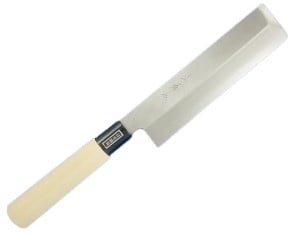
Minonokuni Ume 7.1-inch (180mm) Usuba
An usuba is the knife for learning traditional Japanese vegetable cutting, and the Ume 180mm is a fantastic starter. It is a manageable size for a home kitchen, and the Ume line is the most forgiving of the three standard Minonokuni lines.The tall, flat blade meets the board along its entire edge, so a straight push cut separates every slice of cucumber, carrot or scallion. Turned against a piece of peeled daikon, the single bevel unrolls a thin, continuous sheet, the technique called katsuramuki. It is made for push cutting and slicing.
The Best Usuba to Learn OnUme is the line we recommend to a novice. Its softer steel is the most forgiving and the best for learning to sharpen a single bevel. A cook familiar with chisel-ground knives who wants a harder edge can look at the Take 180mm usuba or Matsu 180mm usuba.Other Ume sizes are the 195mm and 210mm. Left-handed cooks should see the Ume 180mm left-handed usuba. Our knife shapes guide sets the usuba beside the nakiri. Learn More -

Minonokuni Ume 9.4-inch (240mm) Left-Handed Yanagi
Slicing sashimi left-handed with a standard yanagi does not work, because the bevel is on the wrong side. The Ume 240mm left-handed yanagi is ground the other way, so a left-handed cook can make the clean, single-stroke slices the knife is made for.At 240mm, the blade suits both a home kitchen and a restaurant station. It slices salmon and tuna, and it can cut thin carpaccio of beef. The long blade lets the cut finish in one pull, which leaves the fish with a smooth, bright surface.
The Forgiving LineUme uses the softest steel in our three standard lines. It chips less readily and is the best line for learning to sharpen. For a left-handed cook new to single-bevel knives, those qualities make the learning curve gentler. We stock left-handed Ume knives.The Take 240mm left-handed yanagi is the harder alternative in white steel. For a home board, the Ume 210mm left-handed yanagi is shorter. Read about the shape in the knife shapes guide. Learn More -

Minonokuni Ume 9.4-inch (240mm) Yanagiba
The 240mm yanagiba is the length to learn on for a cook who expects to slice sushi in a restaurant as well as at home. The long, narrow blade cuts a saku of tuna in one draw, and the Ume line makes it the most forgiving way to build the technique.Each slice should come from a single, smooth pull from heel to tip. The length of this knife gives enough blade to finish the cut on most fillets, so the cook does not need to saw back and forth. Keep the pressure light and let the edge do the cutting.
The Ume ChoiceWe describe the three standard lines by who they suit rather than by rank. Ume is the right choice for a novice, being the most forgiving and the best line to learn sharpening on. The Take 240mm yanagiba is the sweet spot for cooks ready for a harder edge, and the Matsu 240mm yanagiba is for experienced hands.Other Ume lengths are the 210mm and 270mm. Left-handed cooks should see the Ume 240mm left-handed yanagi. The knife shapes guide covers slicers. Learn More$92.00 -

Minonokuni Ume 8.3-inch (210mm) Left-Handed Yanagi
Left-handed home cooks who want to slice sushi and sashimi properly need a yanagi ground for the left hand. This Ume 210mm yanagi has its bevel on the left face, so the knife draws straight through the fish and the slice falls away cleanly.The 210mm length is manageable on a home cutting board and long enough to slice salmon, tuna or yellowtail fillets in one stroke without tearing. The narrow blade reduces drag through the flesh, and the flat back keeps the slice from sticking.
A Left-Handed First YanagiThe Ume line is the most forgiving of our three standard lines and the easiest to learn to sharpen. That suits a left-handed cook buying a first single-bevel knife, who will be learning both the slicing stroke and the stone at once. We keep left-handed Ume knives in stock. When a harder edge is wanted, the Take 210mm left-handed yanagi is the next step.The right-handed version is the Ume 210mm yanagiba. For a longer stroke, see the Ume 240mm left-handed yanagi. For background on the shape, read the kitchen knife shapes guide. Learn More -

Minonokuni Ume 8.3-inch (210mm) Yanagiba
A home cook who wants to try making sushi and sashimi should start with a 210mm yanagiba, and the Ume version is the forgiving way in. The length is easy to control on a home board and still slices a salmon or tuna fillet in one stroke.The yanagiba works by drawing, not pushing. Start the cut at the heel and pull the blade toward you through the fish, using its full length. The single bevel and hollow back let the slice come away cleanly, and the result has a smooth, bright face that a sawing cut cannot match.
Starting with UmeUme is the most forgiving of the three standard Minonokuni lines and the best for learning to sharpen a single bevel, which every yanagiba owner has to do. Its edge is less likely to chip than the harder steels in the Take 210mm yanagiba and Matsu 210mm yanagiba, which suit cooks with more experience.A longer stroke comes with the Ume 240mm yanagiba. Left-handed cooks should see the Ume 210mm left-handed yanagi. Our knife shapes guide covers the yanagiba. Learn More