
You have no items in your shopping cart.
F Dick 1905 Knives
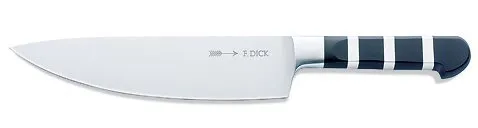
In 1905, a year of upheaval and technical progress, Friedrich Dick developed a series of knives which used aesthetic metal rings to secure the handle scales to the blade rather than the traditional 3 metal rivets used by all other German makers. This special design became the trademark of F. Dick knives as their blades could be identified easily when compared to any other maker. The symmetrical steel rings are inseparably connected to the handle using a proprietary technology that has never been replicated. Seamlessly polished and comfortable to hold, the 1905 series quickly became a favorite of German knife enthusiasts, so much so that these knives are still in production over 100 years later. Beautifully balanced 1905 Series blades are precisely ground from spine to heel and heel to tip resulting in a perfect taper that glides through food with ease. These knives are forged using a solid piece of X50CrMoV15 that holds an edge well, responds quickly to honing and can be sharpened with ease. A half bolster finger guard protects your fingers, but gives the user full access to the knife's edge in order to resharpen the cutting edge completely. Each knife in the 1905 series was thoughtfully designed and lovingly crafted to the exceptionally high standards associated with the name Friedrich Dick. The original marking of "F. Dick" is stamped by hand onto each blade as a quality mark. 1905 Series knives are Made in Taiwan using a process that combines traditional design and modern technology.
-
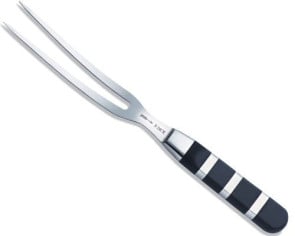
F. Dick 1905 8-inch Carving Fork
A carving fork holds a roast still while the knife does its work, and this 8-inch 1905 fork is made for prime rib, whole turkeys and hams. The forged fork does not flex when it is pushed into a large roast.Rigid tines keep the meat from shifting, so slices come off evenly and the knife stays on line. The long tines reach deep into a roast for a secure hold, and the handle matches the ringed 1905 knives. It also lifts and turns roasts in the pan and transfers carved slices to the platter.The fork also tests roasts and braises for tenderness, since the tines slide in easily when the meat is done. It is a useful tool to keep beside the stove as well as on the carving board, and it matches the 1905 knives on a counter.Pair it with the 1905 8-inch carving knife for roasts and poultry, or the 1905 serrated carving knife for crusty roasts and ham. For a modern-handle fork, see the Premier Plus 7-inch kitchen fork. Learn More$105.95 -
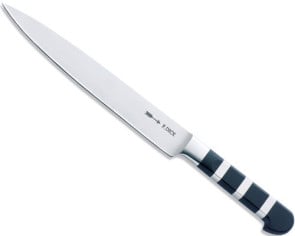
F. Dick 1905 8-inch Carving Knife
A shorter slicer is the right tool for roast chicken, a pork tenderloin or a small roast, and this 8-inch 1905 carving knife portions meat and fish with control. It comes very sharp out of the box.The narrow blade makes thin, even slices with little drag, and the reduced bolster suits a comfortable pinch grip. Its balance and weight make delicate cuts easier, which helps when carving at the table or plating slices of fish. It also serves as a long fillet knife for smaller fish.The 8-inch length is also handy for slicing cold meats and terrines for a platter. It fits a standard knife block, which a longer slicer may not. That makes it a practical first carving knife for a home kitchen.Hold the roast steady with the 1905 8-inch carving fork. For crusty roasts and ham, the 1905 serrated carver bites through the exterior, and for whole sides of salmon the 12.5-inch salmon slicer is much longer. Our knife shapes guide covers carving knives. Learn More$87.75 -
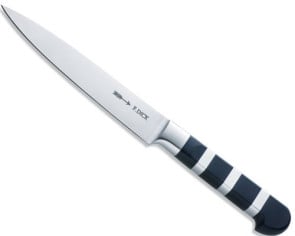
F. Dick 1905 6-inch Utility Knife
A utility knife takes on the jobs that are too big for a paring knife and too small for a chef’s knife, and this 6-inch 1905 knife handles prepping fruit and vegetables in quantity as well as delicate cuts such as a julienne or a fine dice.Using a second knife for smaller jobs also spreads the wear, so the chef’s knife stays sharp longer. The narrow 6-inch blade slices a chicken breast, segments an orange and trims a pork tenderloin. It is a practical knife for both professional and home cooks.It is a sensible second knife for a home cook building a kit, and a handy spare on a professional line. The blade is narrow enough to slip between segments of citrus.A 1905 6-inch granton edge utility knife adds hollows that keep starchy vegetables from sticking. For serrated work on tomatoes and bread rolls, choose the 1905 5-inch serrated utility knife. The 1905 6-inch chef’s knife is taller at the same length. Learn More$74.10 -
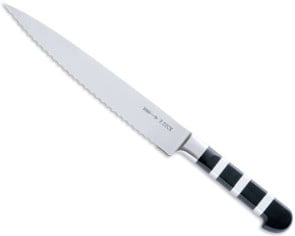
F. Dick 1905 8.5-inch Serrated Carving Knife
Crusty roasts, ham and pork with crackling are easier to carve with serrations, and this 8.5-inch 1905 carver bites through a hard exterior cleanly. The blade has a light flex, which also makes it practical for chicken and fish.A plain edge can skate on a crisp crust, and pressing harder crushes the meat underneath. The serrations catch immediately, so the slice starts cleanly and the knife travels through with light strokes. The hard but tough steel suits a serrated edge, which stays sharp for a long time.A serrated carver also stays sharp longer than a plain blade when it meets bone. That suits a busy carving station, where the knife may not be sharpened until the end of a long service.For roasts without a crust, the plain-edged 1905 8-inch carving knife gives smoother slices. A 1905 carving fork holds the roast steady, and the Premier Plus 10-inch serrated carving knife adds length for larger roasts. Learn More$89.70 -

F. Dick 1905 7-inch Flexible Fillet Knife
Filleting fish cleanly takes a thin blade that bends with the frame, and this 7-inch 1905 knife has one. It lifts fillets in one piece and removes skin and bones, so the fillets come out tidy and whole.The knife balances well, with a comfortable handle that feels like part of the hand during a long session at the fish board. The thin, flexible blade also trims meat and removes silver skin.The 7-inch length suits trout and other fish of a size cooked whole or as fillets at home. It fits easily into a knife roll for a trip to the dock. A thin blade also skins fillets cleanly.For fish such as halibut and salmon, the Premier Plus 8.25-inch flexible fillet knife adds reach. Boning meat and poultry suits the 1905 6-inch flexible boning knife, and pin bones come out with the F. Dick fish bone tweezers. Our knife shapes guide compares fillet and boning knives. Learn More$80.60 -
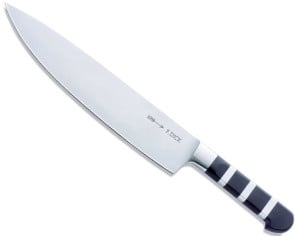
F. Dick 1905 10-inch Chef’s Knife
Professional cooks in high-volume kitchens buy this 10-inch 1905 chef’s knife to prep large amounts of vegetables without tiring their hand. The longer blade fits more food under it with each stroke and reaches across a whole cabbage or a large melon.A long, heavy blade can feel tip-heavy, and this one keeps good balance for its size, which makes it comfortable through a long prep list. The series responds well to regular honing, so a few strokes on a steel at the start of each shift keep the edge working.The long blade also slices roasts and large fish fillets neatly.If 10 inches feels like too much knife, the 1905 8-inch chef’s knife is the all-round size. For heavy portioning of meat, the 1905 AJAX butcher’s chef’s knife carries more weight. The Premier Plus 10-inch chef’s knife is the same length with a modern handle. Our kitchen knife shapes guide covers chef’s knife lengths. Learn More$128.05 -
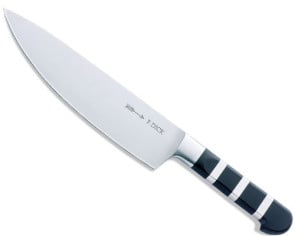
F. Dick 1905 8-inch Chef’s Knife
An 8-inch chef’s knife handles most of the cutting in a kitchen, and the 1905 version covers the full range, from breaking down a chicken and slicing meat to dicing onions and cutting a fine julienne. Its gently curved edge and upswept tip suit cooks who like a rocking motion. For the price, it is one of the finest chef’s knives available.The knife balances well in the hand, and the shape of the bolster leaves room for a pinch grip, where the thumb and forefinger hold the blade itself for extra control. The look of the series goes back to a 1905 F. Dick design with solid collars on the handle.For smaller hands or a small board, the 1905 6-inch chef’s knife is easier to manage, and the 1905 10-inch chef’s knife moves more food per stroke. Cooks who prefer push cuts can compare the 1905 7-inch granton edge santoku. A Premier Plus 8-inch chef’s knife offers a more modern handle at the same length. Learn More$107.25 -
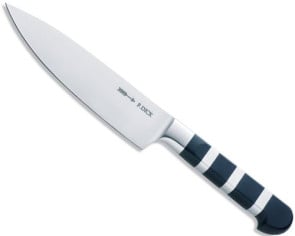
F. Dick 1905 6-inch Chef’s Knife
A 6-inch chef’s knife suits cooks with smaller hands, small cutting boards and quick jobs such as slicing a shallot or a few cloves of garlic. This 1905 version stays sharp and has a comfortable handle that does not cramp the hand through long use.The shorter blade gives more control near the tip, which helps with fine dicing and with work close to the hand. It still has enough height for chopping herbs and enough length to slice a chicken breast. The 1905 knives are easy to hone and resharpen, so the edge is simple to keep in shape at home.It also fits easily in a knife roll or a small drawer, which makes it a good travel knife for a vacation rental kitchen.For bigger produce and longer slicing, the 1905 8-inch chef’s knife is the standard size. A 1905 6-inch utility knife is narrower at the same length, and the 1905 herb knife is built for mincing. Learn More$92.95 -
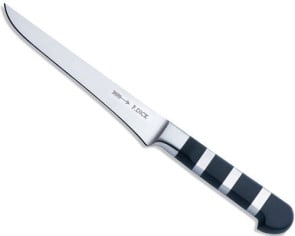
F. Dick 1905 6-inch Flexible Boning Knife
Processors, butchers and fish cutters can all use this 6-inch 1905 boning knife. It has good flex for a forged blade, which lets it trace around joints and bones, and the steel is tough enough to go through chicken joints when cutting wings and thighs.Flex keeps the edge close to the bone, so less meat is left behind. The 6-inch length breaks down a bird and fillets smaller fish. The ringed handle recalls F. Dick designs from the early 1900s and is sealed to the blade, which keeps it sanitary.It also trims silver skin from a pork tenderloin and takes the tenderloin off a rack of ribs.For stiffer boning in a plant or shop, the ErgoGrip 6-inch straight stiff boning knife is built for long shifts. In the kitchen, the 1905 7-inch carving and boning knife handles silver skin, and the Premier Plus 6-inch flexible boning knife offers a modern handle. Learn More$85.80 -

F. Dick 1905 8.5-inch Bread Knife
Everyday loaves, rolls and baguettes are the work for this 8.5-inch 1905 bread knife. It has a standard serration with sharp points and a wide bevel between them, a combination that keeps the serrations straight and cutting for a long time.Bread knife steel has to balance two needs. If it is too hard, the points can chip; if it is too soft, they bend and dull. This blade sits in the middle, which suits a knife that meets hard crusts every day. The forged construction gives it more weight than a stamped bread knife, so it saws with less pressure.It also slices tomatoes and soft fruit, and it levels small cakes. The 8.5-inch length fits a standard knife block.For wide country loaves, the 1905 10-inch bread knife has a curved edge and more reach, and the 12.5-inch bread knife handles the largest breads and sheet cakes. Our kitchen knife shapes guide covers bread knives. Learn More$89.05

