
You have no items in your shopping cart.
Ceramic Waterstones
Ceramic Sharpening Stones, also known as "splash and go" stones, are a type of whetstone made from non-porous ceramic materials. Unlike traditional waterstones that require soaking before use, these stones just need to be splashed with water, making them ready for sharpening almost instantly. This feature offers a significant advantage in terms of convenience, cleanliness and efficiency. Prized for their durability, ceramic stones typically lasting longer than traditional waterstones of commensurate grits. Effective for sharpening a variety of blades, including those made from exceptionally tough steels, ceramic stones provide an excellent balance between cutting aggression and polishing power.
-
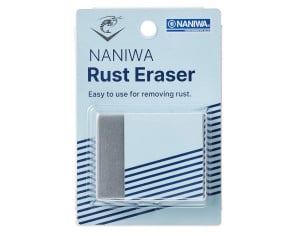
Naniwa Coarse Rust Eraser (Gray)
Carbon steel knives rust when they are left wet, and this eraser takes that rust off. It is the coarse, gray Naniwa eraser, made for heavy or aged rust and stains on carbon steel knives and tools.It works like a pencil eraser. The abrasive runs through the whole flexible block, so fresh grit keeps coming to the surface as it wears. Rub the affected area until the rust is gone, then clean and oil the blade. Learn More -
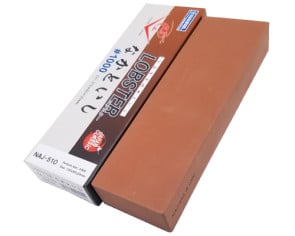
Naniwa Lobster 1000 Grit Waterstone
A 1000 grit stone is the one most sharpeners use most often, and the Lobster 1000 is Naniwa’s economical version. Use it for routine maintenance and to put an edge back on a dull knife.It is a traditional soaking stone: submerge it until the bubbles stop before sharpening. Soaking stones cut quickly and give good feedback, but they wear faster than splash-and-go stones and need regular flattening.For someone learning to sharpen, an inexpensive 1000 grit stone is a sensible place to practice holding a steady angle. Mistakes cost little, and the technique carries over directly to harder, more expensive stones. Pair it with the Lobster 3000 for a finer edge, or with the Lobster 220 for repairs. It is the stone in the Lobster line to buy first.
Upgrading laterA cook who outgrows the Lobster can move to the splash-and-go Super Stone 1000 or the harder Professional 1000. Our sharpening stone guide compares them. Learn More$27.95 -

Naniwa Adjustable Sharpening Stone Holder
This holder clamps a sharpening stone in place so it does not shift while you sharpen or flatten. It adjusts to stones from 136 to 218 mm (5.35 to 8.58 inches) long and up to 76 mm (3 inches) wide, which covers Naniwa’s Professional and Super Stone lines as well as most other bench stones.The rubber mounts grip the counter, and the holder has enough weight to stay put. Its rails and clamps are stainless steel. We tested one by leaving it in water overnight and using it during the day: after two months it showed no rust, and the clamps still turned smoothly. Other holders we tried rusted within days. It is not meant to live in water, but an accidental night in the soaking tub will not hurt it. Learn More$39.95 -

Naniwa 220 Grit Flattening Stone
Every waterstone wears hollow in the middle with use, and a dished stone puts a rounded edge on a knife. This hand-held 220 grit flattener restores a flat surface on ceramic and traditional waterstones alike.Diagonal grooves molded into its face give slurry somewhere to go, so the flattener keeps cutting. At 220 grit it leaves a smoother surface than our 24 grit flattener, which suits a home sharpener who flattens every few sessions.A flat stone also keeps the bevel angle consistent from heel to tip. On a dished stone, each part of the blade meets the stone at a different height, and the edge ends up unevenly sharp along its length.Flatten after every few sessions, or whenever a straightedge laid across the stone shows light underneath. Soaking stones dish faster than splash-and-go ceramic stones and need attention more often.
Which flattener?The Pink Alumina Flattening Stone is longer and uses a harder-wearing abrasive. The 24 Grit Flattening Stone works fastest and suits high-volume sharpening. Learn More$24.95 -

Naniwa Extra Large 24 Grit Flattening Stone
This is the flattening stone we use in our own shop, chosen for the volume of hand sharpening we do. At 24 grit it is extremely coarse, and it is large enough to cover the full face of any standard waterstone, so it restores a dished stone quickly.Rubber feet hold it steady. Lay it flat in the bottom of a sink, wet both stones, and run the waterstone across it. The coarse grit can leave fine grooves in high-grit stones; smooth those afterward with a Naniwa dressing stone.It works on every Naniwa stone we carry, from the soaking Lobster and Traditional stones to the splash-and-go Professional and Super Stone lines. Flatten often and lightly. A stone that is trued every few sessions needs only a short pass on the 24 grit; one left to dish deeply takes far longer.
24 or 220 grit?For a normal volume of sharpening, a 220 grit flattener gives a smoother surface without grooving, though it takes longer. Choose the hand-held 220 Grit Flattening Stone or the Pink Alumina Flattening Stone. Learn More$65.00 -
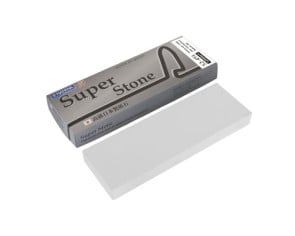
Naniwa Advance S2 Super Stone, 12,000 Grit
The 12,000 is the finest Super Stone and the final stage of sharpening. On traditional Japanese knives it is used to polish the shinogi line and the edge. Many chefs also raise their angle a couple of degrees on this stone to put a very fine micro-bevel on the edge.Straight razor owners use it for the smoothest edge they can produce. The polish it leaves is the reason to buy it. We recommend pairing it with a Naniwa dressing stone, which raises a slurry and clears the steel particles that embed in high-grit stones.Keep the stone flat and clean. On a polishing stone, any loaded patch or high spot appears directly in the finish, so flatten it periodically with a 220 grit flattening stone and clean it with the dressing stone as it loads.
Building up to 12,000Work through an 8000 or 10,000 first. The 12,000 removes too little steel to clear scratches from a mid-grit stone efficiently. Learn More$107.80 -
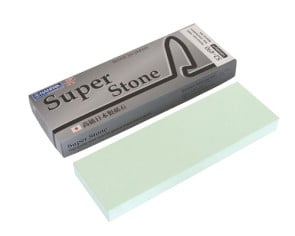
Naniwa Advance S2 Super Stone, 10,000 Grit
The Super Stone 10,000 is a polishing stone. It removes the finest scratches left by an 8000 or 5000 stone and brings the edge and bevel to a mirror finish, which is valued on slicing knives and single-bevel Japanese blades.Use it only after a 5000 or 8000. Going directly from a 1000 grit stone is slow and will not produce a true polish. Allow a light slurry to build as you work; it helps the polishing action. The resin bond gives the stone a soft, smooth feel, and it needs only a splash of water.Expect slow, deliberate work. A 10,000 grit stone removes very little steel per stroke, so the knife must arrive already sharp. When the surface begins to glaze, refresh it with a 10,000 grit nagura stone.
Super Stone or Professional at 10,000?The Professional 10,000 is harder and stays flat longer. The Super Stone is the more economical choice. Learn More$93.95 -

Naniwa Advance S2 Super Stone, 8000 Grit
The Super Stone 8000 is for the final stage of sharpening. It still sharpens, unlike a stone used only to polish, so it finely tunes the edge while it brightens the bevel. That makes it useful for removing the last of the wire edge left by coarser stones.Bring the knife to it from a 3000 or 5000. Splash the surface, keep it wet and use light pressure. A Naniwa dressing stone keeps a high-grit surface from loading with steel.Sharpeners use the 8000 in two ways. For a kitchen knife that slices raw fish and roasts, it can be the last stone. For single-bevel blades and straight razors, it is a step toward the 10,000 and 12,000.Use light pressure and long, even strokes. The stone removes little steel, so the knife should arrive already sharp, with the coarser scratches cleared on the 3000 or 5000.
8000 or higher?For a mirror finish on single-bevel knives, continue to the 10,000 or 12,000. Learn More$85.95 -

Naniwa Advance S2 Super Stone, 5000 Grit
At 5000 grit, the Super Stone moves from sharpening to finishing. It refines an edge from the 3000 into a smoother, more polished one, which suits slicing knives and anyone who wants a cleaner cut through proteins.Naniwa’s resin bond allows a higher concentration of abrasive particles, which improves both the speed and the feel of the stone. It needs no soaking.The step from 3000 to 5000 shows most on push cuts and on soft foods such as ripe tomatoes, herbs and raw fish, where a smoother edge tears less. Spend a few minutes per side with light pressure, then remove the fine burr carefully, by hand or on a leather strop. A polished edge shows any burr that remains.Resin stones at this grit load with steel over time. A Naniwa dressing stone restores the surface when it turns gray and the blade begins to skate.
Where to stopFor most kitchen knives, 5000 is a sensible final grit. Those polishing single-bevel knives or straight razors continue to the 8000 or 10,000. Learn More$76.95 -

Naniwa Advance S2 Super Stone, 3000 Grit
The Super Stone 3000 follows the 1000. It refines the edge into one that slices cleanly, and for many cooks it is the last stone they use.It is also fine enough to prepare an edge for an 8000 grit polishing stone. Like the rest of the series, it is resin bonded and should not be soaked; splash the surface and keep it wet.Between full sessions, the 3000 is useful on its own. When a knife starts to slip on tomato skin, a short session here brings the edge back without the time a coarser stone takes. It removes little steel, so regular touch-ups on the 3000 extend the time between sessions on the 1000.The jump from 1000 to 3000 is small enough that the 3000 clears the coarser scratches quickly. Work until the edge looks even from heel to tip under good light.
A two-stone kitThe 1000 and 3000 together cover routine sharpening for most kitchen knives. For a budget soaking stone with both grits on one block, see the Naniwa Basic Multi Stone 1000/3000. Learn More$72.95