
You have no items in your shopping cart.
Naniwa Abrasives

Renowned in Japan and around the world, Naniwa produces a variety of "abrasive" tools for sharpening and engraving. We've hand selected their best ceramic whetstones for sharpening kitchen cutlery. All Naniwa products are extremely high quality.
Discover the precision and quality of Naniwa Abrasives, the industry leader in sharpening stones and abrasive tools since 1941. Esteemed for their exceptional craftsmanship and durability, Naniwa Abrasives are trusted by professionals worldwide for achieving razor-sharp edges on knives, tools, and blades.
Our extensive product range includes water stones, diamond stones, and specialty sharpening accessories designed to cater to the needs of chefs, craftsmen, and enthusiasts alike. Whether you're honing kitchen knives to perfection or maintaining woodworking tools, Naniwa offers a solution tailored to meet the most exacting standards.
Each Naniwa abrasive is crafted using advanced materials and techniques, ensuring consistent performance and longevity. Naniwa’s commitment to quality and innovation has cemented their reputation for precision and reliability; there’s a reason Naniwa stones are the preferred choice in the sharpening industry.
-

Naniwa 8000 grit Traditional Waterstone
Naniwa’s Traditional Water Stones are specially designed for sharpening hard steels commonly found in woodworking tools and select specialty knives. This Hard Steel series runs parallel to Naniwa’s Standard Traditional Stones but is engineered for enhanced performance on tough steels. Featuring a harder binder, these stones provide a more aggressive sharpening action while minimizing wear, making them ideal for the unique demands of hard steel applications. 8000 Grit: This 8000 grit stone is extremely fine. This is a wonderful final stage for fine cutting knives or tool edges. Learn More$87.80 -

Naniwa 4000 grit Traditional Waterstone
Naniwa’s Traditional Water Stones are specially designed for sharpening hard steels commonly found in woodworking tools and select specialty knives. This Hard Steel series runs parallel to Naniwa’s Standard Traditional Stones but is engineered for enhanced performance on tough steels. Featuring a harder binder, these stones provide a more aggressive sharpening action while minimizing wear, making them ideal for the unique demands of hard steel applications. 4000 Grit: This is a good choice for a final grit for knife sharpening, especially if you prefer a slightly toothy edge that cut with a saw-like action. It is also a good intermediate grit if you intend to proceed to a very fine finish from the 8000. Learn More$68.65 -

Naniwa 2000 grit Traditional Waterstone
Naniwa’s Traditional Water Stones are specially designed for sharpening hard steels commonly found in woodworking tools and select specialty knives. This Hard Steel series runs parallel to Naniwa’s Standard Traditional Stones but is engineered for enhanced performance on tough steels. Featuring a harder binder, these stones provide a more aggressive sharpening action while minimizing wear, making them ideal for the unique demands of hard steel applications. 2000 Grit: This grit is popular with those who like to use just one or two total grits in sharpening. It is fine enough to leave a decent cutting edge that will be a bit toothy with a more saw-like cutting action, but coarse enough to be used on knives that have only just begun to lose cutting ability. It is also popular as a middle grit to continue the refining process before proceeding to finer grits for a more razor like edge. Learn More$62.75 -

Naniwa 1000 grit Traditional Waterstone
Naniwa’s Traditional Water Stones are specially designed for sharpening hard steels commonly found in woodworking tools and select specialty knives. This Hard Steel series runs parallel to Naniwa’s Standard Traditional Stones but is engineered for enhanced performance on tough steels. Featuring a harder binder, these stones provide a more aggressive sharpening action while minimizing wear, making them ideal for the unique demands of hard steel applications. 1000 Grit: This stone is a very popular grit choice because it starts to refine the edge. This stone is an excellent follow-up after using the 220 stone. If your edge isn't very worn, you don't need to start any coarser than this. Learn More$42.95 -
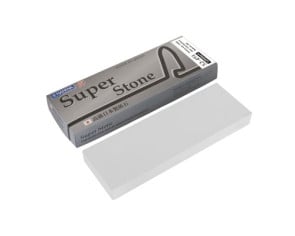
Naniwa 12,000 Grit Ceramic Super Stone
The Naniwa 12,000 Grit Super Stone is used for the final stage of sharpening. Generally speaking, a stone with this high a grit is used for polishing the shinogi line and edge of Traditional Japanese knives. Many chefs will also increase the angle a couple degrees to put a very fine micro-bevel with this stone. This stone is also very popular with straigh razor sharpeners who need to create the smoothest possible edge. This stone creates a phenomenal polish. If you're looking to create a mirror polish you'll want this stone in your arsenal. We recommend using a Naniwa dressing stone with high grit stones such as this. The dressing stone will create a slurry and clean particles that embed in these high-grit polishing stones. Learn More$107.80 -
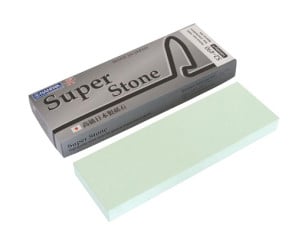
Naniwa Super Stone 10,000 Grit Ceramic Finishing Waterstone (S2-490)
Achieve the Legendary 'Scary Sharp' Mirror Edge Sharpening is a journey that begins with repair and ends with refinement. For those who demand more than just a functional edge, the Naniwa 10,000 Grit Ceramic Super Stone represents the pinnacle of Japanese abrasive technology. Unlike lower grits that remove steel to create a new edge, this ultra-fine 10,000 grit stone is a specialized tool designed to polish and temper. At this microscopic level, you are no longer 'grinding'; you are aligning the steel's molecular structure and removing the invisible burrs that prevent a knife from gliding through delicate proteins. The result is a 'mirror edge'—an aesthetic masterpiece that provides a frictionless cutting experience. Crafted using Naniwa’s proprietary resin-bonding process, this stone offers a unique tactile feedback often described as 'creamy' by professional sharpeners. This ensures you can feel the angle of your blade across the surface, providing more control than harder, glass-backed alternatives. Whether you are maintaining a high-carbon Honyaki or a modern VG-10 blade, this stone delivers the final, definitive touch of sharpness. Learn More$93.95 -

Naniwa 8000 grit Ceramic Super Stone
Size: (210x70x20 mm) (8.25x2.75x.80 in.)
The higher grit allows this stone to be used for both sharpening and polishing. However, it shouldn't be used as just a polisher. Since the grain count is higher than 6000, this waterstone will finely tune the edge of your knife allowing it to be sharpened and polished. Do not soak, just a splash and go.
Learn More$85.95 -

Naniwa 5000 grit Ceramic Super Stone
The material is made from a new resin bonding agent which allows for a higher concentration of abrasive particles. The higher abrasive levels enhance the tactile feel of the stone while improving the time of sharpening. Learn More$76.95 -

Naniwa 3000 Grit Ceramic Super Stone
Size: (210x70x20 mm) (8.25x2.75x.80 in.)
The Naniwa 3000 grit Ceramic Super Stone makes for a great final stone, a perfect step-up from the 1,000 grit stone. It is fine enough to be used prior to using a finer grit such as an 8,000 grit water stone.
The higher abrasive levels contribute to the ease of sharpening. No need to soak the stones in water, just give it a splash and go. Do not soak the stone. Learn More$72.95 -

Naniwa 1000 grit Ceramic Super Stone
Size: (210x70x20 mm) (8.25x2.75x.80 in.)
Naniwa "Super Stones" require no soaking, just splash and go. The 1000 grit stone is used for establishing an edge on a dull knife. It will remove micro-pitting but any chips will require a more coarse stone. This is the average size used for sharpening a dull knife. For use on meats, you may want to continue sharpening with a higher grit but will work great on vegetables. Learn More$63.45